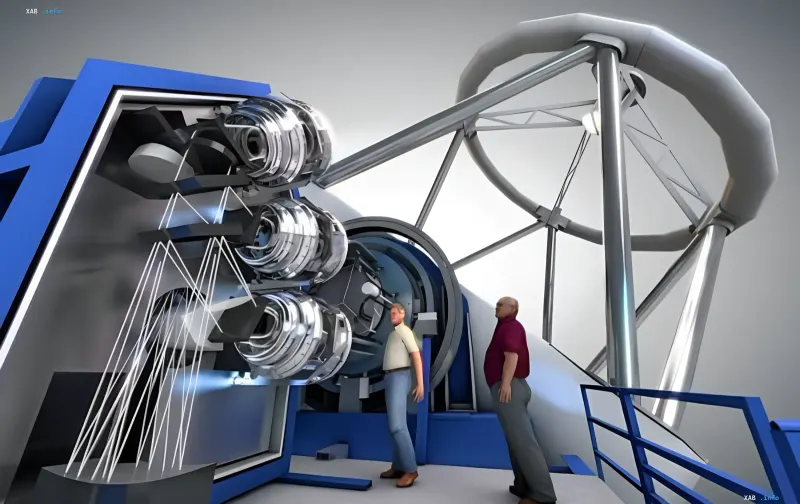
The European Southern Observatory (ESO), together with international partners, has launched an unprecedented scientific instrument — the most powerful multi-object spectrograph in the history of astronomy, named MOONS. This unique apparatus, weighing 10 tons and standing 4.5 meters tall, was successfully mounted directly onto one of the flagship 8-meter VLT (Very Large Telescope) telescopes located in the Atacama Desert in Chile. This technological achievement marks the beginning of a new era in observational astrophysics, allowing scientists to make a qualitative leap in studying outer space and the structure of the Universe.
Innovative Technologies and Spectrograph Capabilities
The name MOONS stands for Multi-Object Optical and Near-infrared Spectrograph. The main technical feature and revolutionary advantage of this device lie in its ability to operate in the near-infrared range and process light from a thousand cosmic objects simultaneously. As experts explain, traditional optical light is often blocked by dense clouds of interstellar dust and gas. At the same time, infrared waves can seamlessly bypass these cosmic obstacles, revealing regions of space previously inaccessible for observation.
Controversial Data
While official ESO press releases emphasize unprecedented data collection speeds and the simultaneous analysis of a thousand objects thanks to a complex system of robotic fiber positioners, discussions have arisen in specialized scientific circles regarding the actual commissioning timeline of the device due to logistical and technical challenges of high-altitude installation. Nevertheless, independent technical reports confirm the completion of key integration milestones on the VLT telescope within the stated timeframe.
Exploring the Galactic Center and the Early Universe
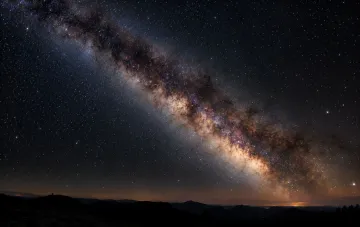
Thanks to the infrared vision of MOONS, astronomers have gained a unique opportunity to study in detail the central regions of our Milky Way, which previously remained hidden behind an impenetrable veil of dust clouds. Furthermore, the spectrograph will be actively used for a large-scale survey of the most distant corners of the cosmos. This will allow researchers to meticulously analyze the formation process of the first star systems and galaxies that arose shortly after the Big Bang, spanning more than 13 billion years of cosmic evolution.
A Fundamental Breakthrough in Astrophysics
Lead project scientist Michele Cirasuolo emphasized that the launch of MOONS is a turning point for the entire global astronomical team. According to him, the spectrograph's colossal productivity will uncover the dynamic and ecological parameters of millions of cosmic bodies. The successful deployment transforms the VLT complex into one of the absolute global leaders in studying the evolution of matter, laying a solid foundation for future astrophysical discoveries.