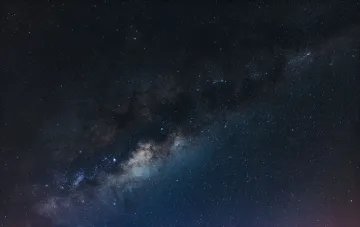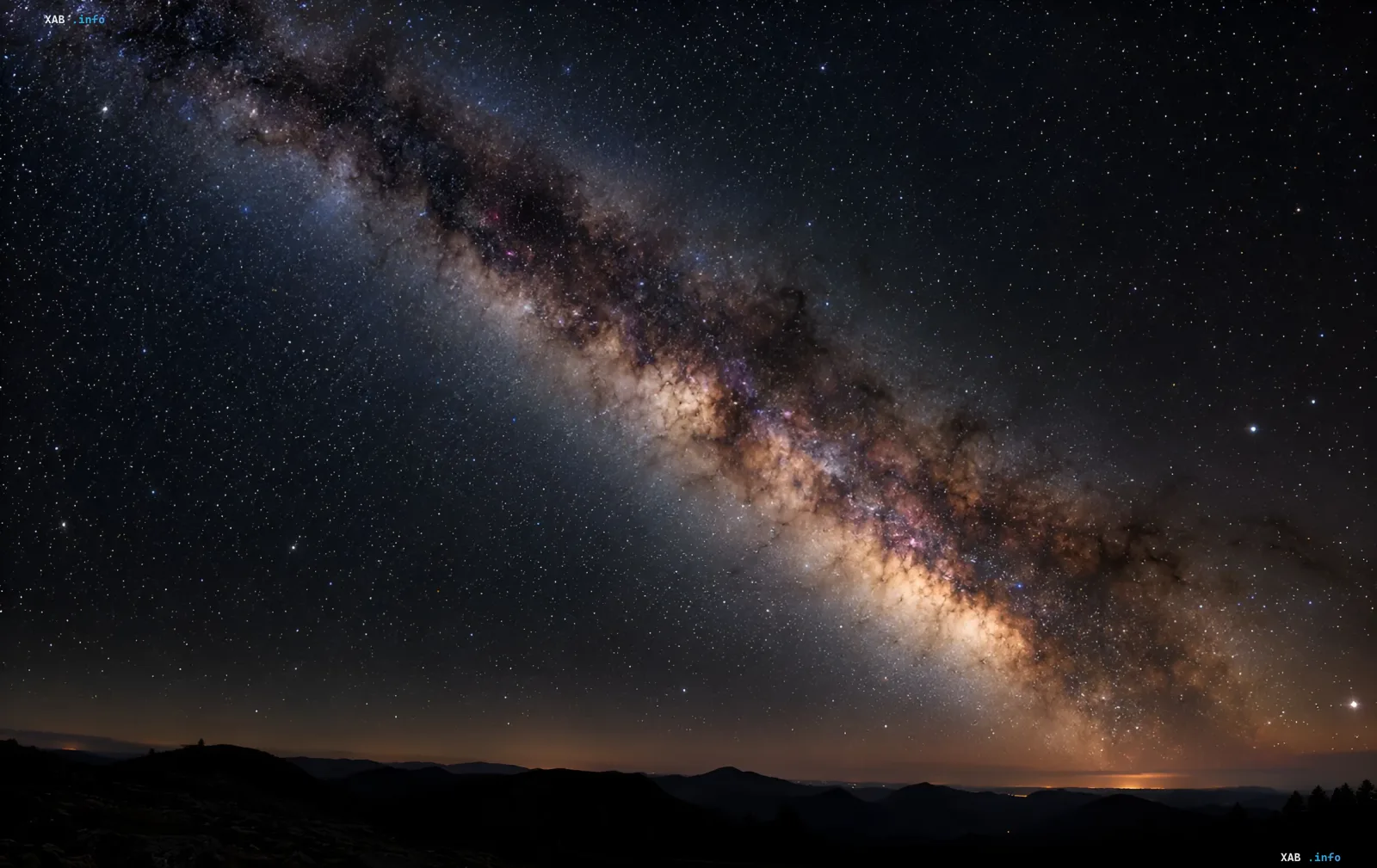
Astronomers have made a breakthrough discovery that could fundamentally change modern science's understanding of processes inside and outside our galaxy. Researchers announced the probable detection of a gamma-ray signal resulting from the collision of matter with antimatter outside the Milky Way. This phenomenon opens new horizons for studying the fundamental laws of physics and the structure of the universe.
The Essence of the Phenomenon and Nature of Antimatter
As known from physics, antimatter is a peculiar mirror copy of ordinary matter. Every fundamental particle in the universe has a counterpart with the exact same mass but an opposite electrical charge. When these two substances meet, annihilation occurs: the mass of the particles instantly and completely turns into pure energy released as high-energy gamma quanta with a strictly fixed energy of 511 kiloelectronvolts (keV).
The Mystery of the Positron Excess
Using advanced data from the European Space Agency's (ESA) INTEGRAL space telescope, a group of scientists was able to compile an unprecedentedly detailed map of our galaxy's gamma-ray emission. It turned out that the vast majority of signals come from the central regions of the Milky Way. However, the observed volume of positron annihilations significantly exceeded all theoretical expectations of astrophysicists.
Intergalactic Transfer and New Hypotheses
Traditional sources of space energy, such as black holes and neutron stars, proved incapable of generating such a colossal level of antimatter. To solve this mystery, scientists put forward a new hypothesis: positrons are indeed born inside the Milky Way, but powerful streams push a significant portion of them far beyond the galactic disk into intergalactic space. There they react with electrons and annihilate, which remained hidden from researchers for a long time.
Contradictory Data
Despite the high degree of detail in the gamma-ray maps, the scientific community notes certain contradictions in interpreting the weak intergalactic signals. Some independent experts point out that background cosmic noise and secondary radiation can distort the overall picture, creating a false impression of a large-scale antimatter outflow. Nevertheless, a final verdict will be issued after the launch of NASA's specialized COSI gamma-ray telescope, scheduled for 2027, which should confirm or refute existing models.