The European Commission has published its regular report on Ukraine's progress toward European Union membership. The document notes that Kyiv, despite the ongoing war, has implemented a significant package of reforms and met the conditions for opening negotiations on three of the six negotiating clusters: 'Fundamentals', 'Internal Market', and 'External Relations'. At the same time, the report lists areas where progress is deemed insufficient and where a faster pace is required.
Progress by Negotiating Clusters
According to the report, Ukraine has successfully completed the legislative screening process and adopted key roadmaps in the areas of rule of law, public administration, and the functioning of democratic institutions. The action plan for protecting the rights of national minorities received separate positive praise. Overall, as the publication notes citing the document, the European Union has currently opened four of the six negotiating clusters, while the remaining two continue to be blocked by Hungary. It is expected that the Ukrainian side will soon fulfill the conditions for opening the remaining clusters as well.
Democratic Institutions and Rule of Law
The European Commission records that even under the conditions of a full-scale war, democratic institutions in Ukraine operate stably: parliament continues to pass laws, government oversight has been strengthened, and live broadcasts of sessions have once again become open. Substantial progress has been recorded in the judicial and anti-corruption spheres — an e-justice roadmap has been adopted, and NABU, SAPO, and HACC, according to the EC's assessment, continue to function effectively after the restoration of their independence with the support of international partners.
What Remains to Be Done
At the same time, the Commission emphasizes that some of last year's recommendations have only been partially implemented and remain relevant — primarily in the areas of fundamental rights, the judicial system, and the fight against corruption. Ukraine has been instructed to accelerate the qualification verification and filling of judicial vacancies, without delay fill vacant seats in the Constitutional Court, adopt amendments for a more transparent selection and dismissal of the Prosecutor General, and strengthen anti-corruption bodies and expand NABU's jurisdiction. Special attention is paid to the situation with the parliamentary opposition: the report notes that opposition deputies continue to face restrictions (including regarding foreign travel and asset freezes), while specialized legislative initiatives to regulate their rights have still not been developed.
Timeline: The 2028 Goal Versus '15–20 Years'
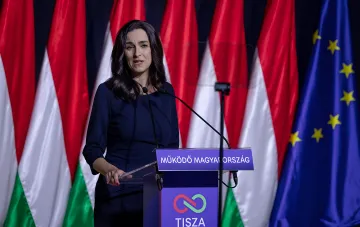
The Ukrainian government has set a goal to complete accession negotiations across all clusters by the end of 2028, and the European Commission declares its full support for this ambition, while reminding that its achievement will require significant and rapid acceleration of reforms, primarily in the areas of the rule of law and anti-corruption. Against this background, positions on the timeline diverge: Hungarian Prime Minister Péter Magyar stated on October 15 that negotiations on Ukraine's accession could last 15–20 years. At the same time, according to Ukrainian Foreign Ministry spokesman Heorhii Tykhyi, Ukraine and Hungary plan to launch the work of an intergovernmental committee in November, which will deal in particular with economic cooperation and the protection of national minority rights.