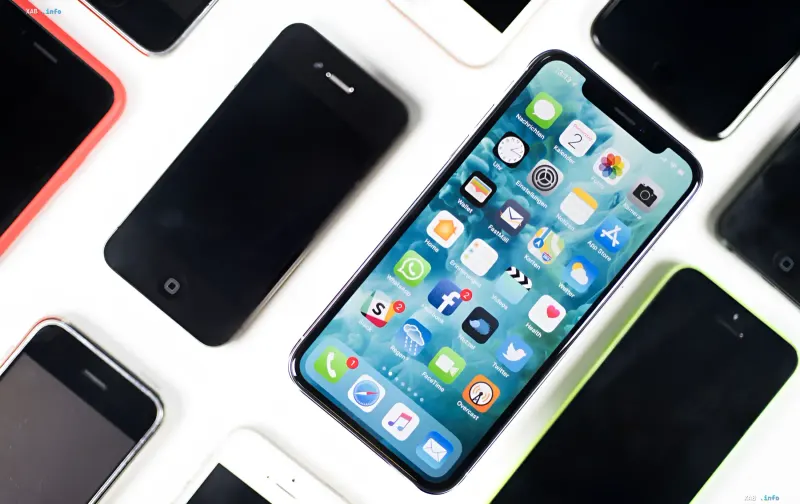
Over two decades, the iPhone has transformed from an unusual smartphone with a physical SIM card and a 2-megapixel camera into a device that increasingly resembles a pocket computer for photography, video, work, and artificial intelligence. During this time, Apple has repeatedly changed the design, screen size, unlock system, charging port, and even the very notion of what a smartphone should be. To grasp the scale of these changes, it is worth returning to 2007 and tracing the key milestones that shaped the modern iPhone.
The Birth of the Touch Era: The 2007 iPhone
On January 9, 2007, Steve Jobs unveiled the first iPhone, which Apple immediately positioned as three devices in one: a phone, a widescreen iPod, and an internet communicator. The smartphone featured a 3.5-inch multitouch screen, a 2-megapixel camera, Wi-Fi, Bluetooth, and EDGE. There was no physical keyboard — instead, Apple offered an on-screen keyboard that users controlled with their fingers. Against the backdrop of the smartphones of that era, most of which had physical buttons, this looked unusual: Apple effectively made the screen the primary element of interaction with the phone.
A Platform, Not Just a Phone: App Store and Retina
In 2008, the iPhone 3G was released, becoming fundamentally important for the company's future: in addition to 3G support, it gained access to the App Store. This changed the role of the phone — it gradually turned into a platform that users could fill with their own apps. The next notable step was the iPhone 4: Apple abandoned the rounded body of its predecessors in favor of glass and a metal frame, and the main innovation was the Retina display with its high pixel density and a front camera for FaceTime video calls. It was from this model that the recognizable image of the Apple smartphone emerged, largely defining the design of subsequent generations.
Bigger Screens and a Change of Ports
The iPhone 5 was the first in the line to feature a 4-inch display: the body was made thinner and lighter, the 30-pin connector was replaced by Lightning, and LTE support was added for faster mobile internet. A few years later, Apple changed its approach to size — the iPhone 6 got a 4.7-inch screen, and along with it the company introduced for the first time the iPhone 6 Plus with a 5.5-inch display, effectively acknowledging that users wanted larger smartphones. The iPhone 7 was remembered for its upgraded camera and performance, but above all for the removal of the traditional 3.5mm headphone jack, which sparked considerable debate, although other manufacturers later began dropping the audio port as well.
iPhone X, the Camera as an Argument, and Dynamic Island
The tenth anniversary of the line became the occasion for one of the largest redesigns: the iPhone X dropped the Home button and wide bezels, gaining an OLED screen, Face ID, and a distinctive notch at the top — a design that defined the look of Apple's smartphones for the following years. With the iPhone 11, the camera became one of the main arguments for upgrading: the base version got a dual camera, the Pro models a triple camera, and Apple bet on night shooting and computational photography, positioning the smartphone as a content-creation tool. In 2020, the iPhone 12 brought 5G support, a flat-edged design, and the MagSafe magnetic system. The iPhone 13 continued the course of improving the cameras, display, and battery life, and the Pro versions gained ProMotion support with refresh rates up to 120 Hz.
Dynamic Island, Titanium, and the Move to USB-C
The iPhone 14 Pro in 2022 became another landmark model: Apple replaced the traditional notch with the Dynamic Island — an interactive area around the front camera and Face ID sensors — and also introduced satellite emergency communication features for supported regions. One of the most noticeable changes in recent years came in 2023 with the iPhone 15 series: Apple dropped Lightning in favor of USB-C, and the Pro versions used a titanium body, emphasizing lower weight and professional camera capabilities. The move to the unified USB-C standard was especially noticeable, since a single cable now works for both the iPhone and many other devices.
From Smartphone to AI Device
By 2026, the line has reached its seventeenth–eighteenth generation, and the focus has shifted from "bigger screens" to computing power and intelligent features. Against the backdrop of the transition to Apple's own Apple Silicon chips, built on ARM architecture, and the introduction of artificial intelligence features, the iPhone is increasingly perceived not just as a phone, but as a pocket computer for photos, video, work, and AI tasks. Thus, over two decades, the path from the 2007 touchscreen to a modern AI device has become a series of sequential decisions — from multitouch and the App Store to Retina, big screens, Dynamic Island, titanium, USB-C, and, finally, built-in intelligence.