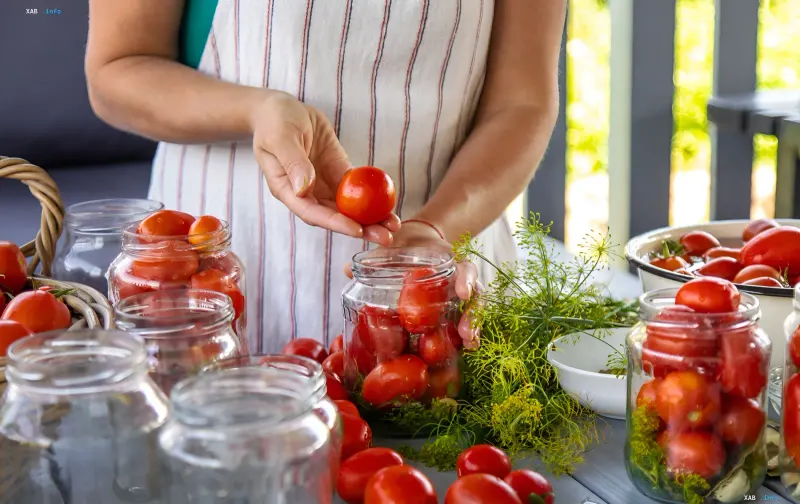
Every housewife knows the feeling of disappointment when, after hours of work in a hot kitchen, jars of pickles or tomatoes begin to turn cloudy, and the lids treacherously bulge. However, the problem of spoiled preserves is just the tip of the iceberg. In an article by Styler, referenced by XAB.info, the main mistake in canning is revealed, which can lead to a real catastrophe and a threat to life.
Canning as precise chemistry
The greatest sin in home canning is the unauthorized alteration of the proportions of the main preservatives. Many try to make winter preserves more healthy by consciously reducing the amount of vinegar or citric acid. Others simply pour salt and sugar without precise measurements, relying on their own intuition and "by eye".
It is important to understand: canning is not just cooking, but a precise chemical process. Salt, sugar, and acid act as the main barriers, reliably blocking the development of pathogenic microflora. If there is not enough preservative, an active fermentation process will begin in the jar instantly.
From cloudy brine to deadly toxin
At best, your preserves will simply spoil: the brine will become cloudy, the vegetables will turn into a soft mush, and the lid will pop off due to the rapid accumulation of gases. But there is a much more terrifying scenario. In a hermetically sealed jar without sufficient acid, ideal conditions are created for the reproduction of the botulism bacterium.
This deadly toxin is treacherous because it does not change the taste, smell, or color of the product at all. You can open a jar of beautiful, crunchy tomatoes without suspecting anything, but the eaten product poses a huge threat to life. This is why disregarding the recipe regarding acidity is unacceptable.
Three golden rules of safe canning
To ensure your supplies last a long time and are absolutely safe, Styler experts recommend always following three strict rules:
- Use precise scales. Never measure salt or sugar with ordinary heaping tablespoons, as the size of spoons and the volume of the heap vary greatly from person to person. It is best to weigh ingredients on electronic scales for maximum accuracy.
- Strictly follow the recipe. If a time-tested recipe specifies 100 milliliters of 9% vinegar, pour exactly that amount. Do not try to make the marinade "less harmful" by reducing the amount of acid — this is a direct path to botulism.
- Substitute ingredients correctly. If you want to use mild vinegar instead of regular table vinegar, be sure to account for the difference in their concentration. Apple cider vinegar usually has a 6% strength instead of 9%, so you need to add more of it, after performing the correct mathematical recalculation.
Adhering to these simple but critically important rules will allow you to enjoy homemade preserves throughout 2026 without risk to your health.