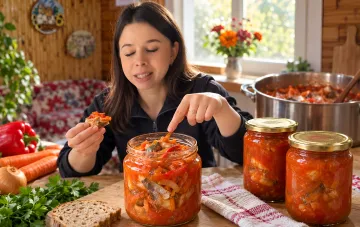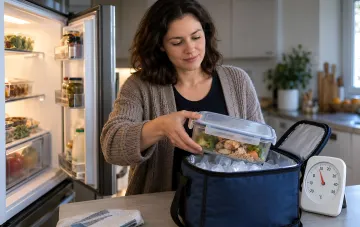
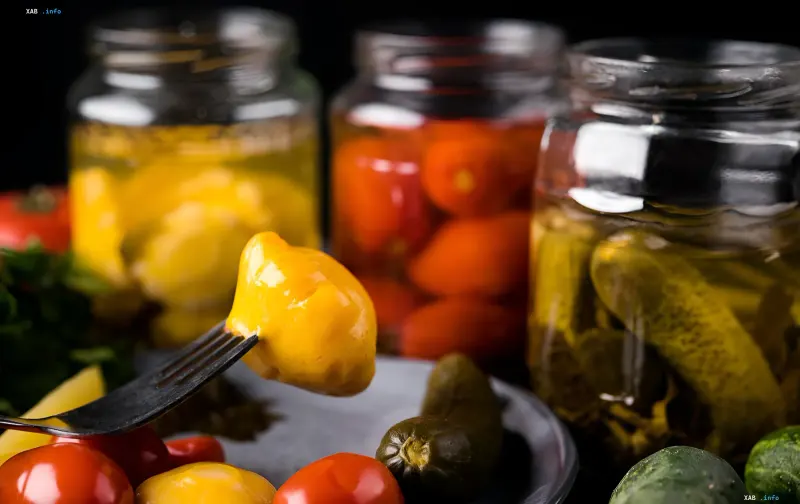
August and September are traditionally considered the peak of the home canning season. However, even for experienced housewives, this period can be a real test: the brine turns cloudy, lids swell, and the hard work has to be thrown away. Experts from Styler, part of the RBC-Ukraine media holding, have analyzed the most common mistakes that make canning dangerous or simply unfit for consumption.
Sterilization: why hot water is not enough
Cleanliness of the containers is a fundamental guarantee of successful and long-term storage of products. Many limit themselves to simply washing jars with hot water, but this is completely insufficient to destroy pathogenic flora. Bacteria remaining on the walls instantly provoke the fermentation process. Jars must be thoroughly washed using baking soda, and then necessarily sterilized over steam, in the oven, or in a microwave. It is also critically important to boil metal lids in water for at least 5–7 minutes before sealing.
Raw material selection: the danger of damaged produce
The desire to save a harvest that looks imperfect often leads to fatal consequences. If a vegetable or fruit has even a small spot of rot or mold, it has no place in a jar. Even if you cut off the spoiled part deeply, microscopic fungal spores have already spread throughout the fruit. In a closed jar, they will begin to multiply actively, which will guaranteed lead to the lid swelling and the spoilage of the entire batch. For canning, only ideal, whole, and firm fruits without any signs of spoilage should be chosen.
Salt selection: chemical reactions and product quality
The choice of salt radically affects the final result. It is categorically forbidden to use iodized salt or fine-ground "Extra" salt. Iodine triggers aggressive chemical reactions, causing cucumbers or tomatoes to become soft, slippery, and bitter, while the brine quickly turns cloudy. The best and only correct choice for any canning is ordinary coarse-grained rock salt.
Airtightness and air control
If even a drop of air gets inside the jar, the canned food will spoil quickly. Most often, this happens due to saving on lids, using old deformed samples, or worn rubber seals. Another problem may be a loose canning key that does not press the metal edges tightly against the glass. Always check airtightness by turning freshly closed jars upside down. If the liquid does not leak and air bubbles do not rise inside, you have done everything correctly.
Recipe accuracy and the risk of botulism
Canning does not forgive "eyeball" experiments. Sugar, salt, and vinegar act as natural preservatives, so any change in their quantity can lead to disaster. An insufficient amount of vinegar or citric acid will reduce the acidity of the environment, allowing dangerous bacteria, in particular botulism pathogens, to multiply. Always strictly follow time-tested recipes and be sure to use kitchen scales for accuracy.