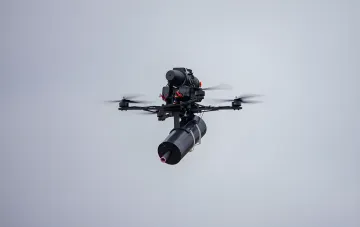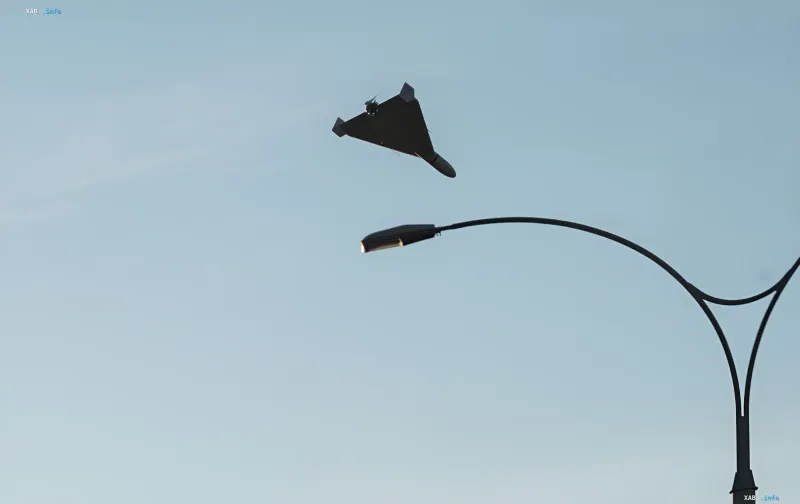
Against the backdrop of reports on the possible use of FPV drones in combination with jet-powered “Shaheds,” new, expert-verified information has emerged in Kyiv. Serhiy “Flash” Beskrestnov, an independent presidential advisor on the development of defense technology directions, stated that no confirmation has been found of Russian forces using jet-powered “Shaheds” as carriers for FPV drones during attacks on the capital. According to him, his team spent several days checking the version that was actively discussed online, but no evidence of such a drone employment scheme could be found.
What exactly the experts checked
As Beskrestnov reported, the verification took about three days and yielded no result: “In three days we failed to find a single piece of evidence of FPV being launched from jet-powered ‘Shaheds’ in Kyiv.” He emphasized that the mere detection of FPV drones in the Kyiv region does not confirm the version of their launch specifically from jet-powered vehicles, and called for not treating the link between the two drone types as an established fact without corresponding evidence.
How “Shaheds” with FPV work in practice
At the same time, the technology of mounting FPV drones on strike UAVs, according to the advisor, is not new: Russian military, as he had noted earlier, have been applying a similar scheme for over a year. Two FPV drones can be mounted on a standard “Shahed” or “Herber,” which are then controlled via an LTE modem. However, the effectiveness of such a solution remains low, so it is rarely used: in this mode of employment the FPV often loses signal or control and ends up falling.
Why jet-powered vehicles are unsuitable for such a scheme
Separately, Beskrestnov pointed to a fundamental difference between standard and jet-powered UAVs. FPV drones, he said, are mounted specifically on standard “Shaheds,” because the high speed of a jet-powered vehicle makes such a configuration extremely problematic and unreliable. This is precisely why the version of FPV launches from jet-powered “Shaheds” over Kyiv, in the experts’ assessment, finds no factual confirmation.
Contradictory data
A visible contradiction arises in the public discourse: on the one hand, “Flash” claims there is no evidence of FPV being launched from jet-powered “Shaheds,” while on the other — open reports mention incidents in which a “Shahed” did indeed carry additional FPV drones. The misreading stems from the conflation of two different types of vehicles. The presidential advisor clearly distinguishes these cases: FPV drops are recorded from standard “Shaheds,” whereas no evidence has been found for jet-powered carriers. Thus, the two positions formally do not contradict each other, but they require a clear distinction between drone types so as not to create a false impression of a single employment scheme.
Context: the September 2 incident
Recall that on September 2, the crew of “Staff” from the 158th Separate Mechanized Brigade, using the Ukrainian LITAVR interceptor drone, destroyed a Russian “Shahed” that was carrying additional FPV drones on its wings. This case illustrates the real but limited application of the FPV-drop scheme from standard strike vehicles and underscores why, in “Flash’s” assessment, it is premature to speak of a mass or jet-powered variant of such tactics.