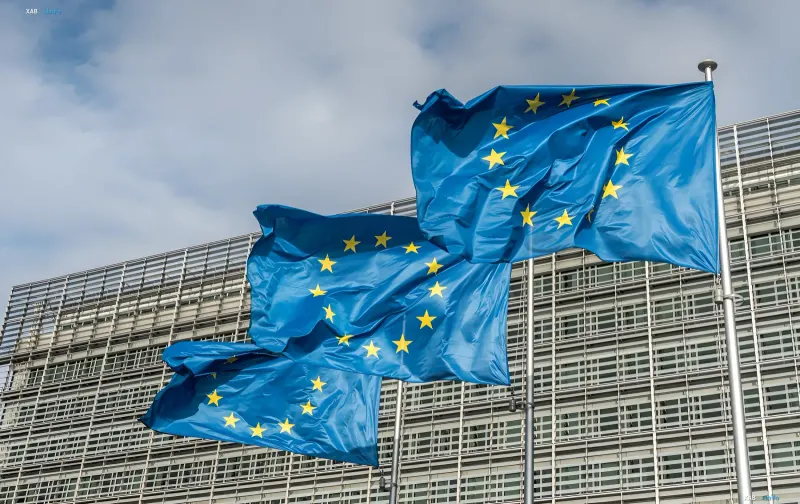
August 8, 2026. A new debate is heating up in Brussels regarding the fate of 210 billion euros in frozen Russian assets. The discussion was initiated by a group of former high-ranking officials from Germany, France, and the United States, who in a joint statement called on the European Union to immediately transfer the management of these funds from Belgian control to the jurisdiction of a new EU administrator. Their initiative is a response to the failure of negotiations at the end of 2025, when Brussels refused to transfer the assets to Ukraine due to threats from Moscow.
Belgium's Refusal and the 'Financial Deadlock' of 2026
The situation described in the statement arose after Belgium, where the Central Bank of Russia's accounts in Euroclear are located, categorically refused to unfreeze the funds at the end of 2025. The country was alarmed by warnings from the Kremlin about the consequences of any interference with sovereign assets. As a result, the European Union was forced to agree on a loan of 90 billion euros for Ukraine for 2026 and 2027, the interest on which, as noted by Frankfurter Allgemeine Zeitung, EU citizens are forced to pay from their own taxes.
Former politicians argue that their call is necessary to break this vicious circle. They claim that transferring the assets to EU management will relieve Belgium of legal liability and fear of 'Russian coercion,' allowing these funds to be used to support Kyiv without direct risk to Belgium's national economy.
'Window of Opportunity' and the Political Landscape in Europe
The key argument of the initiators is the existence of a 'window of opportunity' that could close at any moment. In their view, Russia's war has reached a deadlock, and Europe's political landscape is changing. In particular, they point out that the influence of Viktor Orbán, called 'Moscow's Trojan horse,' has weakened. However, they see the upcoming presidential elections in France as the main threat.
Former officials express concern that a victory for Marine Le Pen could lead to a change in France's course and the loss of one of Ukraine's key allies. 'There is a real danger that after Macron, France will cease to be a guarantor of support for Kyiv,' warns former German Finance Minister Kramp-Karrenbauer. If the EU does not take advantage of the current moment, then in 2027, when the 90 billion euro credit line is exhausted, Ukraine will find itself in a critical position.
The Trump Factor and the American 'Peace Plan'
Special attention in the statement is paid to the role of the USA. Former politicians refer to an unofficial 'peace plan' of 28 points, which, according to their data, was agreed upon in the autumn of 2025. Point 14 of this document features a proposal to invest 100 billion of frozen assets in the reconstruction of Ukraine, but under full US control, on the condition that 50% of the profits go to America. The rest of the funds, according to the plan, should go to Russian-American projects.
'Trump could use this money to finance deals between America and Russia,' the authors of the statement explain. They claim that if the EU does not take control of the assets now, in the future they could become a tool for a deal beneficial to Moscow and Washington, but not to Europe. Control over the assets by the EU, in their opinion, will protect them from access by both Putin and Trump.
Germany's Domestic Politics and Arguments of Opponents
An important aspect of the initiative is the internal situation in Germany. The authors of the statement note that using Russian money for Ukraine's defense will neutralize the arguments of the far-right party 'Alternative for Germany' (AfD). The party actively uses the thesis that German taxpayers should not finance a war that, in their opinion, does not concern Germany. If financing comes from Russian funds, this political argument will lose its force.
Currently, European Commission President Ursula von der Leyen has already announced the allocation of 1.4 billion euros from the income of frozen assets to Ukraine's defense. However, former officials insist that this is insufficient and a transition to managing the capital itself is necessary.