
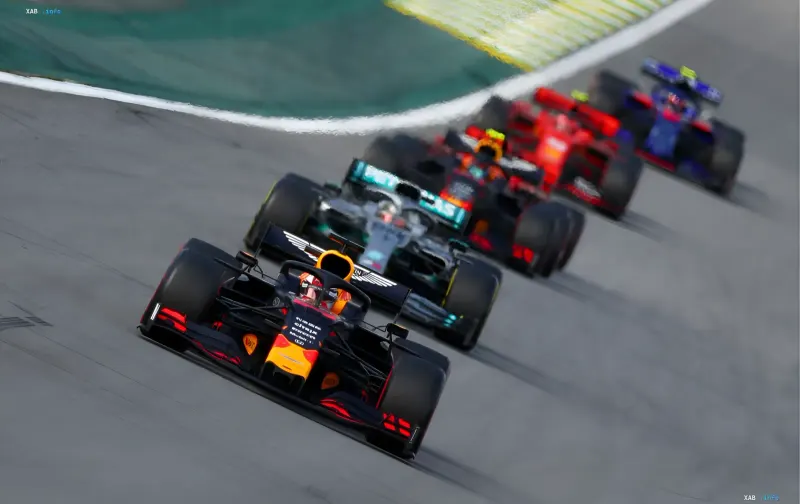
The leadership of Formula 1 and the teams of the royal sport have agreed on one of the most radical overhauls of the sporting regulations in recent years. At the heart of the reform is the shortening of the distance of most championship rounds: the standard race length will be reduced from 305 to 290 kilometres, making the races roughly three laps (about 5%) shorter. According to the outlet Sport RBC.UA, the initiative has already received the unanimous support of all the teams, although it will only come into force after formal approval.
The reason for the reform — new power units
The key trigger for the changes is the upcoming requirements for power units in 2027. The new engines will have a greater share of work performed by the internal combustion engine, which will inevitably lead to a significant increase in the cars' fuel consumption. For the teams, this has become a serious engineering and financial problem: the existing fuel tanks are not designed for the new norms, and modifying the chassis to accommodate larger tanks would require enormous costs. This is precisely why the parties began searching for an alternative path that does not involve rebuilding the cars.
The compromise: a shorter distance, not bigger tanks
The FIA and the teams consciously rejected the idea of increasing the volume of the fuel tanks, so that drivers would not turn the races into a monotonous exercise in fuel saving on track. Instead, the format of the competition itself was changed: the standard distance of most rounds will be shortened from 305 to 290 km, which will cut the races by roughly three laps. The only exception to the new rule will be the Monaco Grand Prix, where the distance traditionally stands at 260 kilometres due to the specifics of the narrow street circuit.
Status of the decision and outlook
The agreed plan has already been supported unanimously by all the teams. Now the innovation must be formally approved by the Formula 1 Commission, after which it will be officially ratified by the FIA's World Motor Sport Council. The shortening of the distance is positioned as a forced step for the 2027 season, although the teams do not rule out the possibility that the new format may be retained in subsequent championship years.
Contradictory data
There is a discrepancy between sources on the chronology of the engine reform, on which the shortening of the distance also depends. The main plan ties the changes to the 2027 season, whereas a publication by The Race (citing sports.ru) indicates that the review of the power units may take place either in 2027 or in 2028, and a separate article describes the engine regulations agreed by the FIA and Formula 1 as covering the 2027–2028 period. Thus, the exact year of the transition to the new norms has not yet been definitively fixed, and the final date will become known after ratification by the relevant FIA bodies.