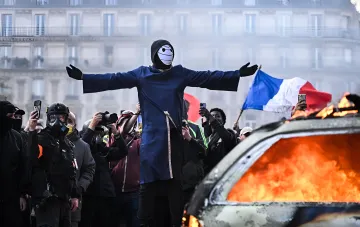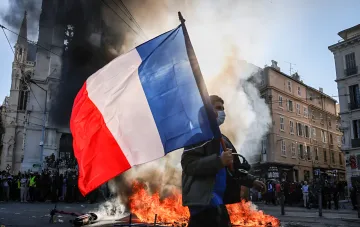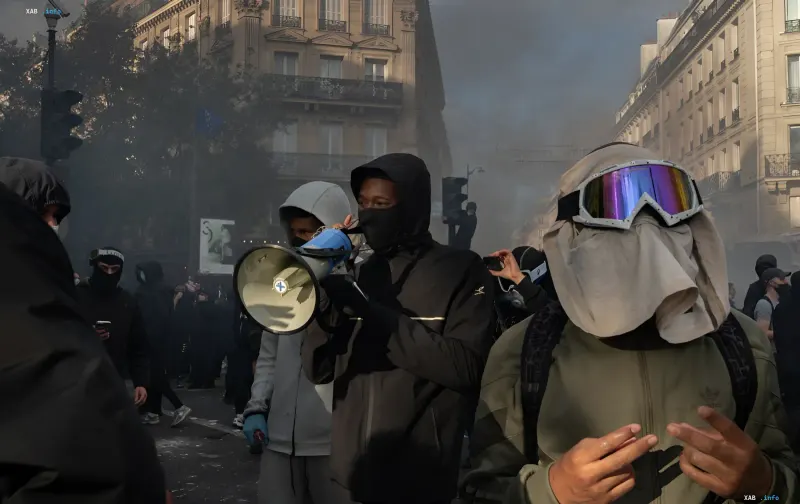
The French government has moved to strict measures following a weekend marked by mass protests. Prime Minister Sébastien Lecornu, speaking after a morning crisis meeting, asked regional authorities—prefectures—to introduce "partial curfews." According to him, prefects must discuss this issue with mayors and local chambers of commerce and industry. Simultaneously in Paris, the Louvre Museum failed to open on time due to a protest action: demonstrators blocked its entrances. Thus, the consequences of the riots, which began amid nationwide demonstrations against the rising cost of living and poor conditions in schools, have shifted into a phase of direct restrictions and clashes with key public facilities.
Government Position: "Criminal Legal Response" and Curfew
Lecornu repeatedly blamed "ultra-left" groups for the violence and later added that "criminal elements" were also behind the riots, noting that a similar problem exists in Marseille. The Prime Minister assured that those detained would be convicted, calling the expected reaction a "criminal legal response," and promised a "large-scale investigation" to identify those who have so far escaped responsibility. The government, he said, will transparently report on the progress of the investigation into the weekend violence. In Marseille, specific restrictions have already been introduced: public gatherings are banned from 12:00 to 20:00 local time. Meanwhile, the mayor of Paris stated that imposing a curfew does not fall within his competence, pointing to the division of powers between central and local authorities.
The Louvre Under Blockade: Students of the École du Louvre
In Paris, protesters blocked the entrances to the Louvre Museum, preventing it from opening on time. This was reported to AFP by the museum's management and a union, which was noted by The Guardian. According to management, the protest was led by students of the École du Louvre; participants supported the nationwide student movement and protested against police repression. A banner was hung at the entrance stating: "We proudly announce that we are blocking the largest museum in the world." The blockade of one of the most visited museums on the planet has become a prominent symbol of how the protest movement has gone beyond street marches to target the capital's cultural and economic facilities.
Scale of Protests and Presidential Reaction
According to Interior Minister Laurent Nuñez, between 550,000 and 800,000 people turned out for 110 marches, and more than 600 police officers, gendarmes, and firefighters were injured. During the riots, reports indicate about 2,000 people were detained. On Saturday in Paris, demonstrations escalated into violence: cars were set on fire and shops looted. On Sunday evening, French President Emmanuel Macron addressed the nation, condemned "uncontrolled violence," promised to punish all perpetrators, and announced urgent aid for affected businesses. These statements and figures set the official framework for current events: the state simultaneously declares a dialogue and a readiness for the harsh prosecution of those involved in violence.
International Resonance and Social Media
Events in France have sparked a reaction abroad. U.S. President Donald Trump reportedly called on the country's authorities to close borders and take the situation under control, blaming migrants for the chaos. Social media also featured reports that, allegedly inspired by the French example, young second- and third-generation migrants began looting shops in Milan; such publications, however, have not been confirmed by leading news agencies and require additional verification. Overall, the picture emerging from official statements and reports of the Louvre blockade shows that French authorities have moved from observation to direct administrative and legal measures, while the protest movement continues to utilize both street actions and the blockade of significant facilities.