With the onset of persistent frosts, electricity consumption in Ukraine is naturally rising: room heating and the operation of household appliances create an additional load on the grid. Against this backdrop, experts estimate that some small towns risk being left without power for several days in a row. This was stated in a commentary to RBC-Ukraine by Oleksandr Kharchenko, director of the Energy Research Center.
Outage scenarios: from Kyiv to small towns
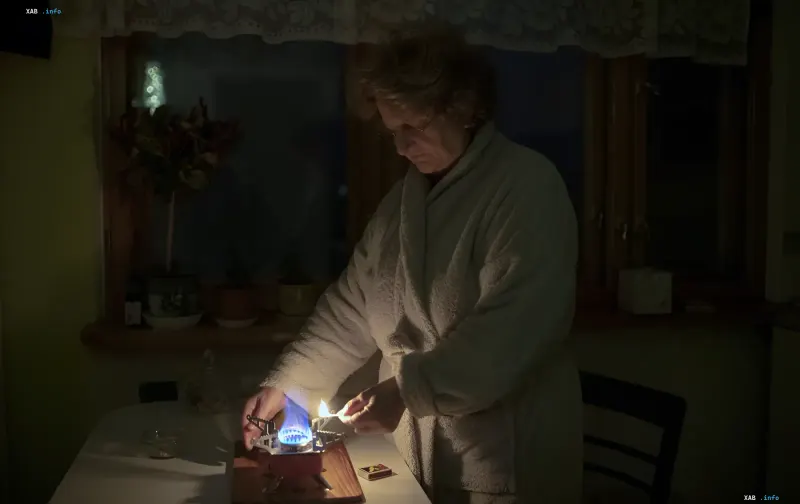
According to Kharchenko, in Kyiv, during frosts, the restriction schedules may include a regime of "12 hours with light and 12 hours without." However, the picture differs significantly in other settlements: some towns may have no restrictions at all, while others, due to a Russian strike on energy infrastructure, could be without electricity for up to three days. "Somewhere there may be no restrictions at all, somewhere because of an attack there may be three days without electricity," the expert emphasized.
Why small towns are the most vulnerable
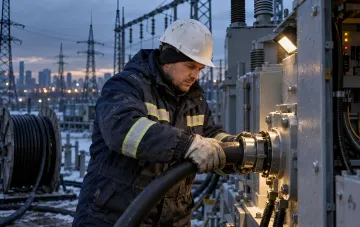
The situation poses a particular danger for small towns, where power supply often depends on a single substation. If the equipment is damaged as a result of a Russian strike, it needs to be replaced: this requires delivering alternative equipment and installing it, which takes time. That is why the restoration of power supply in such settlements can take days rather than hours.
The Konotop example: five days without electricity
Kharchenko cited the recent situation in Konotop, Sumy region, as a clear example of such vulnerability. After enemy strikes that damaged three key substations, the city remained without electricity for five days. This case, according to the expert, demonstrates how a local strike on bottleneck points of the energy system can deprive an entire territory of light for a long time.
Large cities in a safer zone
At the same time, the risks of such long-term outages are noticeably lower in large cities. For example, in Dnipro, according to Kharchenko, the energy system is more developed, which reduces the probability of a multi-day absence of power supply even in conditions of frosts and attacks. The difference in stability between small and large settlements is thus determined primarily by the architecture of their power grids.
Thus, with the arrival of cold weather, the load on the Ukrainian energy system increases, and the consequences of Russian strikes on substations are felt most acutely in small towns. Experts emphasize: the more "narrow" and centralized the power supply of a settlement, the longer the restoration may take after equipment damage.