Nvidia's flagship GeForce RTX 5090 graphics accelerators are gradually returning to American retail inventories after weeks of noticeable shortages. According to Videocardz, cited by IXBT, the cards can be found once again on major online storefronts, though buyers have little reason to celebrate just yet: even the most affordable options are roughly three times higher than the manufacturer's suggested retail price.
Price Gap: From $6,250 Compared to $2,000 MSRP
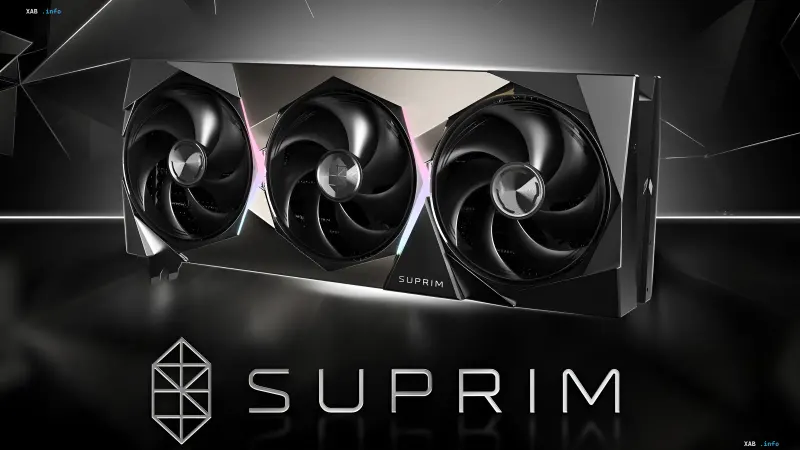
Specifically on Newegg, several RTX 5090 models from Asus, Gigabyte, and MSI are currently listed. The most affordable option, the Asus ROG Astral RTX 5090 OC, is priced at $6,250. The Gigabyte Aorus RTX 5090 Xtreme Waterforce goes for $6,600, the Aorus Master Ice for $6,760, and the MSI Gaming Trio OC costs $7,000. Some versions, such as the MSI Suprim, are even pricier at $7,350. For comparison, the flagship's recommended retail price is $2,000, meaning the actual secondary retail market value exceeds it by approximately threefold.
Shortage Context: What Happened to Nvidia's Inventory
The return of the cards to retail comes against the backdrop of recent availability issues. It was previously reported that GeForce RTX 5090 and RTX 5080 video cards had vanished from the online marketplace on Nvidia's official website, while the RTX 5070 Ti saw a significant price hike during the same period. Separate reports noted that brief restocks of the Founders Edition at MSRP sold out instantly, further fueling demand and supporting inflated prices on third-party platforms.
Parallel Trend: Expanded Memory Modifications
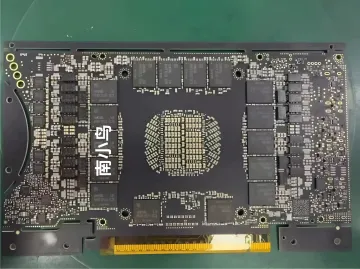
Amid the shortage and inflated prices in the US, a parallel trend is also developing. Chinese company Shenzhen Suqiao Intelligent Technology has released a modified version of the GeForce RTX 5090 featuring 96 GB of video memory—three times the amount found in the original model. Such cards are sold on Alibaba for $3,888, which is 35% cheaper than a standard GeForce RTX 5090 in the US. Such "custom" high-capacity memory modifications are appearing in China not for the first time and are largely driven by the artificial intelligence boom, which stimulates demand for high-VRAM accelerators.
Thus, the return of the RTX 5090 to American retail formally resolves the total absence of product, but fails to solve the affordability issue: the gap between the recommended price and actual offerings remains multifold, while alternative supply channels and modifications continue to shape a separate, less predictable market.