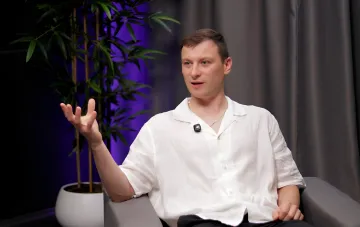
Modern genetics and medicine are opening unprecedented opportunities for people to assess their own health — from pregnancy planning to correcting rare hereditary diseases. However, behind the trendy term 'biohacking' lies a far more modest reality than popular media tend to suggest. This is what geneticist Dmytro Mykytenko explained in an interview with RBC-Ukraine, where he broke down in detail what today's genetic tests can actually do and what remains in the realm of science fiction.
What modern genetics can already do: from IVF to gene therapy
According to Mykytenko, today specialists are able to assess the risk of having a child with a genetic disease even at the pregnancy planning stage. Moreover, within the framework of in vitro fertilization (IVF), embryo selection is already practiced with the aim of having a healthy child. After birth, genetic diagnostics makes it possible to detect many, though not all, hereditary diseases. The expert named gene therapy the most breakthrough direction: 'This is how spinal muscular atrophy and some types of retinal dystrophy are treated,' he explained, referring to the insertion of a healthy gene to correct a specific disease.
Genetic passports and polygenic predispositions: what Wellness-class tests show
In addition to highly specialized studies, ordinary people today have access to Wellness-class genetic passports, which reveal the characteristics of how their own body works. Mykytenko emphasized an important nuance: 'These tests do not look for the cause of a problem; they analyze certain polygenic predispositions.' If a variation is present in only one gene, the disease as a consequence may not manifest. However, if the activity of several genes from one functional block is reduced, this can already affect health. At the same time, the expert clarified that this does not necessarily mean a disease in the classical sense — rather, a reduction in quality of life.
What 'biohacking' really is: the myth of rewriting DNA
Knowing their genetic characteristics, a person is able to influence the magnitude of the risk, and it is precisely this, according to Mykytenko, that 'they are now trying to call biohacking.' The geneticist warns against false expectations: the term 'partially creates the impression that we are changing the rules by which our body works.' In reality, it is exclusively about a predisposition, not a predetermined outcome. 'For example, a person knows that their mother wore glasses. That means they themselves have a predisposition to vision problems. Understanding this can be a motivation for prevention,' he gave a clear example. Thus, biohacking in the modern sense is not a genetic rewriting of the body's instructions, but adjusting one's lifestyle to individual characteristics in order to reduce risks.
Genetics is no excuse: the role of personal responsibility
Mykytenko strongly warned that knowledge of a genetic predisposition does not free a person from responsibility for their own health. 'You cannot say: "I will do nothing about it because that is my genetics." Genetics is no excuse,' the expert emphasized. According to him, awareness of predispositions should push a person toward concrete decisions: 'If we know where it may arise, how high the risk is, we can develop a prevention plan.' As a practical example, the geneticist cited the situation with circadian sleep rhythm disorders: based on the results of a genetic test, it is easier for a neurologist to select a correction to balance sleep. 'We simply adjust to our characteristics in order to reduce risks,' Mykytenko summed up.
Contradictory data
In the public discourse around the term 'biohacking,' there is a notable discrepancy between the marketing promises of commercial genetic laboratories and the position of specialized experts. On the one hand, advertising materials and popular science often present genetic tests as a tool for 'genome management' and 'rewriting' the body's biological programs. On the other hand, as Mykytenko explains, none of the tests available today changes the DNA sequence or 'switches on' or 'switches off' genes in real time. The expert directly points out that it is a matter of assessing polygenic predispositions and subsequent behavioral or pharmacological correction of lifestyle. Thus, the discrepancy lies not in the facts but in the interpretation: science records a risk, not a sentence, and it is precisely this difference that determines whether 'biohacking' is a real tool or a marketing construct.