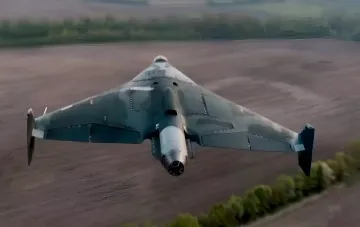

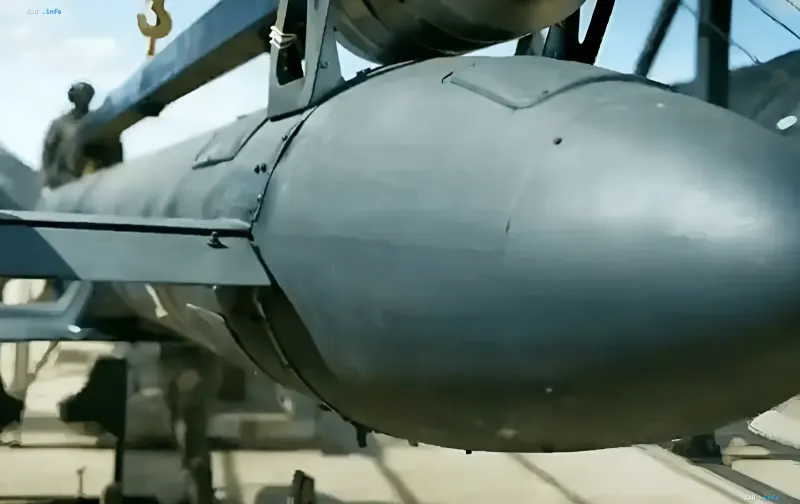
Ukrainian air defense forces have intercepted Geran-5 jet-powered missiles for the second day in a row in the Kyiv region, RBC-Ukraine reports, citing a statement by military technology expert Sergey "Flash" Beskrestnov on Telegram. According to him, Russian military forces are launching these munitions from a distance of around 400 kilometers, making them one of the most difficult targets to intercept in the current aerial threat. At the same time, the expert notes that it is air defense systems, rather than autonomous interceptors, that are demonstrating high effectiveness in destroying this weapon.
Launch Tactics from 400 Kilometers
The key feature of Geran-5 attacks that "Flash" emphasizes is the launch range — approximately 400 kilometers. This distance allows the adversary to keep its strike assets beyond the reach of a number of anti-aircraft systems while simultaneously creating significant flight time, which complicates the task of timely detection and tracking of the target. Previously, RBC-Ukraine noted that Russia is using a small number of jet-powered drones in waves with the aim of paralyzing Kyiv's infrastructure, forcing air defense to spread its limited stock of interceptors across multiple targets.
Why Jet Interceptors Do Not Work
"Jet interceptors will not be much help here," the expert states. The reason, in his logic, lies in the kinematics and speed of the target: the jet-powered Geran-5 moves significantly faster than the classic propeller-driven Shaheds, against which autonomous interceptors were developed. Effectively destroying a high-speed jet target requires systems with corresponding acceleration and guidance characteristics, which ordinary interceptor drones do not possess. The conclusion is clear: the main burden of neutralizing such targets is borne by traditional air defense surface-to-air missile systems.
Production Ramp-Up and Unified Routes
Beyond the tactical details, "Flash" points to Moscow's strategic line: Russia continues to ramp up production of strike drones, betting on faster targets. This means that, in the long term, the share of jet-powered aircraft in attack formations may grow, which will require Ukrainian air defense to adapt and reallocate resources. The expert separately notes that Russian jet-powered Shahed drones follow a single route into Kyiv — along the border with Belarus — which, on the one hand, simplifies forecasting the direction of attacks, while on the other hand indicates the standardization of the adversary's tactics.
Contradictory Data
The available wording shows a terminological inconsistency: in some reports the Geran-5 is called a "jet missile," in others a "jet drone," even though the same type of weapon is being discussed. Moreover, the assessment of the effectiveness of jet interceptors ("will not be much help") is an expert opinion, not a combat-verified statistical result, and should therefore be treated as an analytical hypothesis. Related materials also mention the fall of debris from intercepted targets in a residential area of Kyiv, which confirms that air defense is working, but the exact number of units shot down and the coordinates are not disclosed.