The German economy has shown modest growth, but behind these figures, observers note, lies a deep structural problem. At the mechanical engineering industry summit held on November 10–11 in Berlin, the mood was markedly grim. Bertram Kawlath, President of the German Engineering Federation (VDMA), stated that a year ago he spoke of “outrage,” but today the industry “simply has no words.” According to him, enterprises in the sector—which has been the backbone of German industry for decades and employed over a million people—are losing about 15,000 jobs every month, and since 2018, production volume has dropped by approximately 20%.
Reforms promised, but pace fails to pick up
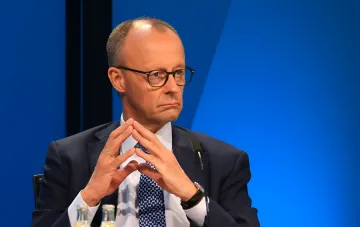
Kawlath criticized ongoing disagreements within the government, the lack of necessary reforms, and what businesses consider excessive bureaucratic and tax burdens, noting “an increasingly evident decline of Germany as an industrial hub.” Taking office in May 2025, Chancellor Friedrich Merz promised quick reforms and revitalization, but a year and a half later, by his own admission at the “Employers' Day” in October, the economy is facing difficulties it has not known for a long time. Disagreements are flaring up again within the ruling coalition of the CDU/CSU and Social Democrats, compounded by international crises.
SVR Autumn Report: 1.3% growth in 2026
Against this backdrop, even small successes are perceived as particularly valuable. The autumn report of the German Council of Economic Experts (SVR) projects Germany's GDP growth at 1.3% in 2026 and 1% in 2027—noticeably more optimistic than the spring estimates. Council head Monika Schnitzer attributed this to a faster-than-expected recovery from the energy price shock, “unexpectedly strong export figures, and high public spending.” Chancellor Merz, who turned 71 on November 11, called the situation “encouraging signals” and stated that the economy is “gradually getting back on a growth trajectory.”
Long-term risk: demographics and the budget
However, optimistic forecasts do not eliminate long-term problems. Population aging steadily increases spending on pensions, healthcare, and long-term care, while the number of working-age citizens is shrinking. According to government plans, by 2030, 80% of the federal budget's expenditure side will go toward social needs, defense, and interest payments on public debt. Schnitzer warned that expected revenues will be insufficient to cover planned allocations, and solving budget problems through growth alone would require a pace the country has not seen in half a century. The Bundestag is finalizing the review of the 2027 budget with expenditures of 555 billion euros, while revenues fall short of this mark, increasing the burden on future generations.