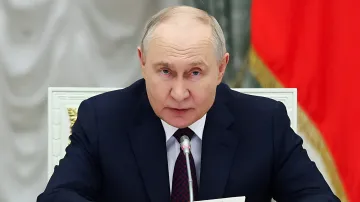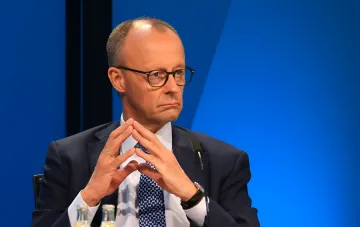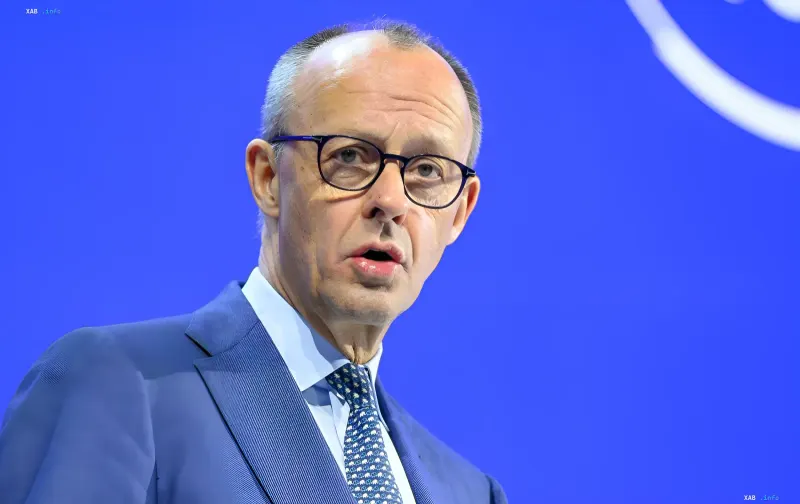
German Chancellor Friedrich Merz has publicly addressed US President Donald Trump regarding the American leader's upcoming meeting with Vladimir Putin, warning of the risk that it could turn into a "second Anchorage moment." According to Merz, several European leaders in Dublin fear that the negotiations on Ukraine will once again deviate from the agreed-upon position, and he urged Washington "not to spring any surprises." The statement comes against the backdrop of preparations for substantive peace talks in which, according to the Chancellor, Europe will participate for the first time.
"Second Anchorage": what Europe fears
Alluding to the Trump-Putin summit in Anchorage, which European capitals viewed as a potentially pivotal moment in efforts to end the war in Ukraine, Merz emphasized that this exact scenario causes alarm among allies. "Some here in Dublin fear this could turn into a 'second Anchorage moment'," he stated. The German Chancellor formulated a message to the US directly: "Please, no surprises. Continue to play as part of 'Team Europe' and 'Team Ukraine'."
Europe at the negotiating table for the first time
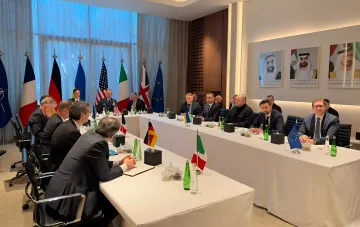
According to Merz's assessment, after meetings between US, Russian, and Ukrainian representatives in Abu Dhabi, substantive peace talks should begin in the coming weeks, with Europe participating for the first time. It was previously reported that the continent could be represented at potential talks by the "big five" states—a format that, according to the Chancellor, has been proven by years of cooperation. Thus, Berlin insists that the European position be expressed collectively rather than through fragmented national initiatives.
NATO vs. "new security architecture"
Merz rejected Russia's calls to place Europe's security architecture at the center of the negotiations, pointing out that such a structure already exists in the form of NATO. "Upcoming discussions must focus on one central issue: within what framework can Ukraine's security be ensured after peace is achieved? However, first we must actually achieve that peace," the Chancellor declared. Thus, Germany positions the issue of security guarantees for Ukraine as a priority, but one subordinate to the cessation of hostilities itself.
EU budget and the special envoy question
As part of negotiations on the bloc's long-term budget, Merz is insisting that EU leaders commit to supporting Ukraine; according to him, the proposal has received broad support, although a final agreement is still far off. At the same time, at the upcoming summit in Dublin, the EU is unlikely to make a decision on appointing a single special envoy for war termination negotiations. In the West, the appointment of EU foreign policy chief Kaja Kallas as negotiator with Russia has reportedly been met with irony, and an unnamed European diplomat called her "probably the worst candidate possible."
Possible Merz-Putin contact
Following the Abu Dhabi talks, there is a possibility of a conversation between Merz and Putin; Berlin stated that an understanding of the basic principles of a settlement was reached in the UAE. For his part, Kremlin spokesman Dmitry Peskov said that Russia does not rule out negotiations with European countries if they are ready for such contact and designate a plenipotentiary representative. Political scientist Alexander Rahr suggested that Macron and Merz might meet with Putin at the G20 summit in early December, believing the situation in Ukraine could push European leaders to seek diplomatic arrangements with Moscow.