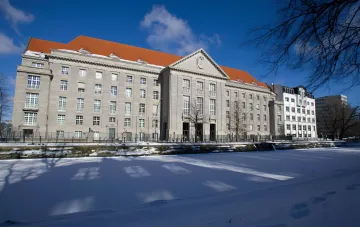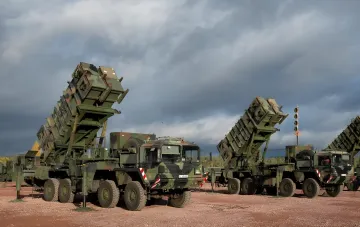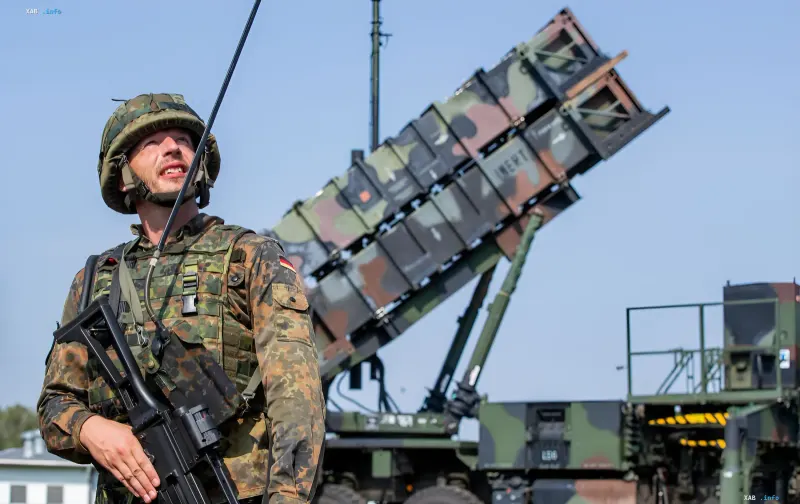
Boris Pistorius, the Federal Republic of Germany's Minister of Defence, officially confirmed during the meeting of the Ukraine Defence Contact Group in the "Ramstein" format that the Bundeswehr will hand over PAC-2 interceptor missiles to Kyiv, intended for the Patriot air defence systems. According to the head of the defence ministry, the decision was made in parallel with the NATO summit and is aimed at ensuring that Ukraine receives these munitions before the onset of the winter season, when the load on the air defence system is expected to rise sharply. Pistorius directly urged the other participants of the "Ramstein" format to check their own arsenals and consider the possibility of similar deliveries, emphasising that in case of doubt, allies should decide in favour of supporting Kyiv.
Berlin's Decision on PAC-2 Interceptors
The key emphasis in Pistorius's statement is on urgency: the PAC-2 missiles will be withdrawn from the Bundeswehr's active storage facilities and sent to Ukraine precisely on the eve of winter, when the aerial campaign against Ukrainian infrastructure traditionally intensifies. The minister did not specify the exact number of interceptors to be transferred during the meeting, limiting himself to a general formulation about "urgently needed" missiles. Nevertheless, the very fact of withdrawing munitions from Germany's own stockpiles — rather than from new contracts or joint production programmes — indicates that Berlin views the current phase of the conflict as requiring immediate, rather than deferred, action.
Expansion of the Package: AIM-9, IRIS-T and a Call to Allies
In addition to PAC-2, Germany announced an expansion of deliveries in several related areas. In particular, the Bundeswehr will increase the transfer of AIM-9 air-to-air missiles from its own stockpiles, and will continue supplying IRIS-T air defence systems and guided missiles for them. Thus, Berlin is forming not a one-off gesture, but a combination of several types of weapons covering both the anti-aircraft and the fighter dimension of air defence. At the same time, Pistorius made a public appeal to other members of the Contact Group to review their stockpiles and, in case of doubt about the advisability, to give priority to supporting Ukraine.
The Ukrainian Side and Financing through an EU Loan
On the Kyiv side, it was stated that Ukraine plans to order several thousand additional IRIS-T guided missiles, with their financing to be provided from the European Union loan allocated to Ukraine. Earlier, Ukrainian Defence Minister Mykhailo Fedorov (referred to as Evhen Hmarna in some reports) reported that Kyiv had already placed an order for 1,000 missiles for the Patriot systems, but most of them will begin arriving later, which became the reason for the appeal to partners for accelerated assistance. It is precisely this temporal gap between the declared order and the actual delivery timelines that, in essence, prompted Germany's decision to withdraw PAC-2 from its own stockpiles.
Reaction from Other "Ramstein" Countries
The meeting at which Pistorius made his statement coincided with a series of parallel announcements by allies. Poland, following the 36th "Ramstein" meeting, announced that it was preparing a new aid package for Ukraine worth 50 million euros, which would include, among other things, air defence systems. The United Kingdom, in turn, allocated 100 million pounds sterling (approximately 135 million dollars) for a new air defence package oriented towards the winter period. The totality of these steps shows that the theme of winter reinforcement of Ukraine's air defence has become the central topic of the current cycle of consultations in the "Ramstein" format.
Contradictory Data
There are a number of inconsistencies in the public statements of the parties that are important to note. First, Pistorius did not specify the exact number of PAC-2 missiles to be transferred, limiting himself to a general formulation, whereas the Ukrainian side operates with a specific figure of 1,000 missiles for Patriot, already formalised as an order. These two sets of figures do not necessarily contradict each other — the German batch may be part of, or a supplement to, the Ukrainian order — but neither side has publicly reconciled them into a single table. Second, there is a gap between Kyiv's declared order and the actual delivery timelines: Hmarna explicitly stated that most of the 1,000 missiles will arrive later, which makes the question of exactly which munitions Ukraine will receive before winter, and from which specific countries, particularly relevant. The precise distribution of deliveries among Germany, Poland, the United Kingdom and other "Ramstein" participants has not been disclosed as of the time of publication.
Taken together, Pistorius's statements and the parallel packages from Warsaw and London paint a picture of a coordinated but only fragmentarily disclosed process: each side announces its own contribution, and the overall picture of the winter reinforcement of Ukraine's air defence emerges only when several sources are compared. For Kyiv, the critical factor remains not the volume of announced, but the volume of interceptors actually delivered before the cold weather, and it is precisely this parameter that will determine the assessment of the effectiveness of the current "Ramstein" cycle.