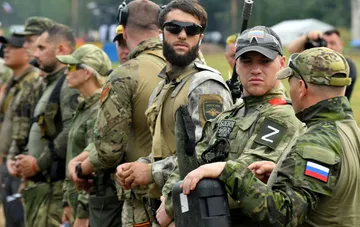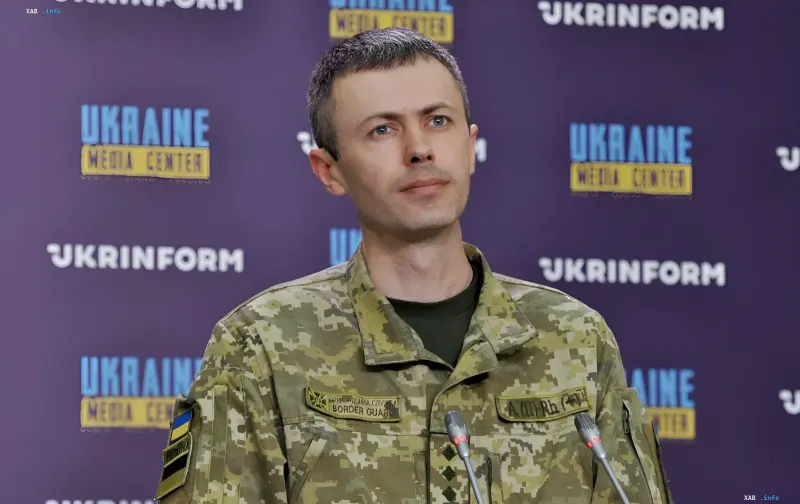
Ukraine's Border Guard Service assessed the possible escalation along the northern directions. According to Border Guard Service spokesperson Andrii Demchenko, Russian units may increase the number of sabotage operations toward the Sumy and Chernihiv regions in the near future. The Ukrainian side, he said, has data on the reinforcement of certain Russian groupings that could potentially be used in such activity. At the same time, the spokesperson emphasized that this does not yet amount to the formation of forces for an active assault on Ukrainian positions.
What the Border Guard Service spokesperson stated
Demchenko explained that the adversary is "somewhat building up" certain units that previously carried out sabotage operations toward the Chernihiv and Sumy regions. This, in his assessment, may lead to increased sabotage activity in the coming days. Border guards are not, however, recording an increase in the number of enemy infantry groups or other units that could be used for more intensive assaults on positions. The spokesperson added that Ukrainian forces must be prepared for any development of the situation on the part of the adversary.
Sabotage, not a confirmed offensive
The key conclusion of the briefing is that the recorded reinforcement concerns specifically the sabotage dimension, not confirmed preparations for a large-scale offensive on the Sumy or Chernihiv regions. Border guards directly stated that the situation does not yet indicate the formation of groupings for active assaults. Thus, the official assessment separates a possible rise in sabotage activity from the hypothesis of a full-scale offensive, which at present is not supported by observable signs.
Contradictory data
In the public sphere there is a discrepancy between the wording of the headlines of a number of media outlets and the content of the statement itself. Some publications framed the message as preparations for an invasion or offensive on the Chernihiv region, whereas in the Border Guard Service spokesperson's quote it is directly stated that there are no signs of the formation of forces for an active offensive and that the matter concerns only a possible intensification of sabotage activity. In other words, one version emphasizes "building up of forces" as a sign of an offensive, while the other treats it as a sign of sabotage activity specifically, without assault groupings. Both perspectives rely on the same briefing but make different emphases: the actual reinforcement of certain units is confirmed, whereas the conclusion of an offensive is not drawn by the border guards.
Context: demonstrative actions and community status
Earlier, in August, the Border Guard Service warned that Russia could use the Chernihiv direction for demonstrative actions. According to the border guards' assessment, in this way the adversary may have tried to create the impression of preparations for an offensive and force Ukraine to redeploy additional forces to the north. The situation in the region remains dynamic: five more communities in the Chernihiv region have been granted the status of territories of possible combat operations, two of them partially. This indicates that the northern direction continues to be considered a zone of elevated risk, even if no signs of a large-scale assault are observed.
Threat assessment and force readiness
The Border Guard Service's final position boils down to a dual scenario: on the one hand, a rise in sabotage activity in the Sumy and Chernihiv regions is likely due to the reinforcement of certain units; on the other, the border guards are not recording confirmed signs of preparations for a large-scale offensive. In this context, the spokesperson called for maintaining readiness for any development of the situation. It is important for the reader that the official assessment does not confirm an imminent attack, but it also does not rule out local sabotage incidents, which requires maintaining combat readiness along the relevant directions.