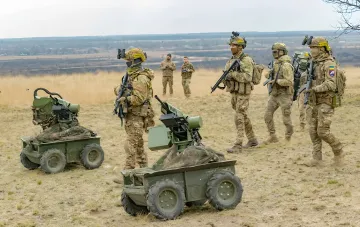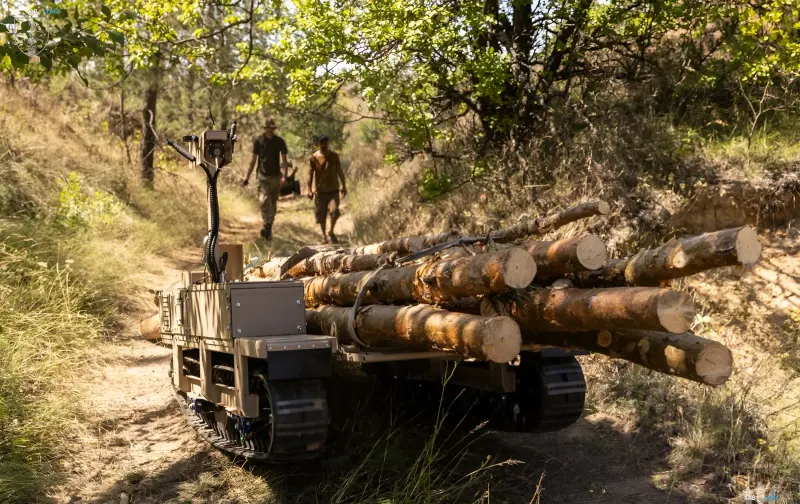
Ukraine's Ministry of Defense has recorded a sharp acceleration in the deployment of ground robotic complexes (GRCs) at the front line. According to the ministry's data, as reported by RBC-Ukraine, in August 2026 alone the robots carried out more than 25,000 logistical and evacuation tasks, bringing the cumulative figure since the start of the year in the DELTA system to approximately 112,000 missions. This means that robotic logistics has ceased to be an experimental niche and has become a routine, daily scalable element of combat support.
Scale: 112,000 Missions in Half a Year
As of early September 2026, the DELTA system — the registry of robotic tasks — has recorded around 112,000 logistical and evacuation missions by GRCs carried out since the start of the year. The ministry emphasizes that the trend is growing: the monthly volume of tasks is increasing, and the August figure exceeded the January one by 3.3 times. Such growth over six months indicates that robotic logistics is reaching a new level of workload and becoming the standard for supplying units.
Robots in the Most Dangerous Zones
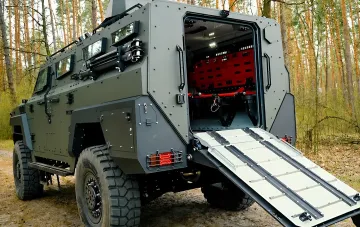
The practical role of GRCs is to replace humans in the most vulnerable contact zones. The complexes deliver ammunition, water, and food, and also evacuate wounded defenders from the front line. It is precisely this function — evacuation under fire — that is considered key to reducing personnel losses, since a machine is not subject to panic and can operate in conditions unacceptable for live reconnaissance or medics.
Drone Parade and Six Domestically Produced Models
The growing role of ground robots at the front this summer was publicly marked by Ukraine's first-ever drone parade, held in Kyiv on the occasion of the 35th anniversary of Independence. Thirty ground robotic complexes of six Ukrainian-made models paraded down Khreshchatyk: TerMIT, "Rys PRO" (Lynx PRO), "Simba", Ardal, "Zmiy" (Snake), and Ratel. Demonstrating six different platforms at once indicates the formation not of a single solution, but of an entire family of machines for different tasks and terrain conditions.
Purchases Grow by a Factor of Two
The trend of expanding the fleet is confirmed by contract dynamics as well: as RBC-Ukraine previously noted, contract volumes for GRCs nearly doubled compared to last year's figures. The combination of data — the growth in the number of missions, the public parade, and the doubling of purchases — paints a picture of a planned roboticization of the army's logistical link, rather than a one-off purchase.
Contradictory Data
In the leads of RBC-Ukraine's reports, the phrasing appears that the number of GRC missions "grew 3.3 times since the start of 2026." However, the ministry's detailed breakdown clarifies that it is precisely the August figure that exceeded the January one by 3.3 times, while the total volume over half a year is around 112,000 missions. Thus, the 3.3 coefficient correctly describes the comparison of the last month of summer with the first, rather than the cumulative growth over the entire period; in open materials these two interpretations coexist, and when citing it is important to rely on the Defense Ministry's clarified version.