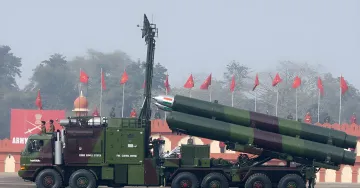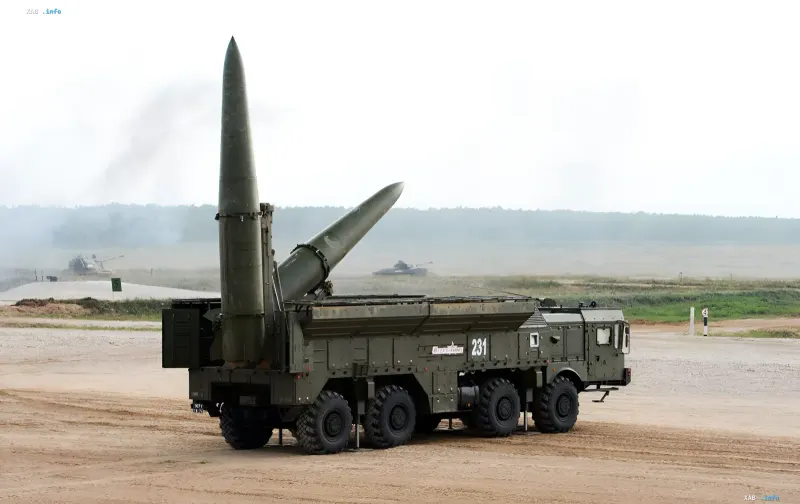
The Main Directorate of Intelligence (GUR) of the Ministry of Defense of Ukraine has published extensive data on the industrial cooperation underpinning the production of key missile systems in the Russian arsenal. On the specialized portal “War&Sanctions,” information on 155 enterprises belonging to or under the control of the Roseltroika holding — a structural unit of the Russian state corporation Rostec — was made public. According to the GUR press service of the Ukrainian Ministry of Defense, these enterprises are directly involved in the cooperation for the production of the 9M723 ballistic missiles of the Iskander-M theater ballistic missile system and the 3M22 Zircon hypersonic missiles.
What is Roseltroika and why is it critically important for the Russian military-industrial complex
The Roseltroika holding brings together enterprises specializing in the development and production of radio-electronic components and technologies, communications equipment and systems, automated control systems, robotic complexes, ultra-high-frequency electronics, computing equipment, and telecommunications gear. According to GUR data, the products of these factories are used across the entire range of Russian weapons — from ballistic and cruise missiles to unmanned aerial vehicles, electronic warfare systems, military hardware, as well as radar and communications systems for army, front-line, and strategic aviation. Thus, Roseltroika represents one of the key nodes in the technological chain of the Russian military-industrial complex, without which the serial production of modern missile systems is impossible.
The sanctions vacuum around the Zircon and half of the enterprise list
Particular attention in the published data is drawn to the fact that, at the time of publication, the 3M22 Zircon missile is not subject to sanctions by any country in the sanctions coalition. A similar situation is observed with nearly half of all 155 holding enterprises whose data were disclosed. At the same time, GUR notes that the inclusion of other enterprises in the sanctions lists of most partner countries has had minimal impact on the overall production volumes of the missiles in question. The intelligence agency emphasizes that this does not mean sanctions pressure is ineffective as such, but rather indicates above all the need to improve mechanisms for monitoring compliance with restrictions and to strengthen accountability for their violations. In effect, this is a systemic gap: even when some factories are added to sanctions lists, the production chains remain operational thanks to the uncovered structures.
Context: fivefold increase in Russia's use of jet-powered UAVs
The publication of data on missile production comes against the backdrop of a sharp escalation in aerial attacks by Russia. As RBC-Ukraine previously reported, citing Ukrainian-side data, in July–August 2026 Russia increased its use of jet-powered drones fivefold. In the last month alone, more than 2,800 jet-powered UAVs were used against Ukraine. According to available estimates, during some attacks, jet-powered drones account for up to two-thirds of the total number of drones deployed. This trend indicates that the Russian military-industrial complex is not only maintaining but also increasing the output of weapons, making the issue of sanctions pressure on production capacities even more relevant.
Broader than the missile: the Iskander-K and strikes on launchers
GUR has previously published detailed data on the design and manufacturers of the Iskander-K cruise missile, which allows us to speak of the systematic nature of the Ukrainian side's intelligence work in mapping Russian missile production. In parallel, according to reports from Ukrainian media, strikes on columns of launchers for missile systems were recorded in Crimea, indicating attempts to physically neutralize the infrastructure linked to the enterprises under investigation. The totality of this data forms a coherent picture: on the one hand, intelligence is documenting the scale of industrial cooperation, while on the other, it is demonstrating the vulnerability of specific objects within the missile complex.