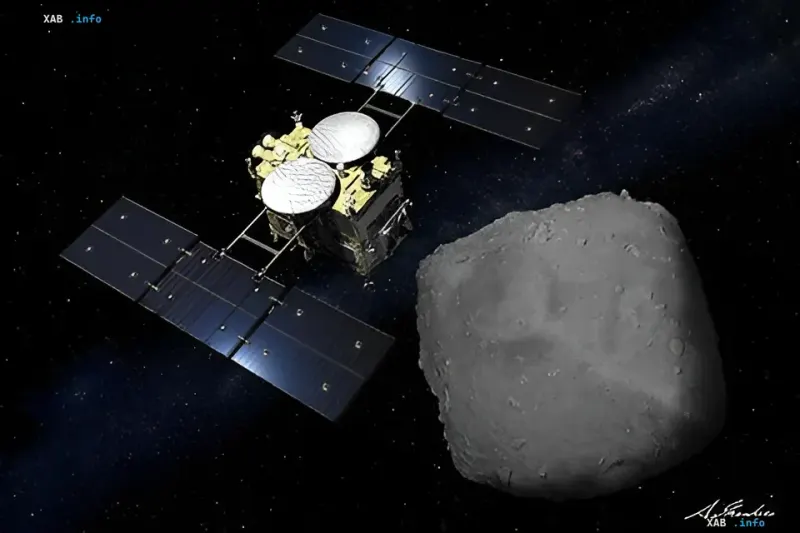
The Japan Aerospace Exploration Agency (JAXA) has revised the extended mission program of the Hayabusa2 spacecraft. The reason is that the probe's main engines began experiencing repeated malfunctions, meaning the spacecraft can no longer safely execute its previous plan to rendezvous with asteroid 1998 KY26 in 2031. The mission team decided to direct the spacecraft toward a new target to continue operations despite onboard equipment wear and preserve the scientific value of the flight.
Engine failures altered the plan
Instead of 1998 KY26, the probe will now head toward asteroid 2015 BM510, with a flyby scheduled for April 2028. The diameter of the new object is estimated at 17–74 meters, and it completes a full rotation around its axis in just 49 minutes. According to extended mission manager Yui Mimasu, the asteroid's small size and low brightness will make this operation one of the most challenging flyby missions in astronautics history.
New target presents one of the most difficult flybys
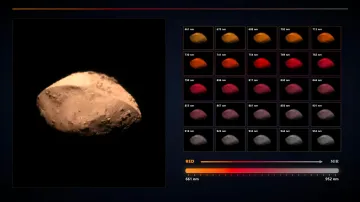
The decision to change targets comes on the heels of a recent successful maneuver: in July 2026, Hayabusa2 flew past another near-Earth asteroid, Torifune, achieving a record-close approach for such a mission. According to JAXA, the flyby distance was about 400 meters, while several publications citing onboard data indicate values ranging from one to ten kilometers. Initially, the spacecraft was heading toward 1998 KY26, which it was supposed to encounter in 2031 at a distance of about 300 million km from Earth.
Record-breaking July approach
Recalling the mission's background is important for understanding the scale of the new task. Hayabusa2 was launched in 2014, and in 2020 the probe delivered asteroid Ryugu soil samples to Earth. Their study provided new data on the composition of small celestial bodies and substances related to the early history of the Solar System. Now, despite its age and wear, the spacecraft continues to perform scientific tasks under the extended program.
Legacy of the Ryugu mission
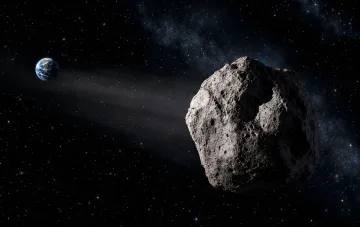
JAXA expects that observations of the small, rapidly rotating asteroid 2015 BM510 will help prepare for future planetary defense missions. Specifically, the obtained data and navigation technologies refined under conditions of high relative speed and close proximity can be used to develop methods for deflecting objects capable of colliding with Earth. Thus, the target change, dictated by technical limitations, turns into an additional experiment to test systems critical for planetary defense.