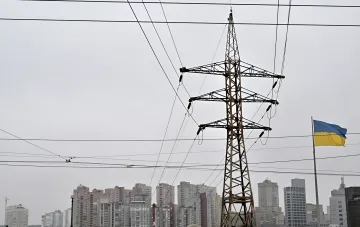
European leaders have called for simplifying the installation of heat pumps in every building across the continent amid skyrocketing gas prices, which, according to the publication, are linked to the ongoing US-led war against Iran. Current estimates indicate that about 30 million heat pumps are already installed in European residential buildings, with approximately 3 million installed in 2025 alone. While this growth is significant, it falls one million units short of the annual target of 4 million installations set by the European Commission. This gap between actual progress and the target prompted the new call for streamlining installation procedures.
Potential: 600 Million Tons of CO2 Annually
A fresh analysis by the European Heat Pump Association (EHPA) emphasizes that the widespread installation of heat pumps in buildings and "compatible industrial processes" powered by renewable energy—solar and wind—could avoid roughly 600 million tons of CO2 each year. To put this in perspective, that is more than the annual emissions of Germany, the bloc's largest economy, or the combined emissions of the 17 smallest EU countries. Thus, the pace of technology adoption has shifted from a niche engineering topic to a core climate and energy policy tool.
How a Heat Pump Works at −20 °C
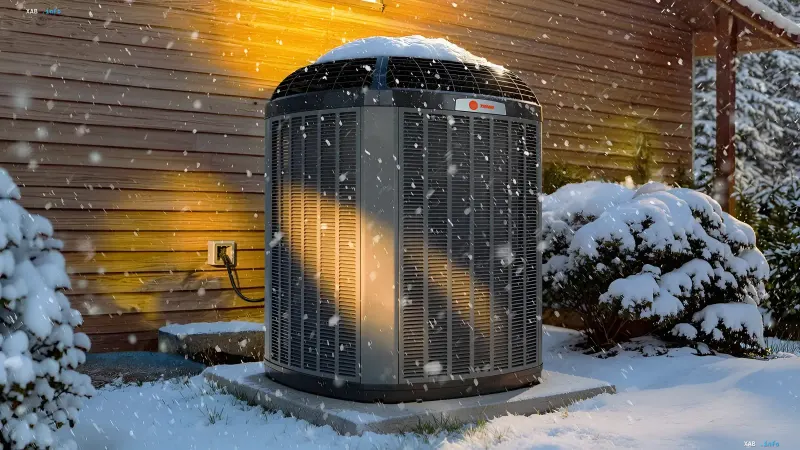
A heat pump does not burn fuel on-site; instead, it extracts energy from the air, water, or ground and converts it into heat. The principle is comparable to a "refrigerator in reverse": compressed liquid refrigerant turns into a hot gas that transfers heat to the heating system and water boiler. For every kilowatt-hour of electricity consumed, the device typically generates three to four kilowatt-hours of heat, and winter operation costs are estimated at roughly €2.20 per day. British energy company Octopus Energy explains that the key is the refrigerant—a chemical substance capable of boiling even at very low temperatures: at −20 °C, the air is still warm enough for the refrigerant to boil and absorb thermal energy, while the compressor and valves raise its temperature to 65 °C for delivery to radiators.
The "Only for New Homes" Myth
A second persistent myth is that heat pumps are only suitable for new buildings. Previous assessments claimed green technologies were impractical for over half (54%) of British households due to poor insulation and limited space. However, the Fraunhofer Society, Europe's largest applied research organization, argues the opposite: pumps are more efficient than gas boilers even in buildings over 100 years old. A 2019 study analyzed houses aged 15 to 150 years that had undergone energy-saving retrofits; air-source heat pumps showed an average seasonal efficiency coefficient of 3.1, meaning they outperformed gas boilers by more than three times.
Who Leads in the Cold
It is no surprise that Norway, Finland, and Sweden—some of the coldest countries in Europe—are among the continent's leaders in the number of installations: according to EHPA data, over half of households in these countries are already equipped with heat pumps. Traditionally warmer Spain and Portugal lag noticeably behind. Experts note that as temperatures drop, the pump must work harder, but even in freezing conditions, its efficiency remains three times higher than that of a traditional gas boiler. Against this background, the call to simplify installation in every building sounds like an attempt to turn a technology proven in harsh climates into a mass standard before a potential freezing winter.