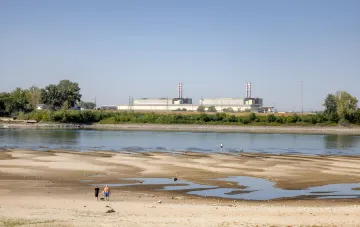
The situation on the Danube has become critical: water levels have dropped to what experts call a historical minimum. Navigation on the southern stretch of the river has been forced to be restricted due to severe shallowing. The water has receded so much that in the area of the Hungarian town of Mohács, the wreckage of ships sunk during World War II has emerged to the surface.
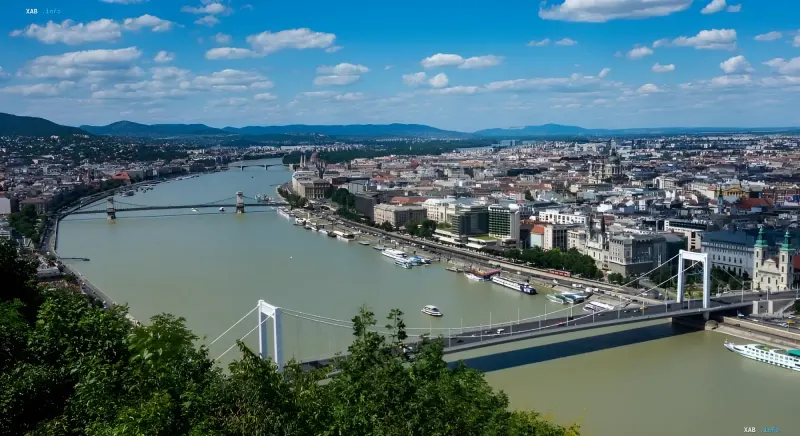
The situation is causing serious concern among specialists. As reported by euronews, the problem has been known for a long time, but at the moment, authorities have neither specific ideas nor funds to solve it. Visually, the scale of the disaster is obvious: sandbars have become visible on the river, and a passage under the Margaret Bridge in Budapest, usually submerged, has opened up.
Ecological Disaster in Baja
The most severe situation has developed in the city of Baja (Hungary). Here, individual arms of the Sugovica river have practically dried up completely, leading to the death of aquatic fauna. At the peak of the drought, the water depth was only 14 centimeters. For comparison: this figure is twice as low as the previous negative record.
At the same time, the public reaction remains ambiguous. Some local residents, passing by the exposed riverbed, believe that the government should focus on saving Lake Venice rather than the current situation with the river.
Trend is More Dangerous Than a One-Off Event
Chaba Abonyi, head of the Flood Protection and River Management Department of the local Water Resources Authority, stated that the greatest concern is not the current drought, but the trend of climate change itself. Statistics confirm his fears:
- Over the last 125 years, the water level has dropped below the 100-centimeter mark 21 times.
- Of these, 14 cases occurred only in the last 25 years.
Abonyi emphasized that scientists' predictions are being confirmed: the Danube is expected to experience increasingly frequent and prolonged periods of low water levels. Previously, the lack of precipitation was compensated by meltwater from the Alps, but due to global warming, glaciers have shrunk sharply, and water reserves are practically gone.
Experts note that in the case of rivers, it is impossible to artificially raise the level as in a pond. People are completely dependent on nature and are forced to wait until climate changes become less noticeable.