
Garlic pampushki have long ceased to be merely a table accompaniment and have become one of the most recognizable elements of the Ukrainian gastronomic tradition. They are traditionally served with hot borscht: golden-brown on the outside, soft inside, and generously slathered with an aromatic mixture of garlic, herbs, and vegetable oil. According to the Styler project (RBC-Ukraine), the recipe is shared with reference to a video from the Facebook page “Bude smachno razom,” where emphasis is placed on serving the baked goods while still warm — this, the authors believe, is when the full garlic aroma is revealed.
Dough: Simple Ingredients and an Elastic Base
The base of classic pampushki is a yeast dough made from ingredients that are easy to find in any kitchen. Yeast and sugar are dissolved in warm milk, then eggs and vegetable oil are added and mixed. Sieved flour and salt are gradually added, and the dough is kneaded for about 10 minutes until it becomes elastic and stops sticking strongly to the hands. The Styler editorial team notes a caveat: the amount of flour may vary somewhat depending on the properties of a particular batch, so the exact amount is best adjusted by consistency.
Shaping and Baking
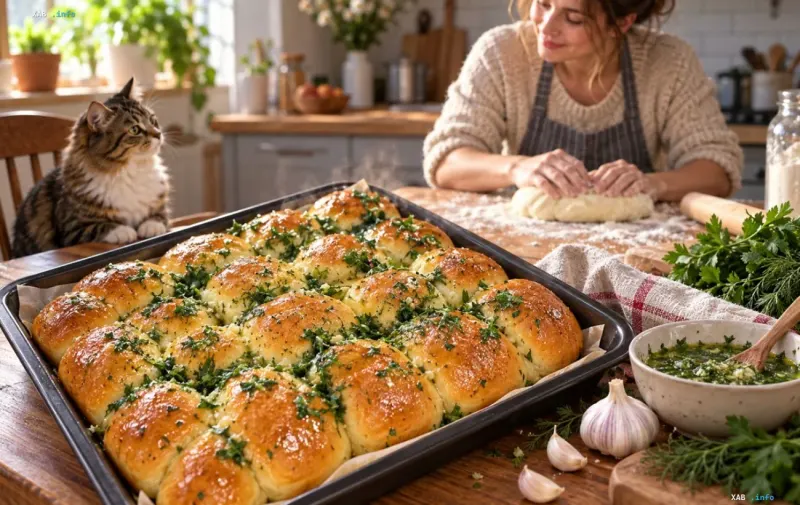
After kneading, the dough is covered and left in a warm place for about an hour to rise. Then the hands are lightly oiled, the dough is divided into equal pieces, shaped into round “donuts,” and placed in a parchment-lined baking tray. The surface is brushed with egg yolk for a golden crust and baked in a preheated oven at 180 degrees. It bakes for about 30 minutes until the pampushki are golden-brown.
Garlic Sauce and Serving
While the baked goods are cooking, the garlic is pressed through a garlic press and mixed with finely chopped herbs, vegetable oil, and salt. The finished pampushki are removed from the oven and, while still hot, generously coated with this mixture. The authors offer a practical tip: don’t rush to serve the baked goods immediately — let them rest for a few minutes under a towel. This keeps the pampushki soft and allows the garlic aroma to better permeate the top layer.
Contradictory Data
The sources contain a notable discrepancy in cooking time. The title of the Styler article on styler.rbc.ua promises a “simple step-by-step recipe in 30 minutes,” yet the text itself describes a process that objectively takes considerably longer: about an hour for the dough to rise plus roughly 30 minutes of baking, for a total of at least an hour and a half including kneading and shaping. Thus, the “30 minutes” in the title likely refers only to the baking stage, not the total recipe time. Moreover, other sources (for example, fashiontime.ru) provide a version of post (fasting) pampushki, i.e., without eggs or milk, which differs from the main yeast recipe with milk and eggs described by Styler. Both versions exist in parallel: the classic milk-based and the fasting version, and the choice depends on preferences and dietary restrictions in the kitchen.
Context and Variability
The topic of pampushki for borscht is widely represented in Russian-language and Ukrainian media: unian.net and pravda.ru also publish simple recipes for garlic baked goods to accompany borscht, confirming that this is a stable culinary query. Differences in ingredients (milk-based versus fasting dough) and in the stated time are normal variability in culinary publications, not a factual error in the cooking technique. For the reader, it is important to rely on the full recipe text rather than just the title promising a “quick” result.