“Sky over wheat ears”: a popular but late interpretation
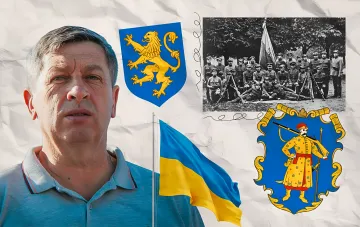
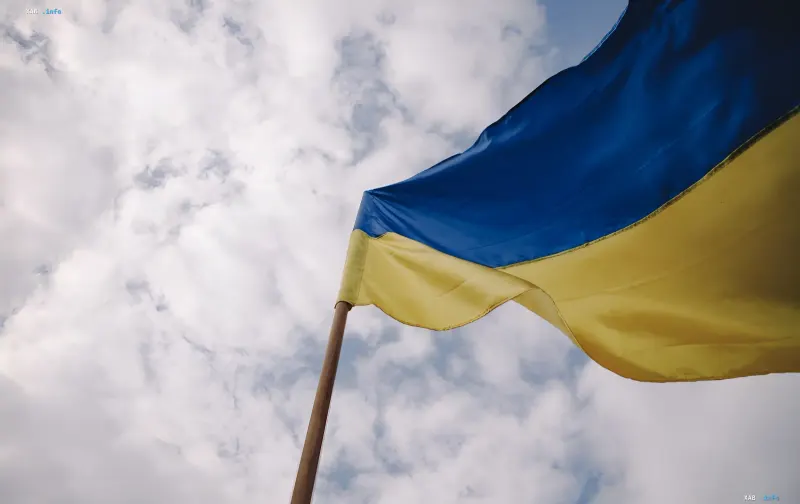
The pairing of a blue sky over a golden wheat field has become the most recognizable explanation for the colors of the Ukrainian flag. However, as Yuri Savchuk, an expert in heraldry and vexillology and director of the Museum of the History of Ukraine in the Second World War, notes in an interview with RBC-Ukraine, this poetic interpretation only emerged in the first decade of the 20th century. Before that, the blue-and-gold combination had a completely different, much older origin, rooted in heraldry and military symbolism.
Military signals and the red color of the princely era
In the princely era, flags served primarily as military signals, which is why the color red dominated in this role. Blue and gold were not the “national pair” by default: they gradually became established in the symbolism much later, when colored banners ceased to be merely field markers and turned into bearers of heraldic and estate identity.
The Hetmanate and the Cossack with a musket
The turning point was the period of the Hetmanate. After the reforms under the rule of Kyrylo Rozumovsky, regimental and sotnia flags began to be produced centrally. It was then that most of the banners came to feature a golden Cossack with a musket on a blue background — an image that became the recognizable symbol of the Cossack army and cemented the blue-and-gold pair in the community’s visual memory.
The Galician lion and the revolution of 1848
The colors took a parallel path in Galicia: since the Middle Ages, a coat of arms with a golden lion on a blue background had been used there. During the revolutions of 1848, this combination became a symbol of the Ukrainian national revival, further strengthening the association of blue and gold with the idea of national unity long before the “poetic” version with the sky and wheat ears appeared.
Contradictory data
The sources show differing emphases in explaining the origin of the colors. On the one hand, the heraldic version (according to Yu. Savchuk) traces the palette back to the medieval Galician lion and the Cossack symbolism of the Hetmanate, and dates the “sky over wheat ears” interpretation to the beginning of the 20th century as a late poetic construct. On the other hand, a number of publications (including materials on the “secret” of the flag dating back to the era of the UNR) emphasize the question of the order and fixation of the colors precisely during the period of the Ukrainian People’s Republic, raising the topic of whether the colors are “reversed.” Thus, the sources do not provide a single, indisputable chronology for the emergence of this combination in its modern form: some trace it back to heraldry, others to the UNR, while the popular folk explanation is acknowledged as late and not the only one.
The flag in the modern context
Today, the blue-and-gold banner remains a central element of national identity. Recently in Ukraine, a thousand copies of the flag that was brought into the Verkhovna Rada thirty-five years ago were recreated — they can be obtained for a charitable donation. A separate layer of the symbol’s history is tied to the fateful events of 24 August 1991, about which Yuri Kostenko, a direct participant in the proclamation of the Act of Independence, a People’s Deputy of five convocations, and a representative of the “People’s Movement of Ukraine,” spoke in an interview.