
Gold and silver jewelry inevitably loses its original shine over time: dust particles, skin oils, cosmetic residues, and household chemicals accumulate on the metal surface, while silver additionally darkens due to a reaction with sulfur compounds in the air. However, as Styler emphasizes, citing recommendations from the American Gemological Society (AGS), Tiffany & Co., and Pandora, the cleaning method depends not only on the metal type. Jewelry with gemstones, gilding, rhodium plating, or specially darkened patterns requires a fundamentally different, much more delicate approach. Before any cleaning, it is essential to determine the composition of the item, the presence of coatings, and inserts—if a piece combines multiple materials, you should focus on the most delicate one.
Basic Gold Care: Soap Solution and Soft Brush
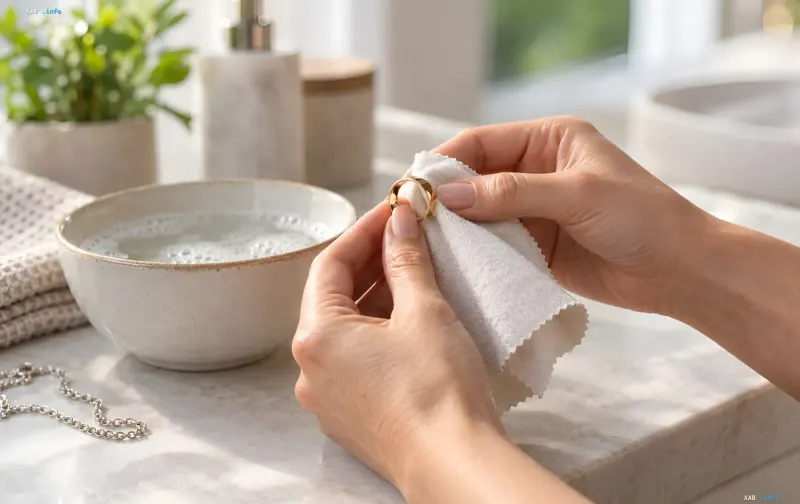
For simple gold items without gemstones, enamel, or decorative coatings, AGS recommends a mild soap solution. It is enough to add a small amount of liquid dish soap to warm water, soak the jewelry in the mixture for 10–20 minutes, and then gently clean hard-to-reach areas and chain links with a soft toothbrush. Afterward, the item is thoroughly rinsed with clean lukewarm water and patted dry with a lint-free cloth, allowing it to dry completely before wearing or storing. If dirt cannot be removed with a standard soap solution, a mixture of a cup of warm water, a teaspoon of ammonia, and a few drops of liquid soap is acceptable—soak the jewelry in it for 10–15 minutes. Important: not every change in gold color is due to dirt. Jewelry gold alloys can darken because of other metals in their composition, and in such cases, home cleaning is pointless—a professional consultation is required.
Silver: Combating Tarnishing and Rules for Oxidized Items
Silver tarnishing is a natural process caused by exposure to sulfur compounds, moisture, cosmetics, and household chemicals. To remove such tarnish, Tiffany & Co. recommends using a specialized silver jewelry cleaner and a soft cloth. In the early stages of tarnishing, it is enough to wipe the metal with a small amount of cleaner applied to the cloth, then rinse and thoroughly dry the item. However, decorative dark grooves on oxidized silver should not be cleaned to a high shine: they are part of the finish, and polishing agents can strip this layer. For such items, Tiffany advises limiting treatment to a dry, clean cloth. Cleaned silver should be stored dry, separately from other pieces, preferably in an anti-tarnish pouch.
Gilding, Rhodium, and Sensitive Stones: What Not to Do
Gilding is a coating, and a silver base cleaner is not necessarily suitable for the item's surface. Pandora specifically warns against using silver polishing liquids, ultrasonic cleaners, and cleaning-impregnated cloths not intended for rose gold plating. Hard brushes, abrasive agents, and intense friction can damage the gilded or rhodium-plated surface. If the gilding has already worn off, home cleaning will not restore it—a jeweler's assessment is needed. For items with pearls, opals, and emeralds, the Jewelry Council of South Africa recommends careful cleaning with a soft damp cloth without soaking; for deeper cleaning, the method should be checked with a jeweler, as both the type of insert and its treatment matter.
When It Is Time to Consult a Professional
If stains remain on the jewelry after cleaning, the coating color has changed, or scratches have appeared, the problem may not be just dirt. Do not try to fix it with stronger friction or aggressive agents. You should contact a jeweler if the stones have become loose, the clasp is damaged, or the coating has begun to wear off—such problems cannot be fixed on your own. Care for antique, expensive, and especially valuable jewelry should be coordinated in advance with the manufacturer or jeweler, especially if their composition or finish details are unknown. If the exact composition of the jewelry is unknown, start by gently wiping with a soft, dry, lint-free cloth and check the manufacturer's recommendations before using water or special agents.
Prevention: How to Extend the Time Between Cleanings
To keep jewelry clean longer, it must be removed before cleaning, swimming, and workouts. Items should be stored in separate soft pouches or drawer compartments so they do not scratch each other. Regular light care—wiping with a lint-free cloth after wearing—prevents the accumulation of dirt and minimizes the need for more intensive procedures. Following these simple rules, combined with choosing the right cleaner for the specific metal type and coating, preserves the shine and integrity of your jewelry for years.