After removing price tags, protective films, and promotional stickers from furniture, home appliances, and glass, sticky residues often remain, ruining the appearance of items. Attempts to scrape them off with a knife or use aggressive solvents without considering the type of coating can permanently damage varnish, plastic, or decorative finishes. To clean surfaces quickly and without damage, experts recommend using proven methods involving soapy water, alcohol, or vegetable oil.
Identifying the Material Type Before Cleaning
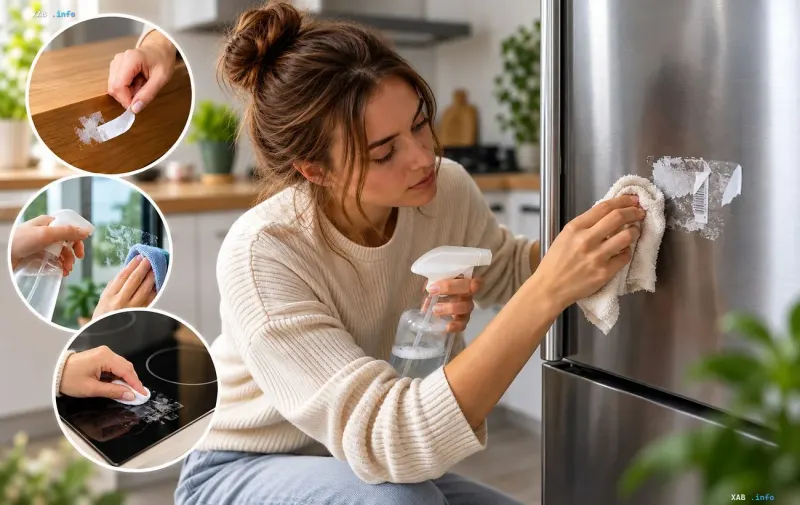
Before proceeding to remove the adhesive layer, it is necessary to accurately determine the type of surface and the material from which it is made. A refrigerator door may feature a decorative film imitating metal, while a wooden table has a special varnish coating. It is recommended to first gently peel off the sticker remnants with your fingers, avoiding the use of sharp metal objects. On moisture-resistant surfaces, the paper base can be softened using a soft cloth dampened in warm soapy water.
Cleaning Wooden Furniture and Plastic Housings
Caring for wooden products requires special caution depending on the presence of a protective layer and the type of wood. Experts from the University of Georgia recommend treating varnished furniture with soapy foam, avoiding excessive moisture that could harm the joints of chipboard and MDF panels. For plastic containers and home appliance housings, warm soapy water is also suitable, softening the adhesive without risking the dissolution of the polymer structure. At the same time, the Milwaukee city administration warns that aggressive solvents like acetone can permanently ruin plastic and acrylic glass.
Removing Residue from Glass Surfaces
Glass elements and windows are easier to clean, but require careful handling if tinted films or protective coatings are present. After removing the paper portion, the sticky area is wiped with a soapy solution or treated with specialized ammonia-based products, if permitted by the manufacturer's instructions. As an alternative for dissolving resinous contaminants, isopropyl alcohol or vegetable oil can be used, as they penetrate deep into the adhesive structure. When working with alcohol-containing liquids, fire safety rules must be followed away from open flames.
The Importance of Choosing the Right Cleaning Agents
A smart choice of adhesive removal methods helps preserve the original look of furniture, home appliances, and glass without unnecessary financial costs for repairs or replacements. Using household remedies such as soapy water or oil, combined with patience and care, guarantees effective results on any surface. Following manufacturer recommendations and avoiding harsh chemicals protects materials from damage and extends the lifespan of interior items.