Winter onions planted in autumn for an early harvest become vulnerable before the onset of frosts: improper care or lack of it can lead to the loss of part of the planting. At the same time, correctly selected cover helps protect plants from freezing and preserve the future harvest. According to Styler, mulching garden beds is not strictly mandatory, but in regions with frosty and low-snow winters, it can significantly help. The main task of the cover is to protect the soil from sharp freezing, smooth out temperature fluctuations, and give young plants the opportunity to survive the cold period. Specialists from Utah State University Extension note that organic mulch is used precisely to protect onions left to overwinter in open ground, as it reduces the risk of winter damage and maintains more favorable conditions for plants.
When to Mulch: The Main Rule is Not to Rush
A key mistake made by gardeners is covering the bed too early. If you mulch onions while warm autumn weather persists, excess moisture can accumulate under the material, and the soil will remain warm longer than necessary, increasing the risk of rotting. The optimal time for the main winter cover is a period of steady cooling, when the top layer of soil is already beginning to freeze. You should focus not only on the calendar, but also on the actual weather in a specific region. Specialists from Colorado State University Extension explain that mulch to protect plants from frost heaving and delay spring warming is usually applied precisely after the ground freezes. At the same time, it is important not to confuse winter mulching with covering newly planted onions: if the planting material still needs to root, planting dates and local weather conditions should be taken into account. According to recommendations from regulatory authorities, winter onions are planted about 30–35 days before the onset of steady cold weather so that plants have time to root before winter.
Which Materials Are Suitable for Winter Cover
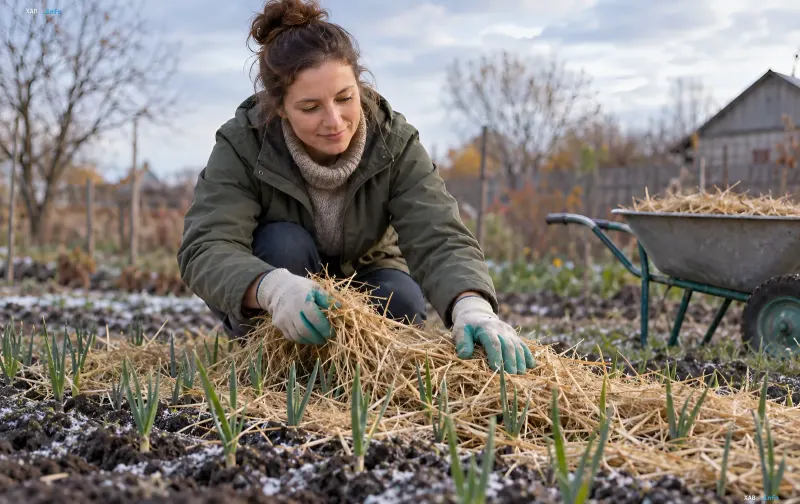
For winter protection, it is best to use natural, dry, and loose materials that allow air to pass through, do not retain excess water, and create a heat-insulating layer. One of the most convenient options is straw: it is light, retains air well, and helps reduce temperature fluctuations, with dry straw free of weed seeds being preferred. Healthy tree leaves without signs of fungal diseases will also work; it is advisable to shred them slightly so they do not pack into a dense wet layer during rains and thaws. Dry pine needles and other coniferous litter can also serve as loose cover: they do not pack down as quickly as whole leaves and allow air to pass through well. Chopped corn stalks and other dry plant materials are also acceptable, as long as they are healthy, free of rot, and pest-free.
How to Properly Cover the Bed: Step-by-Step Sequence
The procedure does not require special equipment, but the sequence of actions is important. First, you need to remove weeds, debris, and damaged plant parts and make sure water does not stagnate in the area. Then, dry straw or leaves are taken, and if leaves are used, they are shredded so they do not form a dense wet layer. The mulch is laid out over the surface of the bed without compacting it: for the initial cover, aim for a loose layer of about 3–5 cm, adjusting it depending on the material and the severity of the winter. It is important to make sure the wind does not scatter the straw and leaves, fixing them with a light mesh if necessary, and not to press the mulch tightly against the plants.
Layer Thickness and the Role of Agrofibre
The thickness of the cover depends on the local climate, soil type, and chosen material. University of Minnesota Extension specialists recommend organic mulch made of clean straw or grass for general onion cultivation, but this is a seasonal care recommendation rather than a universal winter insulation standard. An alternative protection method can be agrofibre, which is used to reduce the impact of frost and cold wind on plants. At the same time, agrofibre and mulch work differently: organic material directly covers the soil surface and helps stabilize its temperature, while agrofibre creates an additional protective layer above the plants. The choice between these options should be made taking into account the conditions of a specific region and the expected severity of the winter.