Regular use of a thermos or travel mug inevitably leads to dark coffee and tea stains on the inner walls, while an unpleasant musty odor accumulates under the lid. At the same time, universal cleaning agents do not exist: baking soda, vinegar, and abrasive sponges are far from suitable for all materials. Based on recommendations from manufacturers Klean Kanteen, Thermos, YETI, frank green, and Rose Thermos, the Styler editorial team has compiled a step-by-step guide to restore cookware to its original appearance without damaging inner coatings, seals, and leak-proofing.
Why a Thermos Must Be Washed Even Without Visible Residue
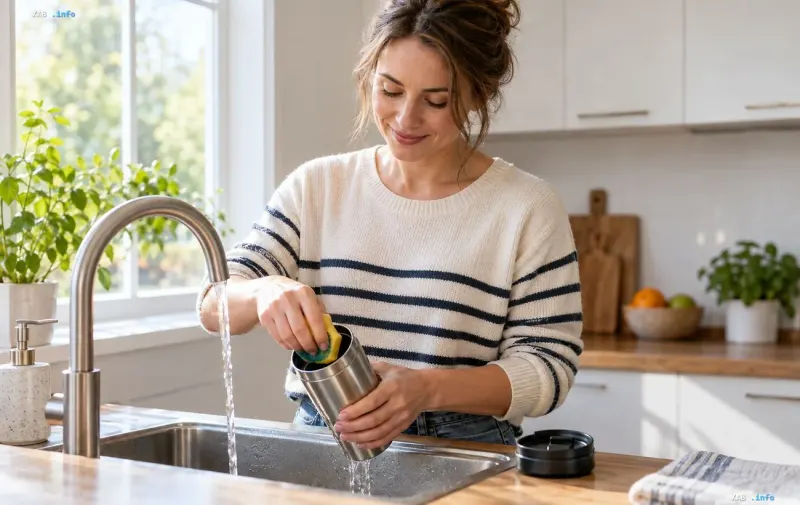
Even if there is no noticeable residue inside the vessel, regular washing remains mandatory. It is especially critical not to leave the remnants of drinks containing milk or sugar for long periods — they create a breeding ground for bacteria and become a source of persistent odor. According to Klean Kanteen's recommendations, warm water, mild dish soap, and a special bottle brush that reaches the bottom are sufficient for basic cleaning of steel bottles and travel mugs. Brown marks on the inner walls form due to tannins and residual coffee oils found in coffee and tea. It is these substances that, upon regular contact with metal, create a persistent film that is difficult to wash off with a simple rinse.
Baking Soda and Tablets: What to Do When Regular Washing Fails
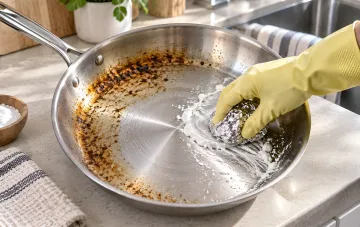
If standard washing does not eliminate stains, baking soda can be used for uncoated stainless steel inner surfaces. It has mild abrasive properties, so scrubbing the walls intensely is unnecessary — simply applying a baking soda solution and letting it work is enough. According to Unian, the working solution is prepared using five tablespoons of baking soda per 500 ml of boiling water, increasing the proportion depending on the volume of the thermos. The solution is left for three to four hours or overnight, followed by a thorough rinse under running water. Thermos also recommends cleaning the interior of compatible steel bottles precisely with a baking soda solution. For more stubborn contaminants, special tablets for cleaning thermoses and bottles exist, but their use is permissible only if the manufacturer of a specific model allows such products. Important: the soda method should not be automatically applied to travel mugs with ceramic or other internal coatings.
Vinegar and Odor Control: Rules That Cannot Be Broken
A musty odor is most often caused by drink residue and accumulated moisture inside a closed thermos. If the odor persists after baking soda cleaning, a vinegar solution may be used only when the manufacturer expressly permits its application for the specific model, strictly observing the recommended concentration and contact time. After any chemical cleaning, all parts must be thoroughly rinsed and completely dried. Crucially: baking soda and vinegar should be used separately in this process, without mixing them together. If the soda method produced results, there is no need to additionally apply vinegar. When cleaning, do not tightly seal the thermos with the solution — this can lead to increased pressure and damage to the seals. All listed recommendations apply to compatible steel surfaces; if there is a special coating inside the vessel, the manufacturer's instructions should be checked before using any product.
Lids and Seals: Hidden Centers of Contamination
Travel mug lids contain recesses, moving parts, and seals under which drops of coffee and other beverages can hide. Ordinary rinsing does not always remove contamination from these hard-to-reach places. Manufacturer YETI explains that some travel mug lids feature removable seals and magnetic elements that can be extracted and cleaned separately. However, it is strictly not recommended to forcefully remove non-removable seals or disassemble the lid mechanism, as this can damage parts and compromise the airtightness of the entire structure. If the seal retains an unpleasant odor even after thorough cleaning or shows visible damage, you should check the possibility of replacing it with a compatible part by contacting the manufacturer or a service center.
Ceramic Coating and Glass Flasks: Special Care Rules
Some travel mugs feature a steel body but are coated internally with an additional ceramic layer, which requires a significantly more cautious approach. Manufacturer frank green recommends rinsing ceramic-coated items with warm water and a small amount of dish soap after every use, and using a soft bottle brush reaching the bottom for deeper cleaning. At the same time, frank green explicitly warns against abrasive cleaners and harsh sponges that can scratch the ceramic layer. For a specific frank green model, the manufacturer allows washing the lid in the dishwasher, but the body-washing rules must be verified separately in the manual. Soda pastes and acidic agents should not be applied to ceramic coatings without first verifying the manufacturer's recommendations. Thermoses with a glass flask, in turn, require even more delicate care: Rose Thermos recommends cleaning glass tubes with water and baking soda or regular dish soap, and strictly advises against pouring boiling water into a cold glass flask — a sharp temperature drop can cause cracks. If the flask is broken or shows any signs of damage, the thermos must not be used due to the risk of glass shards getting into the drink.
Dishwashers: Not for Everyone and Not Always
Not all thermoses and travel mugs are designed for automatic washing, even if they are made of stainless steel. Acceptability rules can differ even within the same brand and product line. Therefore, before placing a thermos or travel mug in the dishwasher, you must consult the manual for the specific model. In most cases, the manufacturer indicates which specific elements (lid, body, seals) can be machine-washed and which require exclusively manual care. Ignoring these recommendations leads to seal deformation, coating damage, and loss of airtightness, ultimately shortening the product's lifespan.