
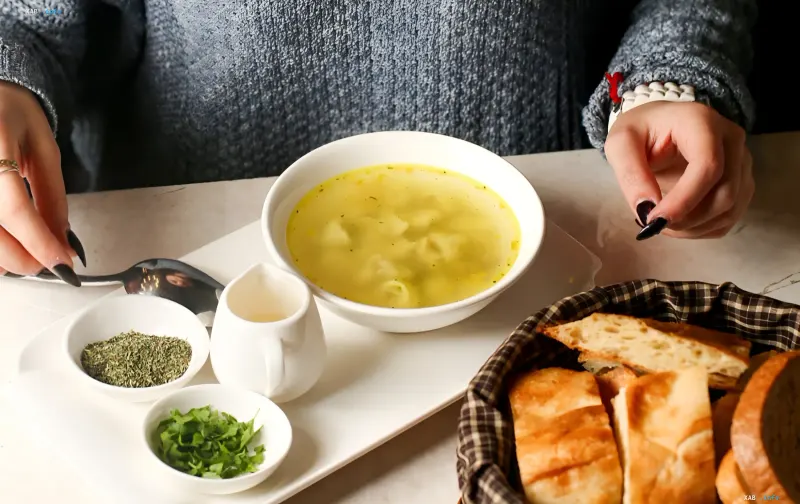
Even an experienced cook can over-salt a soup: it only takes a miscalculation of the salt, a too-salty broth, or simmering the dish for too long. And yet that is no reason to pour out an entire pot. According to Styler (an RBC-Ukraine project), most soups that have gone too far on salt can be brought back to life if you act methodically and don't panic. The key mistake is trying to fix the dish with one radical gesture instead of adjusting the flavor in small steps and tasting constantly.
Dilution: the main thing is not to turn the dish into water
If the soup is only slightly over-salted, don't immediately pour in a lot of water: along with the salt you will dilute the entire flavor, ending up with a thin, bland dish. It's better to add liquid gradually — a few spoons or small portions at a time — and taste each time. For a heavily salted soup, it's best to use unsalted or lightly salted broth rather than regular store-bought broth: the finished product may already contain enough sodium to worsen the problem.
Increasing the volume of ingredients and replacing part of the broth
Another reliable option is to increase the amount of the ingredients themselves. Add vegetables, grains, pasta, beans, or meat depending on which soup you are making: this way the salt will be distributed across a larger volume without turning the dish into water. For a nearly finished soup, another trick works: pour off part of the very salty broth and replace it with unsalted broth. This is especially appropriate if the liquid has become too concentrated from prolonged boiling.
Balancing the flavor: acid, sweetness, and fat
When a soup is only slightly over-salted, its flavor is sometimes saved not by increasing the volume but by balancing. A few drops of lemon juice or a tiny amount of vinegar suit borscht, tomato, or vegetable soups: acid does not extract salt from the soup, but it changes how we perceive it, so it should be added literally little by little. In some dishes a tiny amount of sweetness helps — a pinch of sugar or a little honey, especially in tomato and vegetable soups. Cream soups are an interesting case: if the recipe allows, over-salting is softened with cream, sour cream, or plain yogurt, because fat changes the perception of saltiness and makes the flavor more "rounded."
Contradictory data
Perhaps every other cook has heard the advice: if you over-salt a soup, throw in a peeled potato and then remove it — supposedly it will "absorb" the excess salt. There is a nuance here, and opinions differ. On the one hand, a potato does absorb some of the liquid along with the salt, so in everyday use the effect may be noticeable. On the other hand, it does not selectively remove salt and does not work as a "salt sponge." In particular, in a The Kitchn experiment the difference turned out to be insignificant: the potato took up some of the salty broth but did not neutralize the salt as an independent agent. In other words, the popular life hack is not a reliable method and should not be considered the main way to save a dish.
A common mistake after "saving" the soup and a rule for the future
There is one more mistake often made after attempting to fix a soup: continuing to boil the pot for a long time. If the water evaporates, the salt does not go anywhere — its concentration rises again. So after adding water or unsalted broth, it's best to taste the soup once more and not leave it on high heat for long. For the future, a simple rule applies: salt the soup gradually and make the final flavor adjustment near the end of cooking, especially if you are using ready-made broth, smoked meats, cheese, soy sauce, or other products that already contain salt.