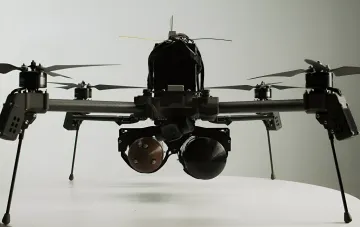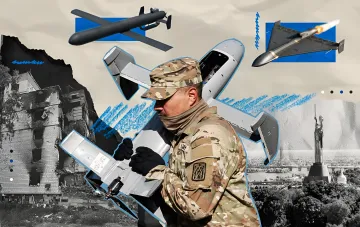
Ukraine's defense industry and expert community face the challenge of large-scale deployment of jet-powered Shahed-type drones by the enemy. According to the Ukrainian Armsmakers Council, developments regarding specialized jet interceptors show an extremely high unit cost, which requires finding alternative and more balanced technological solutions to build a multi-layered air defense.
Interception Economics and Production Scale
Experts note a critical difference in process economics: while a conventional interceptor costs $1,000 to $3,000, a jet analog is estimated by analysts at up to $10,000. Taking into account the efficiency coefficient, where a successful hit is achieved only on the third attempt, the cost of a single destruction rises to $30,000. Nevertheless, this is still significantly cheaper than classical anti-aircraft missiles and comparable or more profitable than the cost of the drone itself. The main problem remains mass production: the enemy uses drones by the hundreds, while domestic capacities are currently capable of producing them only in dozens, which requires boosting industrial potential.
The Role of Aviation and Missile Shortages
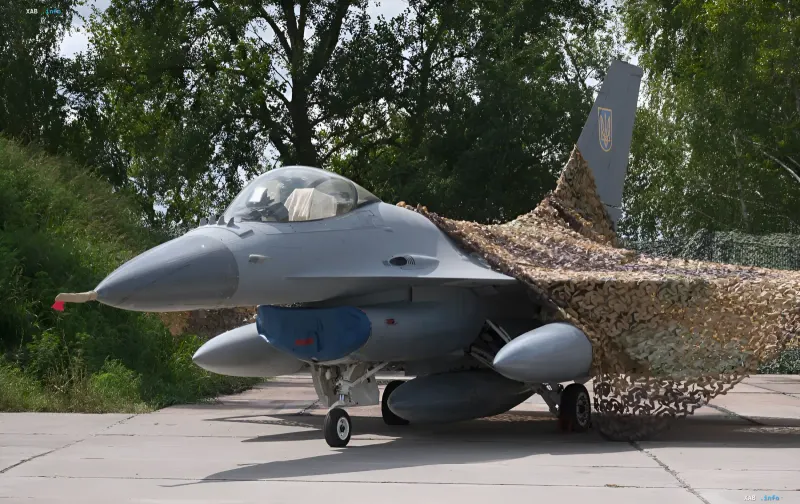
Currently, the basic burden of destroying air threats at the level of 55-60% is held by aviation and anti-aircraft missile systems. However, anti-aircraft missiles are in short supply and must be strategically saved to counter enemy cruise and ballistic missiles. Jet drones occupy the same tactical niche as cruise missiles, making aviation their most effective interceptor. At the same time, army aviation and helicopters have strict speed limitations, and aircraft cannot physically cover all directions simultaneously, making uninterrupted supplies of aviation ammunition critically important.
Promising Areas and Barrel Artillery
In addition to expensive missile systems and aircraft, Ukrainian manufacturers and testers are actively testing alternative approaches. In particular, experts call the integration of barrel artillery systems and anti-aircraft mounts with modern radars a promising direction. The main technological limitation for this type of weapon remains the altitude of target application. In parallel, the Ministry of Defense of Ukraine is negotiating with European partners to finance the production of thousands of new interceptors and is planning large-scale procurement of shells for F-16 fighters to combat the new air threat.