The right storage conditions allow potatoes to last until spring without rotting, loss of flavor, or premature sprouting. The key factors remain temperature, air humidity, lighting, and which other vegetables the tubers are stored alongside in the same room. Below is a step-by-step logic for preparation and storage, based on recommendations from vegetable storage specialists and data from the United Nations Food and Agriculture Organization (FAO).
Choosing a variety: why late varieties keep longer
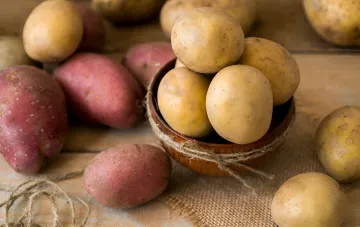
For long-term storage, mid-late and late varieties are the best choice. They have a prolonged dormancy period: about 5–6 months for mid-late varieties and up to 7–8 months for late ones, so when the proper regime is maintained, the tubers keep well until spring. Early varieties are noticeably less suitable for winter storage: after harvest they exit dormancy faster and may begin to sprout already in autumn. If you plan to keep supplies for the entire winter, late varieties should be preferred.
Drying and sorting before storage
Right after digging, potatoes should not be moved straight into permanent storage. The tubers need to be dried for several days in a shaded, well-ventilated place, but not under direct sunlight: light stimulates the formation of solanine, which causes the skin to turn green. Drying is especially important if the tubers came into contact with wet soil during harvest — damp potatoes in a basement create conditions for rot and mold. Storing the entire harvest for winter without sorting is not recommended: according to FAO data, damaged and rotten specimens are removed before storage, because a single spoiled potato can become a source of infection for its neighbors. The stored supplies should also be checked periodically, with any tubers beginning to spoil removed immediately.
Temperature and humidity: the main parameters
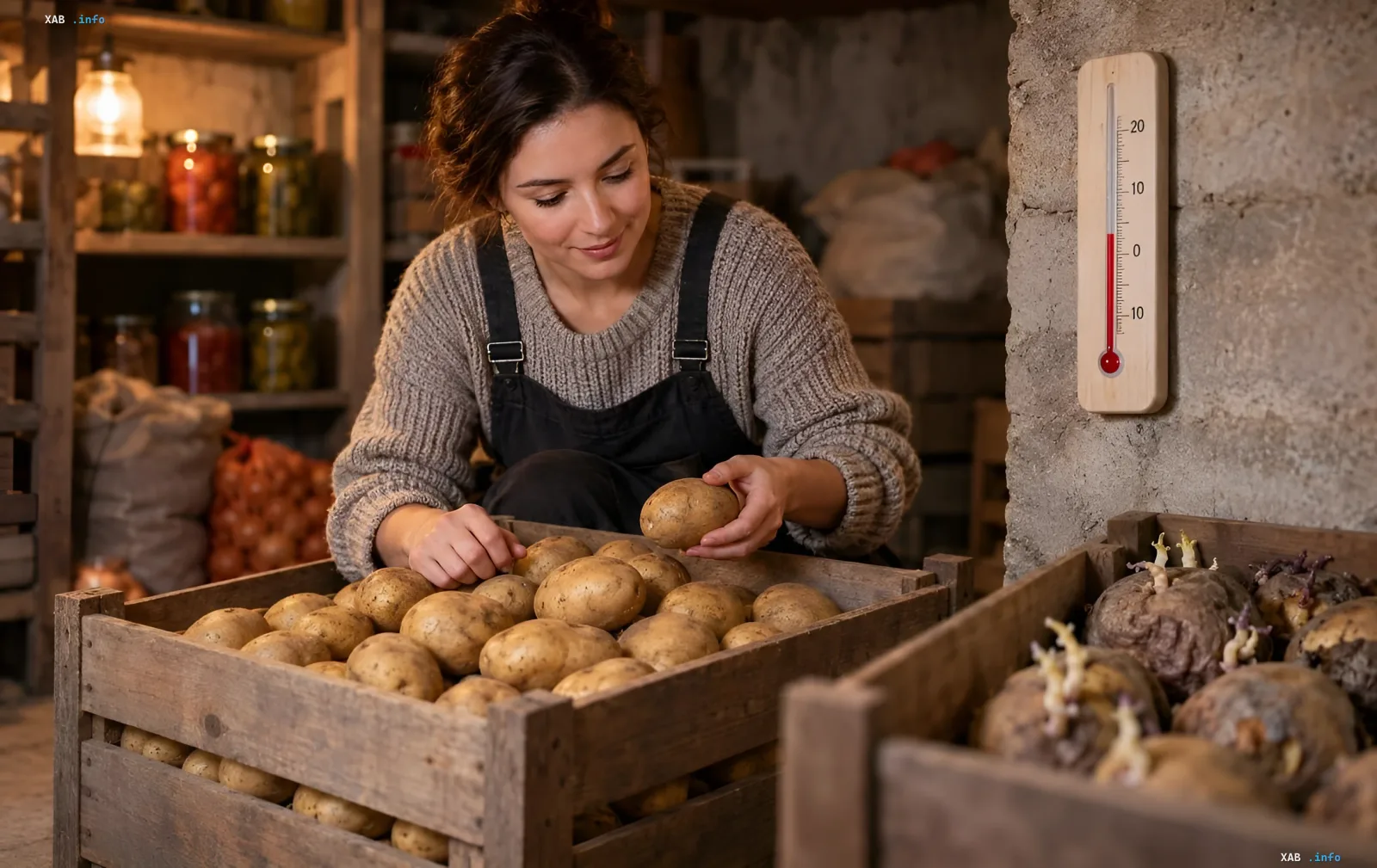
The temperature regime is one of the key factors. Specialists in climate control equipment for vegetable storage, as noted on the AgroPortal website, cite an optimal temperature of about +2…+4 °C, with an acceptable range of around +2…+5 °C depending on the variety and conditions. If the temperature stays at +5…+6 °C or higher for a long time, the tubers begin to sprout prematurely. Sub-zero temperatures are also dangerous: when chilled, starch partially converts into sugars, so after thawing the potatoes acquire a sweetish taste, change in texture, and spoil faster. Humidity is equally important: for long-term storage, a level of about 90–95% is considered optimal, while below roughly 80% the tubers lose moisture, wrinkle, and become lifeless.
Light, containers, and cellar 'neighbors'
Even if potatoes are stored in a garage where a lamp is on during the day or sunlight gets in, the quality suffers: the skin turns green and glycoalkaloids, in particular solanine, accumulate in the tubers. That is why opaque containers or sacks are better for storage, and a window in the basement or garage should be shaded if necessary. Dense polyethylene bags and sacks are a poor choice: moisture builds up inside, and insufficient air circulation promotes spoilage. Wooden crates, mesh, and other containers that allow air access are preferable; piling potatoes in too thick a layer without ventilation should be avoided, otherwise the lower tubers overheat or become damp. There are also nuances regarding neighbors: apples and pears release ethylene, which affects ripening and sprouting, so it is best not to keep them nearby. Beets, on the contrary, can be good neighbors — they absorb some of the excess moisture, while potatoes release it into the environment; they can be stored in the same room in separate crates. Onions and garlic are best kept separately, for example in well-ventilated mesh.
Contradictory data
In specialists' recommendations, the upper limit of the 'optimal' temperature does not always match: some sources cite +2…+4 °C as the target range, while others extend it to +2…+5 °C, noting that the exact benchmark depends on the variety and specific storage conditions. The acceptable lower humidity threshold also varies — some guidelines emphasize 90–95%, while others lower the bottom of the comfortable range to around 80–85%. Both positions agree on the main point: a sustained exceedance of +5…+6 °C triggers sprouting, and air that is too dry leads to wrinkled tubers, so in practice people aim for the middle of the stated ranges and monitor the thermometer and hygrometer readings.
Regular monitoring in winter
Even if everything is done correctly right after harvest, the supplies should not be left unattended for the entire winter. It is advisable to inspect the potatoes roughly every 2–3 weeks. If condensation appears in the basement, the room needs to be ventilated and the cause of the excess humidity identified. The earlier a problem is detected — whether it is emerging rot, sprouting, or excess moisture — the greater the chance of preserving the bulk of the harvest until spring.