Harvesting a bountiful crop of potatoes is only half the job. Equally important is preparing the tubers for long-term storage, because a single damaged or diseased potato can become a source of rot for the entire cellar stock. After digging, tubers often carry scratches, spade cuts, cracks, and bruises. It is through such wounds that microorganisms most easily penetrate the inside, and certain types of rot quickly spread to neighboring tubers. That is why you should not simply dump the whole harvest into one sack and carry it straight to the cellar: first, the potatoes need to be dried, sorted, and given time for the skin to heal.
Drying: light and moisture are the main enemies
After harvest, the tubers are inspected and left to dry, but it is important not to confuse drying with prolonged exposure to direct sunlight. Potatoes are spread in a thin layer in a dry, well-ventilated place protected from precipitation and kept away from light, which causes them to turn green. Right after digging, the skin is still tender, so tubers must be handled with care: seemingly minor impacts and surface abrasions can become a problem in the cellar, turning into "gateways" for bacteria and fungi.
Skin healing: two weeks at 10–13°C
For long-term storage, potatoes are recommended to be held under conditions that promote the healing of minor skin damage. According to Natalie Hooidaal from the University of Minnesota, the bacteria that cause soft rot penetrate precisely through wounds and damage, and if such a potato ends up among healthy ones, the infection can spread to neighboring tubers under conditions favorable to rot. The optimal "treatment" regime is about 10–13°C, high humidity, and constant access to fresh air for roughly two weeks. For a home harvest, the key is to ensure a dry surface, good ventilation, and to avoid placing wet potatoes in tightly sealed containers.
Sorting, and why you should not wash the potatoes
After drying, the harvest must be sorted without delay: this is exactly when it is easiest to spot damage and separate problem tubers. Potatoes for quick use are set aside separately — tubers with minor mechanical damage but no signs of rot or disease. Soft, wet, foul-smelling, or clearly rotting potatoes should not be kept in storage. A separate temptation is to wash all the tubers after digging, but this is not recommended before prolonged storage: surface moisture and the extra friction from washing increase the risk of damaging the skin. It is enough to dry the tubers well and remove excess soil without aggressive cleaning.
Cellar conditions: cool, dark, and ventilated
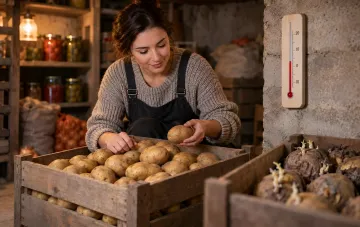
Long-term potato storage requires coolness, darkness, sufficient humidity, and ventilation. For table potatoes in high-humidity storage facilities, the target is usually around 3–4°C, although the exact regime depends on the variety and the intended use of the harvest. In home conditions, it is more important to avoid extremes: overheating provokes sprouting and wilting, while excessive cold worsens the taste. The room should be ventilated, but without constant dampness, and potatoes are best kept in crates, nets, or other containers that allow air circulation.
Regular checks: how not to lose the entire stock
Even properly prepared potatoes will not keep forever without supervision. From time to time, the harvest needs to be checked and any tubers that have begun to spoil should be removed immediately, paying special attention to wet spots, unpleasant odors, softness, and other signs of rot. Regular inspection allows you to catch a problem in time and prevent it from spreading through the entire stock. And the main rule after digging remains simple: first dry and sort, and only then put the potatoes away for winter.