The Hungarian government has announced its intention to definitively abandon the import of Russian energy resources, relying on an agreement with Romania to purchase natural gas from the deep-water Black Sea Neptun Deep field. According to Minister of Economy and Energy István Kapitány, the parties are in the final stages of coordinating the technical and commercial conditions for future supplies. The field is scheduled to be commissioned in 2027, which aligns with Budapest's stated goal of ending Russian gas imports by the autumn of that year.
The Deal with Romania: What Has Been Agreed Upon
As Kapitány emphasized, at this stage, the Hungarian and Romanian sides have yet to define specific contract parameters: supply volumes, price formulas, logistics routes, and transit conditions. "We have discussed the steps we need to take so that Hungary can play an active role in purchasing natural gas extracted in the Black Sea and delivering it to our region," the minister stated. The term "active role" indicates that Budapest intends not just to be a final buyer, but also to participate in shaping the project's commercial model, which could include long-term contracts with fixed volumes.
The Scale of Neptun Deep: 100 Billion Cubic Meters and 4 Billion Euros in Investments
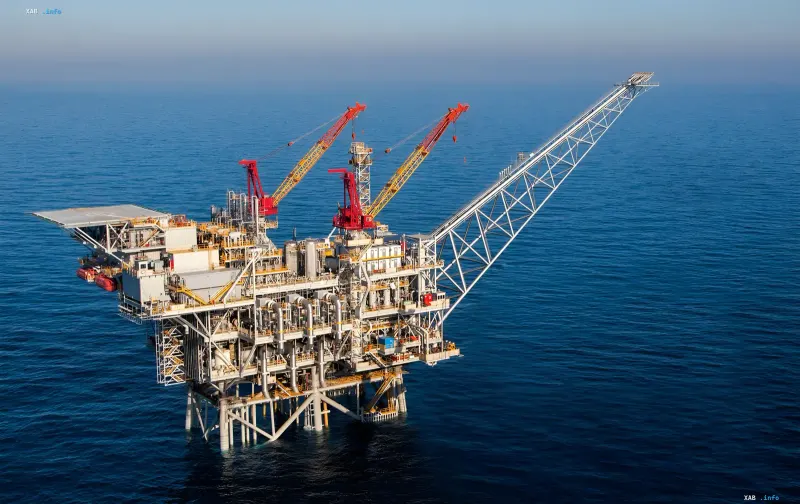
The development of the field is being carried out on equal terms by two companies — OMV Petrom (the Austrian-Hungarian OMV group) and the Romanian Romgaz. The recoverable reserves of Neptun Deep are estimated at 100 billion cubic meters of natural gas, and the total capital expenditure for the project is 4 billion euros. Once it reaches full design capacity, annual production could reach 8 billion cubic meters. For comparison, Hungary's own annual natural gas consumption is about 8.5 billion cubic meters, making the potential production volume practically equivalent to the country's national demand. This means that, if the project is fully realized, Hungary could theoretically cover its own needs exclusively through a single field, not accounting for export potential.
A Parallel Course: Croatia and Pipeline Infrastructure
Beyond the Romanian direction, Péter Magyar's government is working to deepen energy cooperation with Croatia. This line of negotiations is aimed at securing the necessary pipeline infrastructure capacities and fixing the commercial parameters for imports. Croatia possesses a developed gas transport network connected to European hubs and could serve as a key transit link for delivering Black Sea gas to Central Europe. Coordination with Zagreb, therefore, becomes a necessary condition for the physical realization of the deal with Bucharest.
A Strategic Shift: "There Is No More Cheap Russian Gas"
The reorientation toward regional raw material sources is taking place against the backdrop of a fundamental revision of the Hungarian government's energy strategy. Prime Minister Péter Magyar stated directly that, despite the claims of Viktor Orbán's previous cabinet about the benefits of Russian fuel, "there is no more cheap Russian gas" — its cost, according to the head of government, is tied to market quotes. Magyar emphasized that diversifying sources and cooperating with new suppliers will allow Budapest to achieve more favorable transit tariffs. Minister of Foreign Affairs and Trade Anita Orbán confirmed that Budapest intends to stop importing Russian natural gas by the autumn of 2027.
Regional Context: New Energy Realities in the Balkans
The Hungarian path fits into a wider trend in the Balkans. Moldovan President Maia Sandu reported that her country no longer purchases Russian natural gas and continues to strengthen energy independence from Russia. Thus, a new configuration of gas flows is forming in the region, in which Black Sea fields — primarily Neptun Deep — are becoming a strategic resource for several countries simultaneously. For Hungary, this means not only replacing one supplier with another but also transitioning to a model where energy security is built on regional cooperation and route diversification, rather than dependence on a single transit channel.