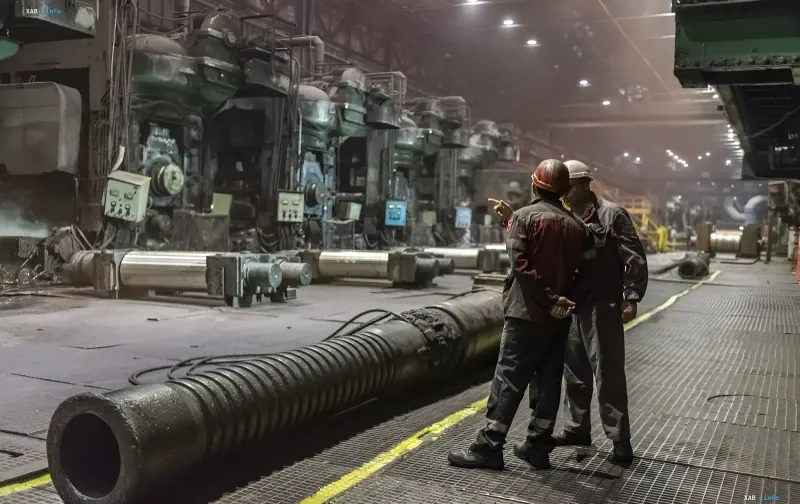
The Ukrainian national committee of the International Chamber of Commerce (ICC Ukraine) has called on the state to strengthen support for industry right now, under wartime conditions. According to the committee's president, Volodymyr Shchelkunov, preserving production during hostilities is a matter not only of economics but also of national security and the state's ability to finance its defense. As RBC-Ukraine notes, the loss of industrial enterprises means not only reduced tax revenues for the country but also the loss of jobs, engineering personnel, technologies, exports, and domestic production chains.
Why Industrial Policy Cannot Be Postponed
The central argument of ICC Ukraine is that postponing the restart of industrial policy until the end of the war is unacceptable. In the committee's assessment, the halt of enterprises is already creating a risk of losing equipment, specialists, and production competencies that will be needed for the country's upcoming recovery. Shchelkunov emphasizes that supporting industry is "not a gift from the state to business" but rather "an investment by the state in its own economic security, tax revenues, employment, exports, and the future competitiveness of Ukraine."
What Measures ICC Ukraine Proposes
The committee calls for a shift from general business support to systematic stimulation of production and large investment projects. Among the key steps mentioned are ensuring industry access to long-term financing, state guarantees, and cheaper loans; introducing targeted tax incentives for modernization and job creation; and forming long-term orders for Ukrainian producers. ICC Ukraine also considers a more active trade protection of the Ukrainian producer abroad, export support, and ensuring industrial companies' access to external markets as a separate priority.
Energy Resilience of Enterprises
The energy resilience of factories has been named a separate priority. According to ICC Ukraine's position, the state should stimulate in-house generation, cogeneration, energy storage, and other solutions that allow enterprises to continue operating even in the event of attacks on the energy system. This effectively turns the energy infrastructure of enterprises into an element of industrial and defense policy.
Figures: What Has Already Been Lost and What Is Threatening by 2035
Before the invasion, Ukraine's heavy industry accounted for 24.8% of GDP (about $200 billion) and generated over $40 billion in foreign currency revenue annually. After 2022, industry fell by 37%, the economy by nearly 30%, and the industry's share of GDP dropped to 19%. The Ukrainian Institute of the Future has published a forecast: if the current industrial policy is maintained, by 2035 Ukraine will collectively lose $260–300 billion in GDP, exports, and tax revenues. This is equivalent to roughly $75–80 million in losses per day, or about $3 million per hour, as well as the loss of more than 800,000 jobs, which will worsen the demographic and economic crisis.
Context: Logistics and Tariffs as an Accompanying Factor
The call to restart industrial policy comes against the backdrop of a broader economic discussion that ICC Ukraine is conducting with the authorities. In particular, the committee previously criticized the surcharge coefficients on railway tariffs, classifying them as fiscal pressure rather than an element of transparent tariff policy, and warned that raising Ukrzaliznytsia's tariffs creates a risk to exports and the stability of the hryvnia. These assessments underscore that the logistical and tariff environment is viewed by ICC Ukraine as part of the same conditions on which the survival and competitiveness of the Ukrainian producer depend.