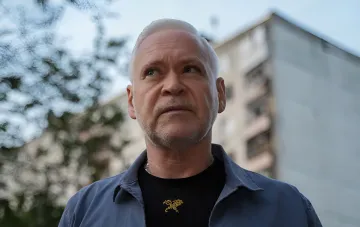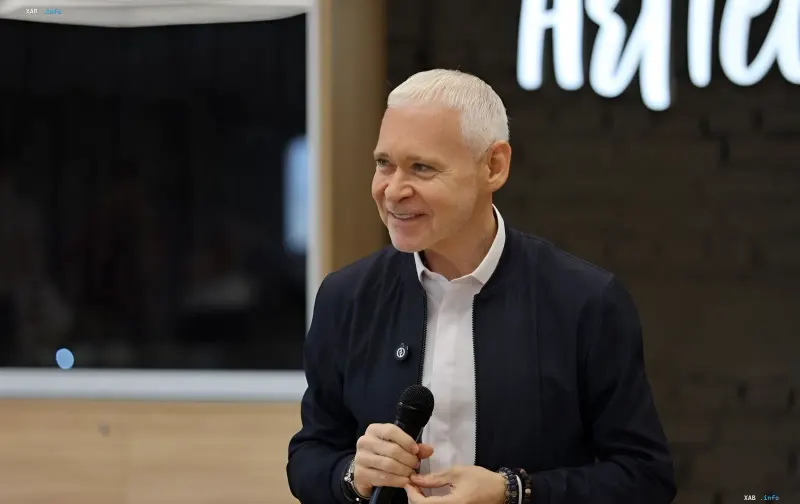
Ihor Terehov, Mayor of Kharkiv and head of the Association of Frontline Cities and Communities, outlined key directions of state policy during a working visit to Lutsk on September 7, 2026, that, in his view, can halt the mass outflow of people abroad and encourage those who have already left the country to return. The visit to Volyn Oblast served as a platform for discussing support for frontline communities, the challenges facing local self-governance in wartime, and interregional cooperation. The central issue of the meeting was preserving Ukraine's human potential.
Four conditions for stopping emigration
Terehov outlined the sequence of decisions a person makes when considering a move. "The first decision a person makes is how their safety will be. Then – where will I live? Where will I work? A decent salary is needed. And the fourth is infrastructure," emphasized the head of the Association of Frontline Cities and Communities. In his words, it is the comprehensive resolution of these four tasks that must form the basis of state policy: without guaranteed safety, affordable housing, a decent income, and developed infrastructure, any talk of returning Ukrainians from abroad remains merely declarative.
Youth as a resource for "today," not the "future"
During a meeting with students of Lutsk National Technical University, Ihor Terehov called for rethinking the rhetorical framework in which young people are traditionally called the "future of the country." "When people say you are the future, I always answer: no, you are today. The future is ahead of you, but already today you need to hear one another, communicate, and work together. It is very important to me that you stay in Ukraine, work here, and build the future of your state," declared the Mayor of Kharkiv. He also shared the experience of creating underground schools in Kharkiv, which ensure safe education for children even amid constant shelling, and stressed that such solutions should be replicated in other frontline regions.
The IDP issue and the housing program
As part of the visit, Terehov toured the Volyn Regional Territorial Medical Association for the Protection of Motherhood and Childhood, where he thanked the medical staff for their work and described how Kharkiv's healthcare system functions amid daily shelling. He emphasized the need to retain medical personnel and strengthen state support for hospitals, especially in frontline communities. Separately, the Mayor of Kharkiv met with internally displaced persons from Kharkiv, Kherson, and Donetsk Oblasts. Participants shared their stories of forced relocation and the problems they face after losing their homes. "A state program of support for internally displaced persons is needed, first and foremost a housing provision program," Terehov noted, adding that he had previously submitted a corresponding bill on a new IDP support system.
Economic priorities of frontline communities
The Association of Frontline Cities and Communities has formulated a package of economic proposals for the state. Terehov stressed that a strong economy is a necessary condition for supporting the army, the communities, and the return of Ukrainians home: "If the economy does not work – nothing will work. There will be no salaries, no budget revenues, no ability to support military and civilians." Among the specific measures are creating conditions for business development, supporting Ukrainian producers, ensuring insurance against military risks, and providing businesses with access to financial resources. "The state must support business in all territories. Insurance against military risks, affordable lending, support for Ukrainian producers – this is today a question not only of economics but of national resilience," declared the head of Kharkiv.
Unity of rear and frontline regions
Concluding his speech, Ihor Terehov noted that the war has exposed the critical importance of unity between rear and frontline regions. In his words, the exchange of experience, mutual support, and joint work on state-level decisions must become the foundation for renewing and preserving the country's human potential. "It is important to us that people stay. That is precisely why the Association of Frontline Cities and Communities is working on solutions that will help people live, work, and develop despite the war," summarized the Mayor of Kharkiv.