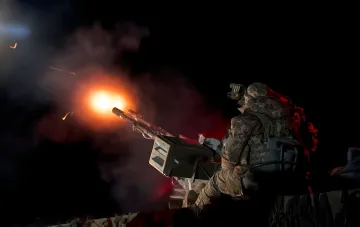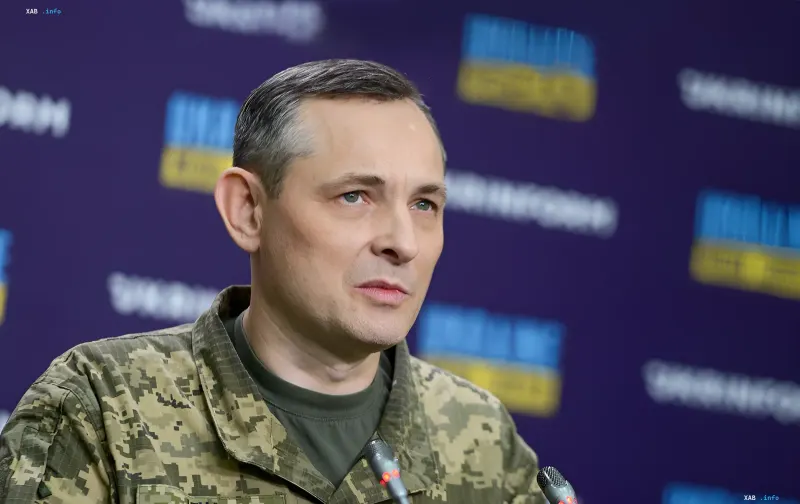
On the night of October 27, Russian troops launched a missile strike on Kyiv, damaging the South Bridge across the Dnipro River. Yuriy Ihnat, a spokesman for the Air Force of the Armed Forces of Ukraine, announced this during a national telethon, as reported by RBC-Ukraine. According to him, the enemy used ballistic missiles, directing several of them directly at the bridge structure. Damage to the roadway will take time to repair and is already causing significant inconvenience to the capital's residents.
'Sixteen Ballistic Missiles'
The Air Force spokesman specified that during the latest attack, Russian troops used a total of 16 ballistic missiles. At the same time, according to him, on the night of the strike, the enemy used only two types of weapons: Iskander-M ballistic missiles or S-400 anti-aircraft guided missiles. Ihnat emphasized that specialists must determine exactly which missiles hit the bridge during an investigation of the impact sites, so an exact typing of the strikes on the specific object has not yet been provided.
'The Bridge Can Be Restored, But It Will Take Time'
Commenting on the condition of the South Bridge, Ihnat explained that damage to the bridge deck does not mean the structure cannot be repaired: 'bridges are not as easy to destroy as some think.' At the same time, he acknowledged that repairs will take time and will inevitably cause certain inconveniences for citizens, as traffic over the damaged span is restricted until inspection and repairs are completed.
'Strikes Are Spread Over Several Waves'
Separately, the spokesman drew attention to a change in the enemy's tactics. According to him, over the past two weeks, Russian troops have been focusing their missile strikes specifically on Kyiv, launching ballistic missiles in several waves in a single night and combining them with drone attacks. Whereas previously ballistic missiles were generally used primarily in a single wave per night, shelling is now stretched across several stages, which complicates the work of air defense systems and increases the load on urban infrastructure.
Consequences for the City
As a result of the strike, the South Bridge was temporarily closed to traffic in both directions, causing significant traffic jams on both banks of the capital. Alternative routes for drivers were designated via the Darnytsia Bridge and the Paton Bridge; the exact timeline for restoring traffic was to be announced after inspecting the technical condition of the structure and assessing safety. In addition, due to the aftermath of the shelling, the operation of the capital's metro changed: on the green line, trains ran only between Syrets and Vydubychi stations, and traffic in the section from Osokorky to Krasny Khutir was temporarily suspended.