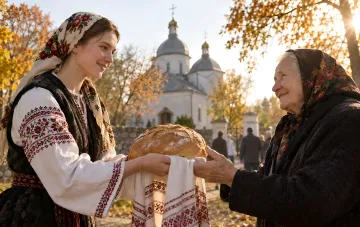

The Feast of the Intercession of the Holy Virgin has long served as a crucial seasonal milestone in the traditional calendar of Ukrainians. By this date, the cycle of main field and agricultural works was completed, peasants finished harvesting, and fully prepared for the onset of cold weather. Predicting the weather for the upcoming winter was of practical importance for the daily well-being of every family, which had to survive the winter months with prepared supplies and insulated housing.
Observations of Nature and Wind
Weather conditions on the Intercession were perceived by our ancestors as a direct hint for the coming months. In particular, in historical Zvenigorod records, a warm and sunny festive day was invariably associated with a mild winter, while cold weather portended severe frosts. Similar views were recorded in Transcarpathia, where general trends were complemented by detailed observations of wind direction and its changes throughout the day.
Birds and Trees as Harbingers of Winter
Special attention was paid to animal behavior and the state of vegetation. Ethnologists note that the mass departure of cranes on the eve or directly on the day of the holiday was perceived as a sure sign of approaching cold weather. In Transcarpathia, there was an omen about the cherry tree: if the tree did not have time to shed its leaves by the Intercession, the winter was expected to be warm. In Polissya, fallen leaves were compared with future snow cover, combining natural phenomena into a single system of folk wisdom.
Contradictory Data
The analysis of ethnographic sources reveals certain local differences in the interpretation of omens. While in some regions the absence of morning frost on the Intercession was considered a sign that the cold would come only in a week or two, in mountainous areas the main indicator remained the presence or absence of snow on the peaks, directly correlated with forecasts for the New Year holidays. Such regional variations reflect the diversity and richness of Ukrainian folk meteorology.