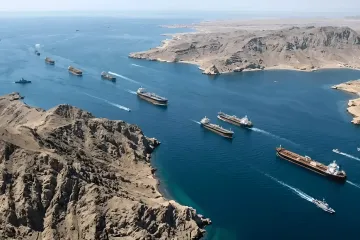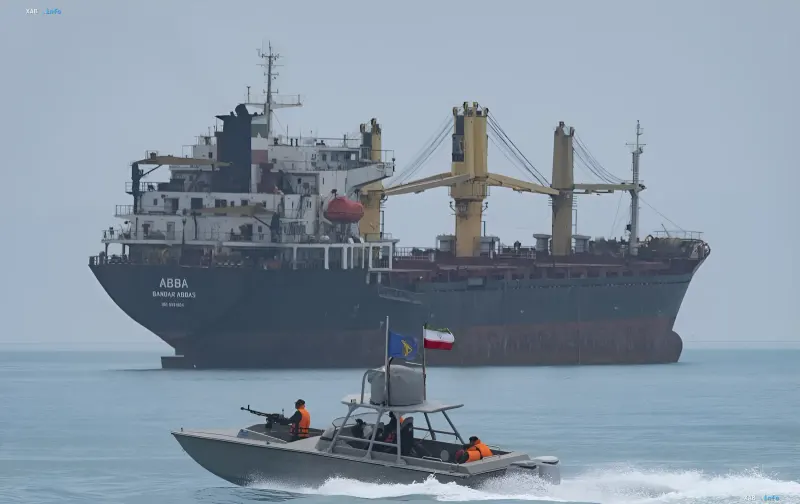
Iran and Oman are advancing the idea of establishing a temporary joint shipping route through the Strait of Hormuz — a key artery of global oil trade. According to the outlet, at the center of the discussions is also a practical mission to demine the corridor. Omani Foreign Minister Said Badr bin Hamad Albusaidi, commenting on talks with Iran's top diplomat Abbas Araghchi in Tehran, called them "constructive" and expressed hope that an announcement on the Hormuz corridor would come soon.
Framework Agreement and the Question of Strait Management
The proposed framework agreement between Muscat and Tehran reportedly contains a general plan for demining the strait. The Omani side emphasized that the parties would continue negotiations toward reaching an agreement on a permanent corridor and a management system for the Strait of Hormuz. At the same time, Albusaidi noted that "future management of the strait and a permanent solution will be determined in due course," indicating that the talks so far concern only temporary measures rather than a final political-legal settlement.
Contradictory Data
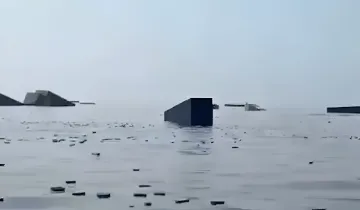
Oman's reference to the need for a demining mission, according to the outlet's assessment, directly contradicts Washington's position. Earlier, U.S. President Donald Trump stated that the U.S. Navy had informed him that all mines had been removed from international waters in the Strait of Hormuz. Thus, one side claims that the mine threat has already been cleared by the American fleet, while Oman and Iran continue to discuss their own demining operation. This discrepancy in versions remains a key contradiction in the public agenda surrounding the strait.
Context: The Collapsed Memorandum and Sanctions Pressure
The Iran–Oman talks are formally being conducted in accordance with a memorandum of understanding signed by Washington and Tehran on June 17. However, as the outlet notes, this memorandum quickly collapsed, as the United States and Iran moved into a direct struggle for control over shipping routes. Against this backdrop, Trump stated that Iran had received a "stern warning" about new mining of Hormuz, and that the United States "fully" controls the entire region linked to the strait. Additional reports mentioned Washington's plans to expand secondary sanctions against organizations and states cooperating with Tehran.
Significance for Regional Security
The combination of the Muscat–Tehran diplomatic track with U.S. sanctions and military pressure creates a complex picture: formally, the parties refer to a previously signed memorandum, but in practice each side is advancing its own model for ensuring shipping security. The outcome could be either a temporary corridor with joint management, or an escalation of contradictions, if the statements about "cleared" waters and the need for demining remain uncoordinated.