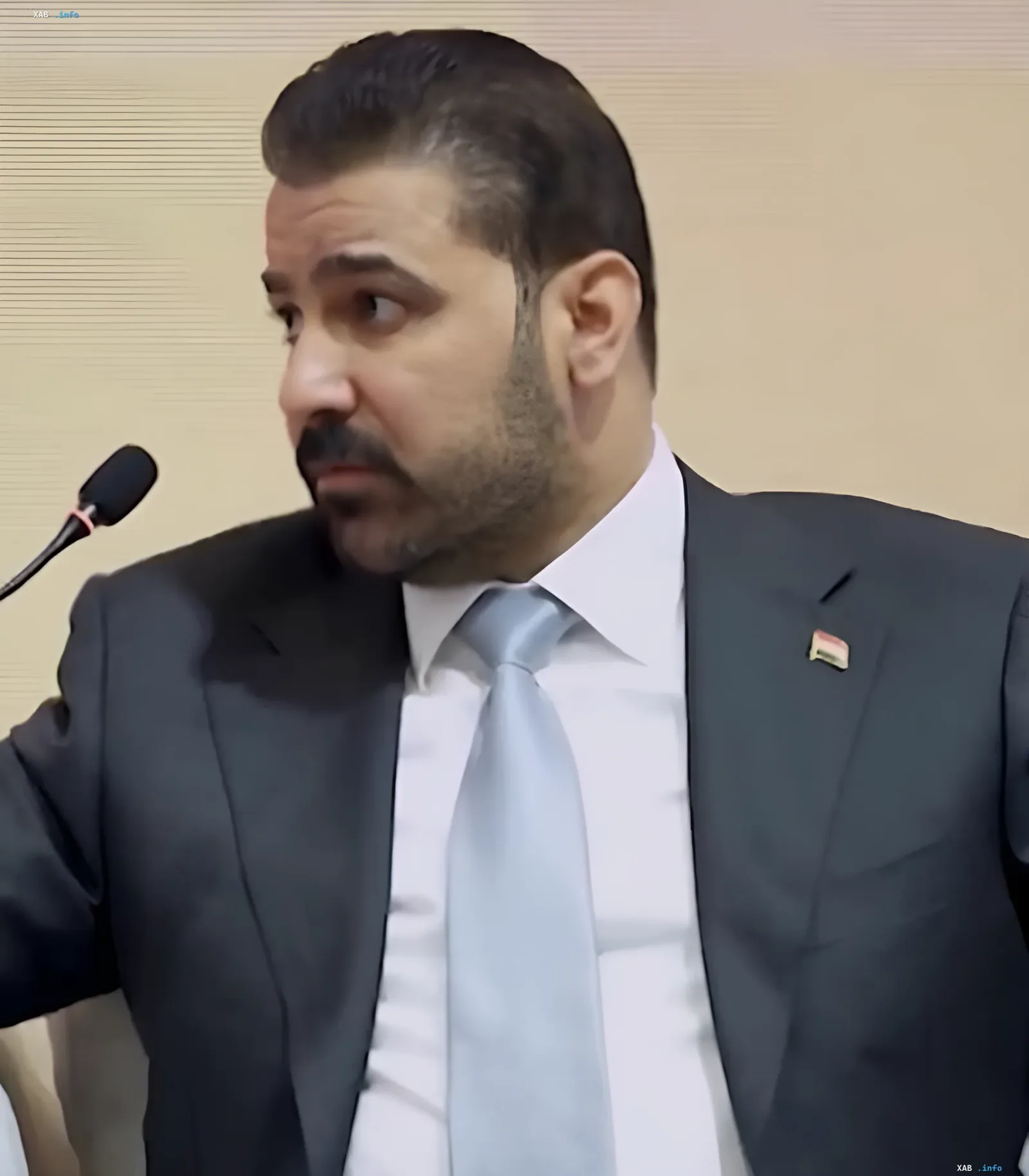
Iraqi Prime Minister Ali al-Zaidi, who took the helm of the cabinet in May 2026 after replacing Mohammed Shia al-Sudani, responded to questions about the fight against corruption by stating that “with God’s help, our government will be free of corruption... because there is no money anyway.” Formally, this is a rhetorical figure; however, in institutional and macroeconomic terms, it captures two interrelated processes: the launch of the harshest anti-corruption purge of the state apparatus in decades, and a simultaneous acknowledgment that the fiscal resources which previously sustained the ruling clientelist networks have been exhausted.
Macroeconomic Context: The Paradox of “Missing” Funds
The phrase about the “absence of money” rests on a specific financial document: Iraq’s Federal Board of Supreme Audit published the results of an audit that uncovered more than $77 billion in non-repayable and “stuck” state loans issued to ministries and agencies since 2004. In substance, this is not about the absence of a budget as such, but about the mass withdrawal of funds from official circulation: criminal cases over the missing state credits have already been referred to court. Thus, the prime minister’s public formula describes not a zero balance, but a hole in the accounting and recovery of funds, which fundamentally changes the legal qualification of the situation — from a budget deficit to a criminal-law one.
Legal and Institutional Framework of the Campaign
Al-Zaidi’s cabinet’s anti-corruption line is being carried out through three channels. The first is symbolic asceticism: the prime minister’s official refusal of his salary, the cancellation of premium benefits for members of the government, and a public ban on accepting gifts. The second is forceful purges in Baghdad’s elite government quarter (the “Green Zone”) and in the ministries: in the first months of the cabinet’s work, more than 40 senior officials were arrested, including Deputy Oil Minister Adnan al-Jamili (according to the initial report, over $21 million in cash and 45 kg of gold bars were seized) and the former governor of Salah al-Din province. The third is confiscatory: in the Oil Ministry case alone, according to available data, more than 40 billion dinars have been turned over to the state, along with significant sums of cash and gold. Legally, this moves the fight against corruption from a declarative plane to one of criminal prosecution and asset seizure.
Foreign-Policy Balance and Washington’s Conditions
The campaign does not exist in a vacuum: it is embedded in the negotiation framework with the United States and the IMF. According to available data, the unblocking of interbank dollar transactions and the lifting of restrictions on the banking sector are conditioned on the requirement to purge money-laundering schemes and to disarm the Tehran-loyal armed formations within the “Hashd al-Shaabi.” Contextual sources confirm that Iraqi Shia armed groups are ready to lay down their arms, but are putting forward their own conditions, which makes the disarmament process non-linear. Domestically, the campaign is facing parliamentary sabotage: Shia factions are blocking appointments, as a result of which nine key ministerial posts in al-Zaidi’s cabinet remain vacant to this day.
Contradictory Data
Here it is necessary to honestly record the discrepancies. First, the public formula “there is no money” contradicts two facts: (a) the $77 billion was in fact disbursed as state loans and is now undergoing audit, meaning the funds existed and were distributed; (b) the government itself is announcing an increase in oil production to 10 million barrels per day and an expansion of exports bypassing the Strait of Hormuz, which implies a significant future inflow of revenue. Consequently, “the absence of money” is a rhetorical, not a literal, statement, and there is a gap between the public frame and the economic trajectory. Second, there is an inconsistency in the figures on gold in the primary data: one fragment cites 45 kg of bars in the deputy oil minister’s case, while another speaks in general terms of “tens of kilograms.” Third, the external sources used for verification confirm the general context (the prime minister’s appointment and his political stance, the oil plans, the disarmament negotiations), but they do not reproduce verbatim the quote on corruption or the exact audit figure, so these two elements rely on the primary report.
Long-Term Consequences
For al-Zaidi’s cabinet, the anti-corruption campaign is a matter of political survival: the young technocrat (41 years old, the youngest prime minister in the country’s history, a graduate of the financial sector) uses it as a tool of legitimation and simultaneously as a signal to the clans that the fight for the remnants of the budget is moving into the phase of confiscations and criminal cases. The key long-term risks and effects: the campaign’s resilience to parliamentary sabotage (nine vacant posts are an indicator of the coalition’s fragility), the success of unblocking the banking sector as a condition for macroeconomic stabilization, and whether the growth in oil revenue to the target of 10 million barrels per day can be directed toward restoring fiscal discipline rather than reproducing the old schemes. The prime minister’s ironic formula, thus, functions as a public marker: the resources are exhausted, and the price of holding onto them is the criminal liability of the formerly untouchable.