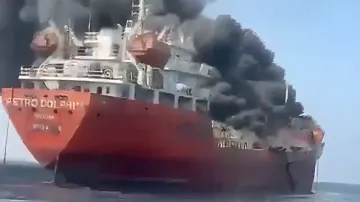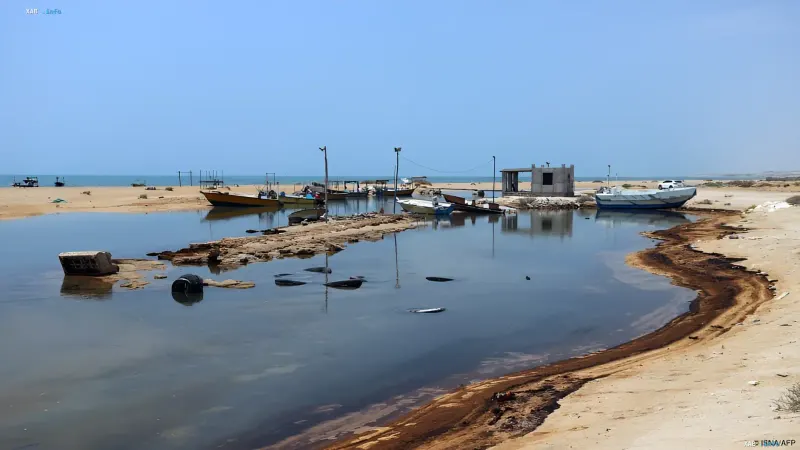
On Sunday, November 29, the press service of the Islamic Revolutionary Guard Corps (IRGC) Navy of Iran reported that two oil tankers had struck sea mines in the Strait of Hormuz. According to the Iranian military, the incident occurred in the morning as the vessels were traveling along the southern route of the strait. Independent confirmation of this information was not available at the time of publication.
What the IRGC Specifically Stated
According to the Corps' statement, one of the tankers—a supertanker with a capacity of approximately two million barrels of crude oil—hit a mine north of the Omani port city of Khasab. The second tanker detonated a mine near the very exit of the strait. The IRGC added that fires broke out on board both vessels following the explosions. The Iranian military emphasized that, according to their data, both ships were traveling along an "unauthorized route by Tehran" with their navigation systems turned off, and reminded that passage through the strait must be coordinated with the Iranian armed forces. Ignoring warnings, IRGC representatives said, could lead to "irreparable consequences.">
Mines or Airstrikes: Diverging Versions
Iran attributes the cause of the explosions to sea mines, but analysts view this version with skepticism. As dpa reports, citing a joint project by Washington-based research centers the Institute for the Study of War (ISW) and the American Enterprise Institute, Iran is unlikely to have successfully mined the southern part of the Strait of Hormuz despite its own claims of controlling the routes. According to analysts, the explosions may have been caused not by mines, but by strikes from Iranian drones or cruise missiles. Thus, the discrepancy between Tehran's official version and the expert assessment remains unresolved, and independent data on the nature of the vessels' damage is currently unavailable.
Context: Strait Under Control and Blockade
The incident occurs against the backdrop of escalating confrontation around the Strait of Hormuz. Following the resumption in 2026 of mutual strikes between Iran and American forces stationed in the Middle East, Tehran and Washington both declared control over the strait: the Islamic Republic announced its closure until the "end of US interference" in regional affairs, while the US reported the resumption of a naval blockade of Iran. In recent weeks, Tehran has reportedly increasingly reported explosions on vessels passing through the strait, some of which, according to the Iranian military, were traveling along an "unauthorized route" with disabled navigation.
Significance for Global Trade
The Strait of Hormuz remains a crucial artery for oil and liquefied natural gas supplies. The US is reportedly attempting to restore trade in the region by escorting civilian vessels with warships. Ongoing peace talks between Tehran and Washington have yet to yield a breakthrough, maintaining a high degree of uncertainty for shipping and energy markets.