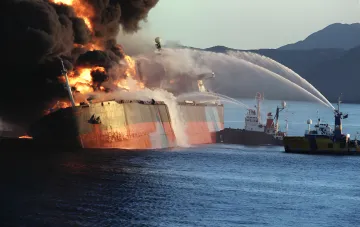
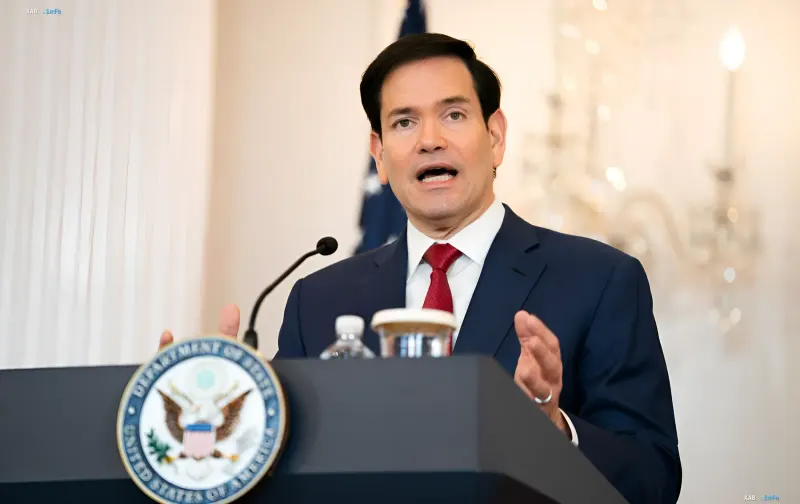
US Secretary of State Marco Rubio stated that Iran will continue to "pay" with its tankers for shelling American warships, and that Washington intends to keep "squeezing" Tehran economically. This was reported by RBC-Ukraine, citing a DRM News broadcast. According to the head of the US foreign policy department, on the night of September 9 Iran lost five more tankers: four were damaged and one was sunk.
"They Are Paying for It With Their Tankers"
Rubio emphasized that, in Washington's assessment, no country is providing Iran with anything capable of changing the dynamics or parameters of the situation the US is observing. "They keep shelling warships, and when they shell our warships, they pay for it with their tankers. They don't hit our ships, but they lose five tankers. Last night they lost another five. Four were damaged and one was sunk," the Secretary of State said. He added that the Iranian side would continue to suffer losses: "We will continue to squeeze them economically."
Iran's Version and the CENTCOM Report
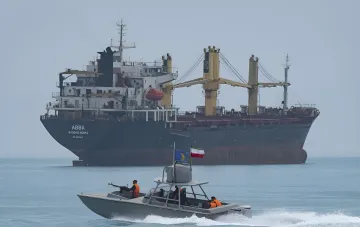
The day before, on September 9, the Islamic Revolutionary Guard Corps (IRGC) reported that on the night of that day Iran had used ballistic missiles against a base in Jordan used by US military forces. At the same time, Tehran claimed an attack on ten vessels in the area of the Strait of Hormuz. For its part, US Central Command (CENTCOM) reported the destruction of five Iranian tankers and added that a US warship evaded the attacks and that there were no military casualties.
Contradictory Data
There are notable discrepancies in the figures between the statements of the two sides. Tehran claims an attack on ten vessels in the Strait of Hormuz, while CENTCOM confirms the destruction of only five tankers. In addition, there is also a mismatch in the wording regarding the outcome of the strikes: CENTCOM speaks of the "destruction of five" tankers, whereas Rubio clarifies that of the five lost, four were damaged and only one was sunk. These differences have so far not been reconciled either by Washington or by Tehran, and both versions are presented with equal weight.
Economic Pressure as a Tool
According to Reuters, after half a year of war, Iran has faced unprecedented economic pressure from the US. According to sources, this could force Tehran to make concessions, in particular on the issue of opening the Strait of Hormuz. The context is confirmed by earlier reports: according to Axios, by the end of August the US was betting on economic pressure and a naval blockade rather than new strikes on Iranian territory, indicating a shift in emphasis from direct military escalation to economic "suffocation."
Thus, the public rhetoric of Washington, according to Rubio, entrenches a course combining naval pressure in the Strait of Hormuz with economic containment, while Iran, conversely, underscores its readiness to continue attacks on vessels and facilities linked to the US. The gap in assessments of the number of vessels affected and the nature of the losses remains the key disputed element that the sides have not yet reconciled.