On Tuesday, the US military carried out a series of strikes on Iran, hitting approximately 100 military targets, according to Washington's assessment. As one US official stated, these strikes have weakened Iran's ability to attack vessels in the Strait of Hormuz "for at least a month." In his words, the overall logic of the operation comes down to the metaphor of "mowing the lawn" — a deliberate reduction of the risk of Iranian attacks on US tankers, ships, and aircraft. The strikes came as a continuation of a tense phase of the confrontation, in which Tehran had previously repeatedly declared its intention to close the strait, while Washington revoked Iran's oil license in July over attacks on shipping.
List of Targets Hit
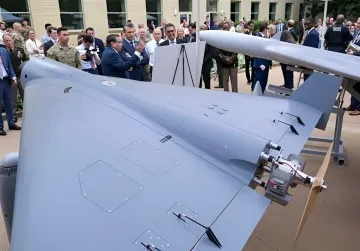
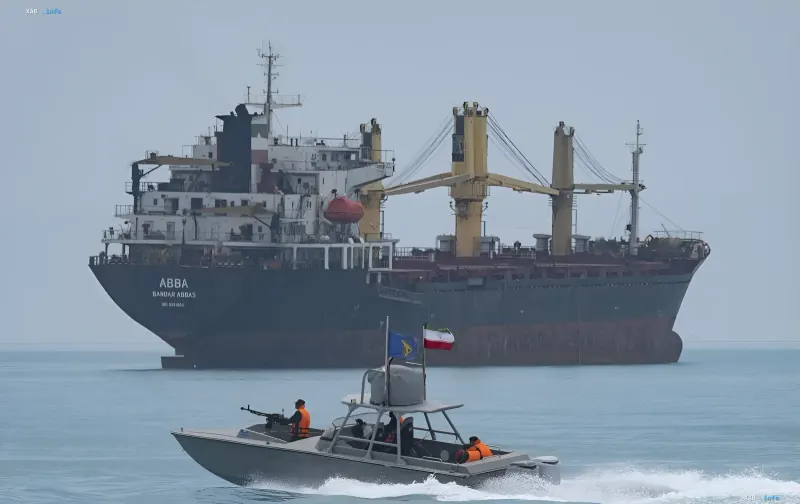
Among the roughly 100 objects struck, according to US officials, were two Iranian government tankers: US drones hit them with missiles in their engine rooms. The list of targets also included air defense installations of the Islamic Revolutionary Guard Corps (IRGC), radar systems, mine-laying equipment, communications facilities, as well as launchers for anti-ship missiles and attack drones. The combined list points to an attempt by Washington to simultaneously suppress air defense and deprive Iran of means of asymmetric maritime pressure — mines, anti-ship missiles, and drones.
New "Tanker for Tanker" Policy
The strikes on the tankers, according to the US official, marked the first instance in which the US attacked Iranian vessels specifically in response to Iranian attacks, rather than as part of preventing a violation of the naval blockade. This, he claimed, is an element of a new "tanker for tanker" policy approved by Donald Trump. Thus, Washington has effectively enshrined the principle of mirror retaliation: for every tanker attacked or seized, an equivalent strike follows on an Iranian vessel, marking a shift from a preventive naval blockade to a policy of retribution.
Iran's Failed Response
According to US officials, Iran's response proved ineffective. About 25 ballistic missiles were launched, but only half of them reached Jordanian airspace: ten were intercepted, and three fell without casualties. In addition, Iran launched around two dozen drones at US bases in Bahrain, as well as directed missiles and drones at bases in Kuwait. Most of the targets, according to Washington, were intercepted, which, in the US assessment, confirms the effectiveness of the strikes on Iranian launch complexes and communications equipment.
Shipping Continues in the Strait
While the US and Iran exchanged fire, American forces continued to escort ships through the Strait of Hormuz. According to a US official, on Tuesday around 40 vessels carrying millions of barrels of oil entered and exited the region's countries. This indicates that, despite the hostilities, the logistical corridor was not fully paralyzed, and the US naval presence in the strait was performing the function of ensuring the passage of commercial tankers.
Contradictory Data
The two sides diverged in their assessments of the strikes' consequences. Iranian state media claimed that one US strike hit a wedding ceremony in the city of Kuhestak, killing at least four people and injuring more than 35. CENTCOM spokesperson Tim Hocks responded that the military is aware of the Iranian state media reports but emphasized that the US military, unlike the IRGC, "never attacks civilians." Thus, the version of civilian deaths at the wedding is confirmed only by the Iranian side and denied by Washington; independent verification of this data is absent in the provided sources.
Context of Escalation
The current series of strikes is taking place against the backdrop of a growing crisis around the Strait of Hormuz. In July, Washington revoked Iran's oil license over attacks on shipping, while Tehran repeatedly declared the closure of the strait. Under these conditions, the strikes on around 100 targets and the introduction of the "tanker for tanker" policy signal a transition of the conflict into a phase of direct military retribution, in which a naval blockade and mirror strikes on vessels become the main instrument of pressure for both sides.