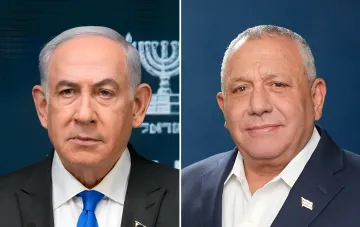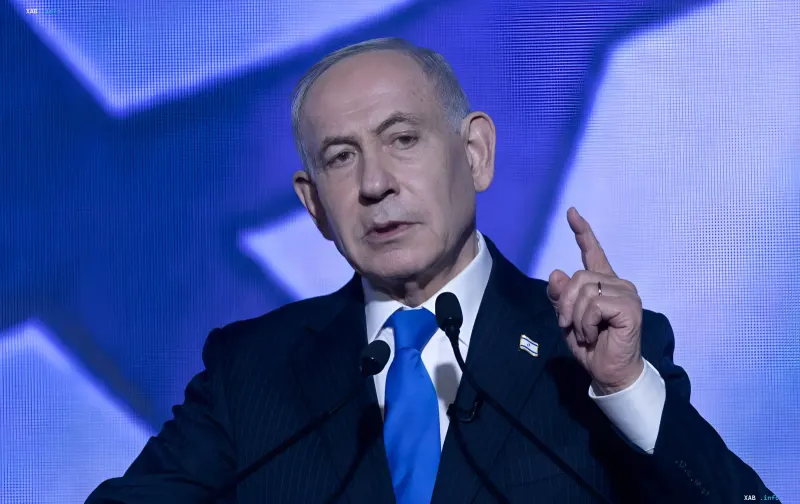
Israel's Central Election Commission has completed the main vote counting phase following the parliamentary elections held on October 27, 2026. According to data processed from 99.9% of ballots, Prime Minister Benjamin Netanyahu's coalition block wins 53 out of 120 mandates, while Gadi Eisenkot's opposition block secures 48. Neither of the two main forces reaches the 61 mandates required to form a majority in the Knesset. Final official results will be announced on November 4.
Counting Results: No One Has a Majority
The distribution of seats effectively recreates a "hung" parliament in which neither side can independently form a government. The internal leader of Netanyahu's block, the Likud party, wins 27 seats, making it the largest single player. At the same time, the prime minister's entire block loses 15 seats compared to the current Knesset composition, where it held 68 mandates. Eisenkot's opposition, conversely, gains 48 mandates, but also falls short of 61. Thus, the outcome of government formation will be determined not so much by the voting result as by subsequent coalition negotiations.
Likud and Netanyahu's Block Outperform Exit Polls
The counting result came as a surprise to some observers: most pre-election polls and exit polls published on the evening of voting on October 27 gave an advantage to Eisenkot's block by two to three seats. Nevertheless, during the actual counting, both Likud and Netanyahu's entire block pulled ahead. Approximately 430,000 to 480,000 ballots from soldiers, diplomats, and other voters who cast their ballots outside their local polling stations played a significant role in the outcome; these votes were counted separately to prevent double voting, and they largely determined the final balance of power.
Arab Parties' Record and the Coalition Question
Arab parties together secure 19 seats — a record high in Israel's history and almost double the number in the current Knesset. Their voters turned out in record numbers, aiming to remove Netanyahu from power. Combined, these votes would have given the opposition a solid majority. However, all parties in Eisenkot's block, with the exception of the Democrats, previously ruled out cooperation with Arab parties, which significantly narrows the coalition options of both sides and elevates the role of small mediator parties.
Significance of Results for Ukraine
The outcome of the Israeli elections also matters for Kyiv. As experts have explained, the Israeli opposition is verbally much more supportive of Ukraine than Netanyahu's coalition, and its victory could have opened a more active dialogue on countering Iran and sharing experience in combating drones. Since neither side won a majority, the real impact on foreign policy and relations with Ukraine will depend on which block ultimately forms the government.
Tense Campaign and International Context
The election campaign took place in a tense atmosphere. Ahead of the vote, Netanyahu published an AI-generated image of a nuclear explosion over Tel Aviv, and US President Donald Trump publicly endorsed his candidacy. Against the background of high turnout — about 74.3% an hour before polls closed — and record electoral activity by Arab parties, the 2026 elections became one of the most competitive in Israel's modern history, leaving the country facing a difficult stage of coalition negotiations.