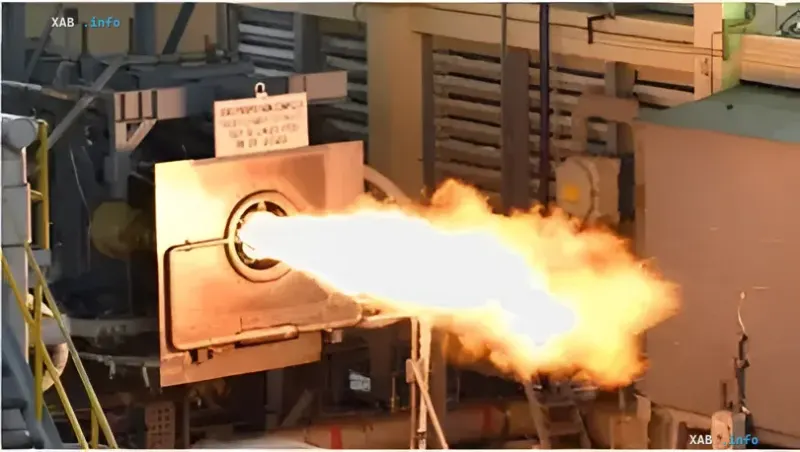
On October 9, 2026, the Indian Space Research Organisation (ISRO) successfully completed the first hot-fire test of a full-scale gas generator for the advanced LME1100 liquid oxygen and methane rocket engine. The test marked a key milestone in the next-generation methane engine program, confirming the functionality of the core assembly required to prepare the working fluid for the combustion chamber. According to the agency, the integrated version of the 1,100 kN thrust engine is scheduled to be ready by mid-2027.
Gas Generator Design and Reliance on Additive Technologies
The LME1100 is designed using a gas generator cycle, with development starting in 2023. A key design feature is the extensive use of additive technologies: according to ISRO, more than 70% of the engine's components are manufactured using 3D printing. This reduces the supply chain, accelerates iterations, and lowers the mass of complex cast and machined elements. Following the successful initial gas generator run, specialists plan to conduct a series of qualification tests across various operating modes to verify operational life and performance stability.
Component Testing: From Scale Models to Full Cycle
In parallel with the full-scale gas generator, ISRO is testing other engine assemblies. A scaled-down model of the gas generator was previously tested, allowing engineers to practice the ignition sequence and evaluate the characteristics of printed injector elements. Tests of a scaled combustion chamber helped select the injector configuration and verify ignition systems designed for different propellant supply conditions. Separately, turbopump assemblies for liquid oxygen and methane—critical elements for establishing operating pressure in the circuit—are undergoing testing.
From LM20-TD to LME1100: Chronology of the Methane Program
ISRO began work on methane engines back in 2019. The first stage involved creating the LM20-TD 20-tonne technology demonstrator, which utilized components from the existing CE-20 liquid oxygen/liquid hydrogen cryogenic engine. In 2019–2020, the demonstrator underwent five hot-fire tests, providing foundational experience in handling cryogenic components and enabling the transition to designing the full-fledged LME1100 methane engine.
Methane for the Moon and Mars: Strategy Up to 2040
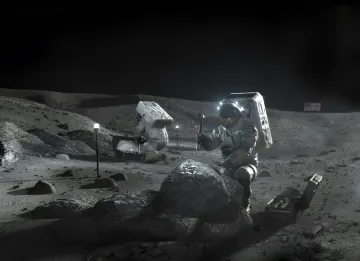
The transition to liquid oxygen and methane is viewed as a promising direction for new rockets. Compared to traditional hydrocarbons, methane provides cleaner combustion and can simplify the maintenance of reusable stages. Furthermore, methane can potentially be produced on Mars from carbon dioxide and water ice, making it particularly attractive for future interplanetary missions. ISRO plans to use such engines in the next-generation NGLV rocket and in a heavy-lift rocket for a crewed lunar expedition that India intends to accomplish by 2040.
LME2400: Heavy Class for Crewed Missions
For its heavy-lift rocket, ISRO has also completed the design of the LME2400 engine with a thrust of 2,400 kN. Unlike the LME1100, it will use a full-flow staged combustion propellant feed cycle, which increases specific impulse and efficiency. This engine is set to become the foundation of the future heavy launcher intended for crewed lunar missions, completing the formation of the Indian space program's methane engine family.