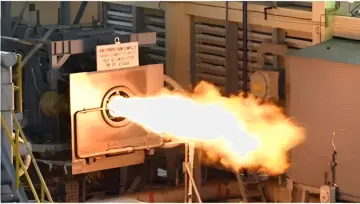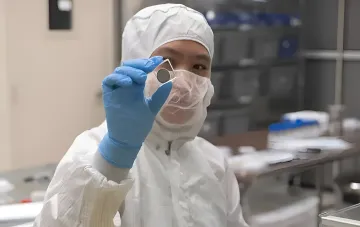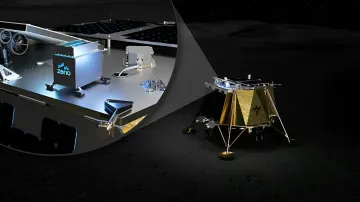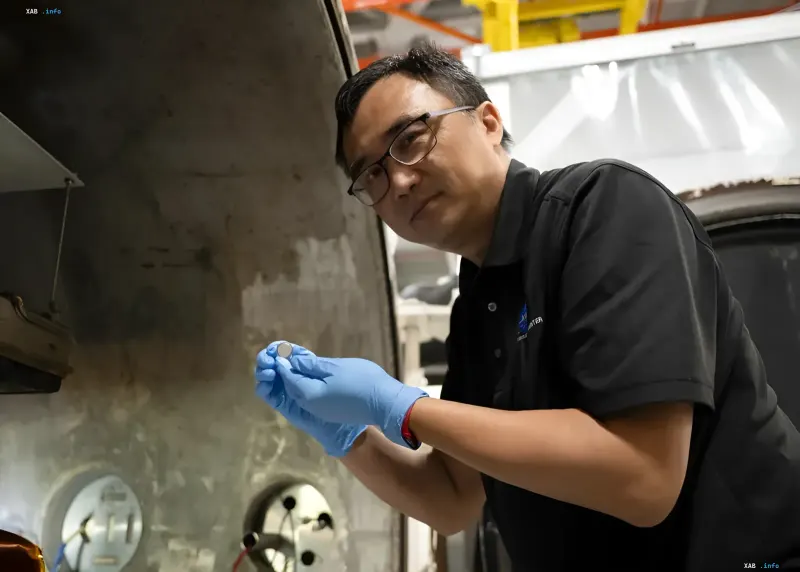
NASA's Langley Research Center has completed another phase of thermal-vacuum testing for the SPEARS (Solid Power for Extreme Environment Adaptability and Resilience in Space) project—solid-state batteries designed for operation in the extreme conditions of the lunar surface, where temperatures during the lunar night drop to −200 °C. Prototype cells demonstrated stable operation in the range from +80 °C to −60 °C, and with slightly reduced performance down to −80 °C. The most significant result was that the power cells survived cyclic exposure to temperatures from +100 °C to −170 °C without any structural damage, paving the way for their use in applications where traditional batteries simply cannot function.
Why Lithium-Ion Batteries Cannot Survive on the Moon
Classic liquid-electrolyte lithium-ion batteries are practically useless in lunar conditions. The liquid in the electrolyte freezes during the lunar night and can boil in a vacuum, leading to the destruction of the cell's internal structure and loss of capacity. For a lunar rover entering permanently shadowed craters or for an astronaut's emergency life-support kit, where every gram of mass and every watt of power are critical, such instability is unacceptable. That is why the SPEARS team opted to replace the liquid electrolyte with a solid ceramic or polymer material that is not subject to phase transitions within the operating temperature range.
Thermal-Vacuum Testing: Numbers and Achievements
Yi Lin, SPEARS testing lead at Langley Research Center, reported that the current stage has proven cell operability at −80 °C, with plans to expand the range further. According to recent thermal-vacuum tests, prototypes steadily delivered their rated power at +80 °C and maintained nominal mode down to −60 °C; below this threshold, performance decreased, but the cells continued to function down to −80 °C. Crucially, the solid-state electrolyte neither freezes nor evaporates in a vacuum, and returning the battery to full operation after prolonged dormancy only requires briefly turning on a built-in low-power heater. This eliminates the need for massive, energy-intensive constant thermal control systems previously required to keep lithium-ion batteries operational.
Flexible 'Chemistry' for Specific Tasks
“We can tune the chemistry through the choice of electrode materials,” explained Yi Lin. “Just as the chemistry in headphones differs from that in a phone, and that from a car, all these electrochemistries can work with a solid electrolyte. You can optimize the cell for energy, power, or longevity.” This approach allows batteries to be engineered for a specific mission: a rover requiring maximum capacity for a multi-day route and an emergency kit where peak power in the first seconds is critical will use different combinations of electrode materials while sharing the solid electrolyte.
Path to Space Testing and Terrestrial Prospects
In parallel with the work at Langley, NASA's Ames Research Center is developing the flight hardware required to prepare SPEARS for orbital and ultimately lunar testing. The technology is also being considered for commercial terrestrial applications: from electric vehicles and unmanned aerial vehicles to portable communication devices operating in Arctic and high-altitude conditions. If the SPEARS program successfully completes space validation, solid-state batteries could become the standard power source for all lunar infrastructure—from scientific stations to vehicles operating in conditions where no existing energy source can withstand repeated diurnal temperature swings.