From Expeditions to Colonization: New Challenges for Astronauts
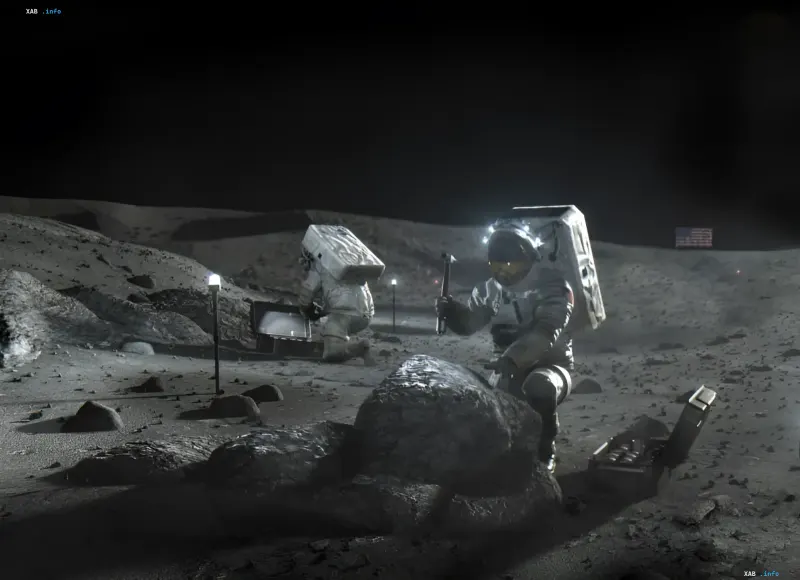
By August 2026, the space race has entered a new phase where the focus has shifted from short-term landings to the creation of permanent infrastructure. Through its Human Research Program (HRP), NASA has officially called on the scientific community to develop strategies for crew survival and health preservation. The agency clearly recognizes that the transition from "fly-in, fly-out" missions to a scenario of long-term residence on the lunar surface requires a fundamentally new approach to human medicine and biology.
Michael Stenger, the Chief Science Advisor for HRP, emphasized that current knowledge accumulated over decades of work on the International Space Station (ISS) is insufficient to solve the challenges of a lunar base. While astronauts in Earth orbit face microgravity, on the Moon they will encounter gravity equal to one-sixth of Earth's. This is a unique condition that cannot be fully simulated on Earth or on orbital stations, and its impact on the body during prolonged exposure has become a priority for study.
The "80-Hour" Problem: Data Deficit on the Lunar Environment
A fundamental problem facing mission planners is the critical lack of empirical data. Throughout the history of manned spaceflight, humans have spent a total of only about 80 hours on the lunar surface. Meanwhile, the experience of staying in low Earth orbit includes missions lasting up to 437 days. NASA explicitly states that lunar conditions differ not only in the scale of stay but also in environmental parameters, particularly the level of radiation exposure, which is significantly higher on the Moon than in Earth's orbit, protected by the magnetosphere.
The agency warns that lunar surface conditions cannot be directly reproduced based on ISS experience. Prolonged exposure to reduced gravity and increased radiation could lead to unpredictable changes in the crew's physiology and psyche. Therefore, NASA is seeking ways to identify these risks in advance to prevent failures in base operations and crew health in the future.
Medicine Without Evacuation Possibilities
One of the most pressing tasks raised in the request is the organization of medical care in isolation conditions. On the ISS or during short-term missions, there is always the possibility of an emergency return to Earth in case of a critical threat to life. On a lunar base, such an option will not exist. Evacuation from the Moon is a complex and lengthy procedure that is not possible "right here and now."
In this regard, NASA poses the question to scientists of creating autonomous medical systems. It is necessary to determine how effectively remote diagnostics and treatment can be organized, what exercise systems will be required to maintain muscle and bone tone in low gravity, and how to prevent mental disorders due to isolation. According to Stenger, a specialized laboratory could potentially be placed on the lunar surface, which would serve as a testbed for studying organism adaptation.
International Cooperation and Program Expansion
In the context of preparing for the creation of a base, NASA is actively expanding its circle of partners. In 2026, the agency officially invited the Indian Space Research Organisation (ISRO) to join the lunar base program. This decision is aimed at deepening space ties between the US and India and pooling resources to solve complex scientific tasks. The accession of new partners will allow for faster data collection and the distribution of risks associated with creating infrastructure for the long-term presence of humans on another celestial body.
Contradictory Data
While NASA emphasizes the uniqueness of the lunar environment and the need for new research, part of the scientific community and experts in space medicine point out that many physiological processes observed on the ISS can be extrapolated to the Moon with a correction for the gravity coefficient. There is a debate regarding how radically the effect of radiation on the Moon differs compared to orbit, and whether current protection models are sufficient for the first missions. On one hand, NASA insists that 80 hours of experience is negligible compared to years of life on a base, while on the other, optimists believe that technologies tested on the ISS already provide a sufficient foundation for a start.