Revolution in Space Navigation: Moving Away from Dependence on Earth
August 18, 2026, marked a significant day for the space industry. NASA successfully completed a critical phase of testing the FALCON (Fast Autonomous Lost-in-space Catalog-based Optical Navigation) autonomous navigation system aboard the experimental Starling satellite. This event signifies a shift from the traditional model of spacecraft management, which relies entirely on ground stations and GPS satellite systems, to a new paradigm of full autonomy. Spacecraft can now determine their position in space using only their own "eyes" — optical cameras — and a visual catalog of surrounding objects.
How FALCON Works: The Next-Generation "Star Compass"
The FALCON technology is based on an innovative approach to processing visual data. Instead of requesting coordinates from GPS satellites, the system uses the standard star tracker cameras of the Starling satellite. Working in tandem with Era-Core software developed by EraDrive (based at Stanford University), the cameras scan space, recognizing not only stars but also artificial objects.
The satellite compares what it sees with a catalog loaded into memory containing data on 20,000 space objects, including active satellites and space debris fragments. By correlating the position of these objects with their calculated orbits, the algorithm computes the spacecraft's own trajectory with high precision. This allows the satellite to "know" where it is, even if communication with Earth is completely lost.
Experiment Results: Self-Learning and Orbit Refinement
During the three-day autonomous experiment, the system demonstrated not only navigation capabilities but also the ability to refine data. FALCON independently analyzed more than 200 space objects, improving the accuracy of data on their orbits without any intervention from ground operators. The resulting position estimates were more accurate than the initial predictions available to the spacecraft.
In a press release, NASA emphasized that this is the first time a spacecraft with optical cameras has independently determined its orbit based solely on the relative position of other objects. This proves the viability of a concept that previously remained theoretical.
Strategic Significance: From Earth to Mars
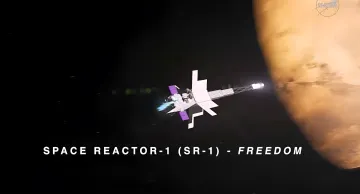
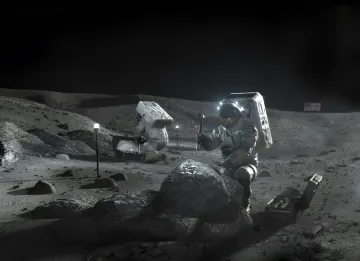
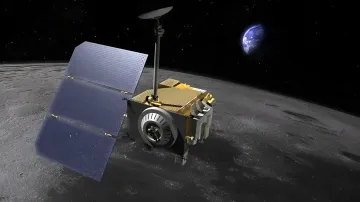
The FALCON technology is critical for future missions beyond low Earth orbit. In lunar and Martian expeditions, the GPS signal is either absent or too weak for precise navigation. Autonomous systems will allow groups of satellites to coordinate their actions without constant communication with ground infrastructure, which is vital for scientific programs requiring the precise positioning of multiple spacecraft simultaneously.
Furthermore, this technology opens new horizons for monitoring space traffic and preventing collisions. Satellites will be able to independently detect threats and maneuver without waiting for commands from Earth, significantly increasing the safety of space assets.
The Future of the Starling Mission: Distributed Constellations
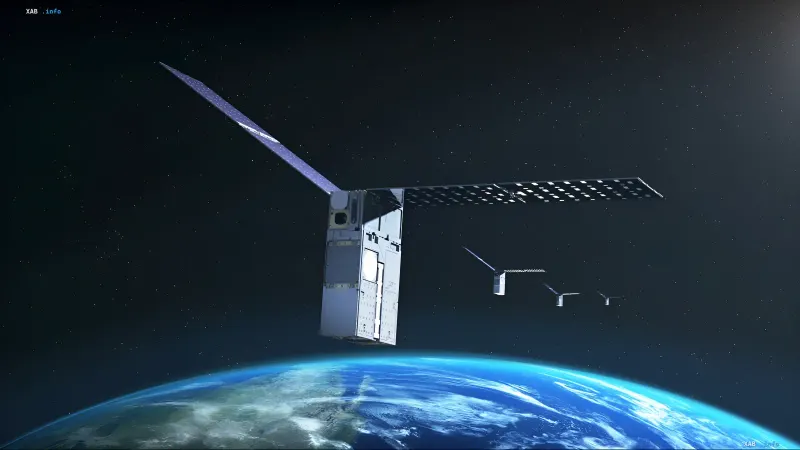
The Starling mission, launched in 2023, consists of four small satellites. Throughout 2026, NASA plans to expand the scale of FALCON testing. In the near future, all four spacecraft will exchange data on observed objects, creating a distributed navigation network. This will allow them to jointly refine their positions and update information on object orbits in real-time. In the long term, this will lead to the creation of fully autonomous satellite constellations capable of operating as a single organism in deep space.