The Institute for the Study of War (ISW) in a recent report, as cited by RBC-Ukraine, assessed the Kremlin's proposal for a "humanitarian mission" in Kostiantynivka modeled after the ceasefire in Oleshky as unfeasible under current conditions. According to analysts, the military situation in the Kostiantynivka area is fundamentally different from the one in Oleshky, which is precisely what makes applying the Oleshky model to the Donbas impossible. The report explicitly states: "The Oleshky ceasefire cannot be a model for a potential ceasefire near Kostiantynivka because the military situations on the front lines are different."
Why Kostiantynivka is not Oleshky
The key difference highlighted by ISW is the degree of control over the city and the configuration of the front line. Unlike in Oleshky, where Russian troops effectively controlled the town, in Kostiantynivka, Russian forces do not hold the city entirely, and Ukrainian and Russian positions in the area are intermingled. This "intertwined" front geometry, according to the Institute, does not allow for the organization of a proposed ceasefire in the format implemented in the Kherson region.
Information pressure and ignoring the Ukrainian initiative
ISW also notes that, in the Institute's assessment, the Kremlin is using its proposal to falsely frame Ukraine as the party unwilling to agree to a humanitarian ceasefire. Meanwhile, analysts emphasize, Moscow is ignoring Kyiv's counter-initiative to extend a ceasefire modeled on the Oleshky agreement to other settlements in the occupied parts of the Kherson and Zaporizhzhia regions. According to ISW, it is the Ukrainian initiative, rather than the Russian proposal for Kostiantynivka, that is feasible given the geography of the front.
Risk of military exploitation of the "humanitarian window"
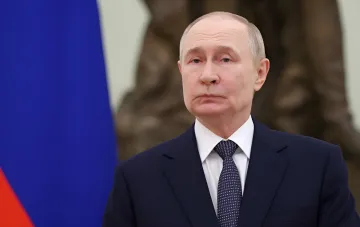
The proposal for a mission in Kostiantynivka came after a humanitarian ceasefire in Oleshky: according to DW, on November 12, Vladimir Putin claimed that Russia controls Kostiantynivka and proposed an operation there following the example of the Oleshky evacuation, stating that five days would be required for demining the approaches, and suggesting the involvement of Ukrainian and Russian ombudsmen Dmytro Lubinets and Yana Lantratova, as well as representatives of foreign media. The Office of the President of Ukraine warned that Russia could use such a ceasefire to transfer equipment and rotate military personnel, as it did in Oleshky. President Volodymyr Zelensky stated that the goal of the Russian Federation is the capture of Kostiantynivka.
What this means for future negotiations
The collective assessments of ISW and Ukrainian agencies indicate that the Kostiantynivka issue remains less of a humanitarian matter and more of a military-political one: the front's configuration provides no basis for the "Oleshky" model, and the Ukrainian side views the Russian proposal as a tool for information pressure and potential military exploitation. Against this backdrop, Kyiv's initiative to expand the ceasefire to other settlements in the Kherson and Zaporizhzhia regions, according to analysts, appears more realistic in terms of front-line geography.