A tense situation has unfolded in the international waters of the Mediterranean Sea, marking another episode in the struggle against Russia's so-called "shadow fleet." Italian military forces conducted a decisive operation to inspect the oil tanker Toa Payoh, which, according to European intelligence, is being used to circumvent sanctions.
Details of the operation off the coast of Pantelleria
The events took place west of the Italian island of Pantelleria. The tanker Toa Payoh, which departed from a port in the African nation of Benin on July 16, was heading to Istanbul. Although the vessel formally sails under the flag of Cameroon, this flag raises serious suspicions among European regulators. It was precisely to verify the legality of the documents and the flag that Italian authorities initiated the stoppage of the vessel.
The operation was conducted in strict accordance with Article 110 of the United Nations Convention on the Law of the Sea, which allows warships to inspect vessels on the high seas if there are reasonable grounds for suspecting piracy or drug trafficking, as well as in cases of statelessness (absence of a flag).
Refusal to cooperate and landing of the landing party
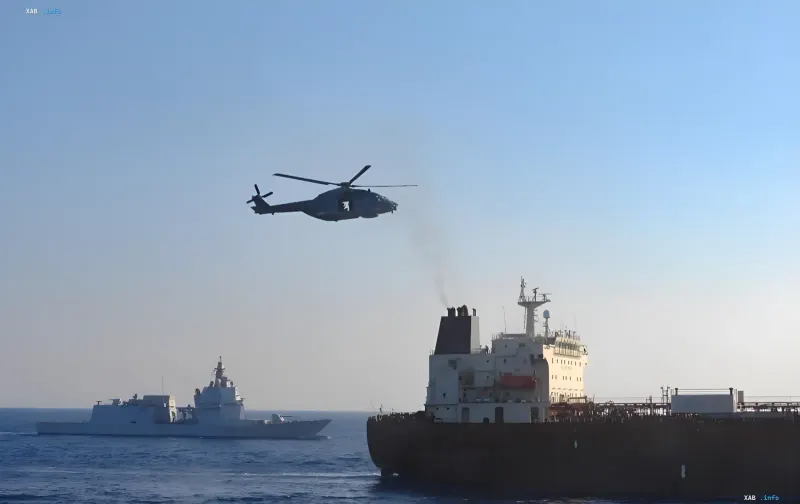
The inspection, which lasted about two hours, did not go smoothly. Initially, the captain of the tanker refused to cooperate with the military, necessitating the use of forceful methods. To conduct the inspection, a group of Italian servicemen was landed on board the vessel from a helicopter. The operation was supported by a Greek warship and a Polish patrol aircraft, underscoring the international nature of the mission.
At present, the military have completed the physical inspection, and specialists have begun a detailed analysis of the documents and information obtained during the check. The vessel Toa Payoh is already under European Union sanctions and officially belongs to the Russian Federation's "shadow fleet."
Political context and reaction
Italian Defense Minister Guido Crosetto commented on the incident, calling it an important contribution to regional security. "This operation once again confirms Italy's concrete contribution to the security of the Mediterranean and the implementation of European Union policy," he stated.
The situation surrounding the "shadow fleet" remains one of the most acute in modern geopolitics. Previously, the European Union allowed member states to sell oil confiscated from Russian vessels, which Moscow termed "piracy." Meanwhile, against the backdrop of these events, US senators are discussing new sanctions, expressing confidence that pressure will force the Russian leadership to sit down at the negotiating table.